

Over 70% of industrial companies are stuck in “pilot purgatory,” unable to scale digital initiatives beyond isolated tests. According to McKinsey, the facilities that actually bridge this gap see a 50% reduction in machine downtime. The way there lies through software architecture.
Legacy systems, unable to provide real-time visibility, struggle against supply chain volatility and rising operational costs. In this environment, modernizing manufacturing software development is a survival metric.
At Fireart, we build industrial software that turns shop-floor complexity into a competitive advantage. A successful digital transformation requires software that connects machines and empowers the people on the factory floor. In this report we detailed the key IT trends in manufacturing and the architectural decisions required to build scalable industrial software.
Article highlights
- The legacy debt crisis is a major business risk. Outdated systems drain resources through rising maintenance costs and create security blind spots that invite ransomware attacks.
- Modern architecture is defined by three shifts: edge computing for real-time data, agentic AI for autonomous operations, and API-first integration to break down data silos between IT and OT.
- The operator experience is a critical ROI driver. User-centered design that reduces cognitive load on the factory floor minimizes operational errors and enhances adoption.
- Custom software development offers a lower 5-year Total Cost of Ownership (TCO) than off-the-shelf solutions, which often suffer from rigid workflows and expensive per-seat licensing.
Ready to escape "pilot purgatory"? Fireart turns manufacturing complexity into scalable, operator-centric software.
Explore our Digital Product Design ServicesWhy legacy systems carry $9,000-a-minute risk
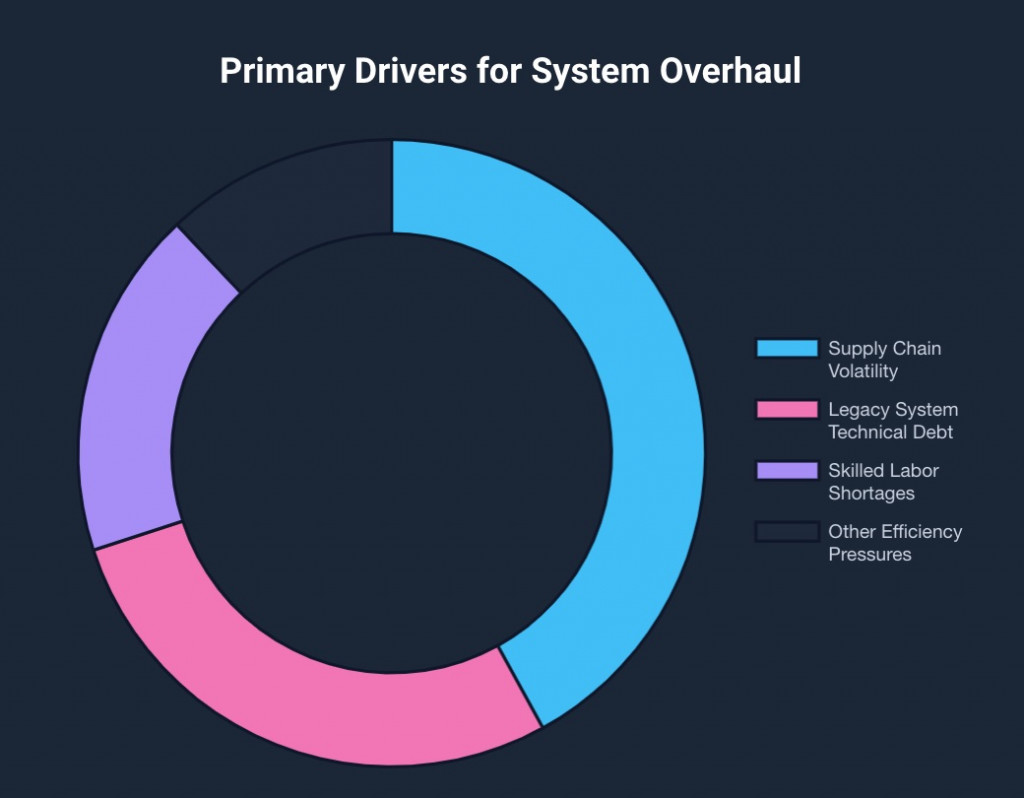
Unplanned downtime can cost a large enterprise $9,000 per minute. This is the reality of the legacy debt crisis in manufacturing. Outdated systems are a slow-acting poison that erodes productivity and exposes companies to severe financial and security risks.
Till now, too many operational technology assets rely on equipment old enough to remember life before smartphones. Only 30% of manufacturers provide workers with real-time data for decisions. This technical debt creates two vulnerabilities.
First, it weakens resilience. With supply chains disrupted every 3.7 years, legacy systems cannot pivot. They fail to ingest data or adjust production schedules, leaving companies unable to react to changes in material availability or demand.Second, these systems are a cybersecurity liability. Built before current threats, they have blind spots. Last year, ransomware hit 57% of manufacturers, with average payouts exceeding $175,000. Manufacturing software development is a core component of efficiency, but also risk management. Investing in legacy app modernization is investing in your defense.
Legacy debt erodes margins and invites security threats. Fireart helps you mitigate these risks.
Explore Our Legacy Modernization ServicesCore architectural shifts defining 2026
The recent trends in manufacturing technology represent three shifts in software architecture. Mastery of these shifts is essential for competitive advantage.
Edge computing and microservices
Modern factories require sub-10 millisecond latency for production line adjustments, a speed centralized cloud computing cannot guarantee.
This requirement has moved processing to the edge computing, where 75% of industrial data is now handled locally. Systems analyze sensor data on the factory floor and send only insights to the cloud. This new manufacturing technology reduces bandwidth costs and lag.
Manufacturing software development is embracing cloud-native microservices. By breaking applications into independent services, teams can update functions (like a quality control algorithm) without taking the plant offline and halting the production.
AI and digital twins
Software now makes decisions. The most immediate ROI comes from AI powered predictive maintenance. Predictive maintenance using machine learning yields returns by forecasting equipment failure; 95% of adopters report success.
The latest manufacturing technology goes further with Digital Twins. These replicas of assets are fed by sensor data. Developers use them for virtual commissioning to test and optimize production lines in simulations, reducing setup downtime by 20%.
The next frontier is agentic AI. Autonomous agents rebalance production lines or reroute supply chains in response to disruptions without human intervention.
API-first and zero-trust
Silos between the factory floor and business systems reduce efficiency. API-first development treats the API as the core product, providing a language for tools to integrate.
However, this increased connectivity expands the attack surface. This is why Zero-Trust Cybersecurity has become one of the top digital transformation trends in manufacturing. In a zero-trust model, no user or device is trusted by default. Every connection must be authenticated to isolate systems and prevent breaches. Adherence to standards like IEC 62443 is essential for secure software development for manufacturing.
Managing cognitive load for the operator
Poor operator experience is a hidden cost in manufacturing software development. Industrial software has often been cluttered. Modern factories require higher standards.
The usability principles from industrial website design apply to internal tools. Just as the best manufacturing websites guide B2B buyers through product catalogs, factory-floor software must guide operators through workflows. Extra buttons, labels, or screens increase cognitive load, the effort required to complete a task.
At Fireart, our digital product design services apply design principles to the factory floor.
- Contextual dashboards: We design role-specific views. A manager sees OEE trends and efficiency metrics. An operator sees a task queue and machine status. Progressive disclosure allows users to find details without a data dump.
- Mobile apps: For field workers and maintenance crews, our mobile app development studio designs interfaces with hit areas for gloved hands and contrast for visibility in variable lighting. An app must be usable while walking the floor.
Overcoming shop-floor resistance
Even the best software will fail if operators don’t trust it. To ensure adoption, we use two key strategies during rollout:
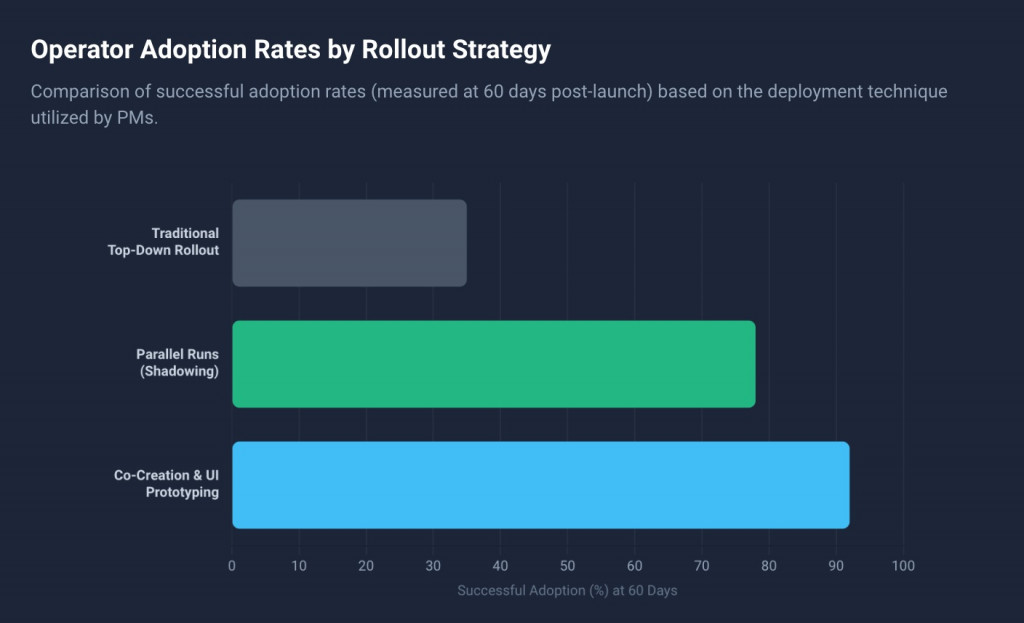
- Co-Creation: We conduct UI prototyping sessions on the factory floor with operators. This makes them involved stakeholders.
- Shadow Runs: New software runs in parallel with the old system for two to four weeks. The system pulls data without driving processes, while operators verify accuracy without risking production.
The “build vs. buy” reality
One of the most contentious decisions facing manufacturing leaders is whether to buy off-the-shelf (OOTB) software or invest in a custom solution. While packaged MES and ERP systems promise fast deployment, data reveals long-term frustrations.
The hidden costs of off-the-shelf software
Off-the-shelf software forces unique processes to conform to rigid logic. Complaints include:
- Rigid workflows. Systems do not adapt to the ad-hoc reality of a factory floor, leading to workarounds.
- Vendor lock-in. Proprietary databases trap data management, making it difficult to integrate tools or AI-powered solutions.
- Scaling costs. Licensing becomes expensive as you scale and penalizes growth.
Model the 5-year TCO and build a "Minimum Viable Replacement" (MVR) strategy to transition from off-the-shelf or legacy systems.
Schedule a ConsultationThe Long-Term ROI of Custom Architecture
Custom software development for manufacturing provides a competitive advantage through ownership. Upfront capital expenditure is greater, but operational expenditure stabilizes and is lower over five years than subscription fees. This allows for optimizations tailored to machinery and eliminates licensing fees, lowering the total cost of ownership.
At Fireart, we help clients navigate this transition with a “Minimum Viable Replacement” (MVR) strategy. By managing the complete product development life cycle, we create minimum viable replacement strategy that identifies and modernizes critical legacy components one piece at a time. This phased approach minimizes disruption and delivers incremental value, ensuring a safe and cost-effective transformation.
Conclusion
Modern software development for manufacturing sees legacy systems for what they are: liabilities that hinder efficiency and expose companies to threats. Leaders now use real-time industrial data, embrace autonomous operations with AI-powered systems, and build tools for the factory floor.
The cost of standing still outweighs the risk of transformation. Are you ready to take action?
Let’s build your future-ready manufacturing software
Contact usFAQ: Common Questions About Manufacturing Software
How much does custom manufacturing software cost?
Costs typically range from $50,000 for a simple tool to $300,000+ for a complex enterprise platform. The primary cost drivers are the complexity of legacy system integration, the need for advanced features like real time AI/ML pipelines, and compliance requirements.
How long does it take to develop a custom manufacturing application?
An MVP can be developed in 2–4 months, while a full-scale enterprise platform often takes 9–18 months. A phased “Minimum Viable Replacement” strategy can accelerate the time-to-value by modernizing one critical component at a time.
What is the typical tech stack for a modern smart factory application?
A modern stack usually includes a backend in Python (for AI) or .NET Core, a frontend using React or Angular, cloud infrastructure on AWS or Azure, and specialized databases like InfluxDB or TimescaleDB for high-speed industrial data.
How do we integrate new software without disrupting live production?
Through a strategy of “shadow runs.” The new custom software is deployed to run in parallel with the old system for a 14-to-30-day period. It receives live data and performs its functions without controlling physical outcomes. This allows operators to verify accuracy before the final cutover.







 Kotlin
  C++
C++  C#
C#  Ruby on Rails
  Java
Java  Firebase
  Python
  Vue.js
  HTML5
HTML5  CSS3
CSS3  Azure
Azure