Kotlin
  C++
C++  C#
C#  Ruby on Rails
  Java
Java  Firebase
  Python
  Vue.js
  HTML5
HTML5  CSS3
CSS3  Azure
Azure 




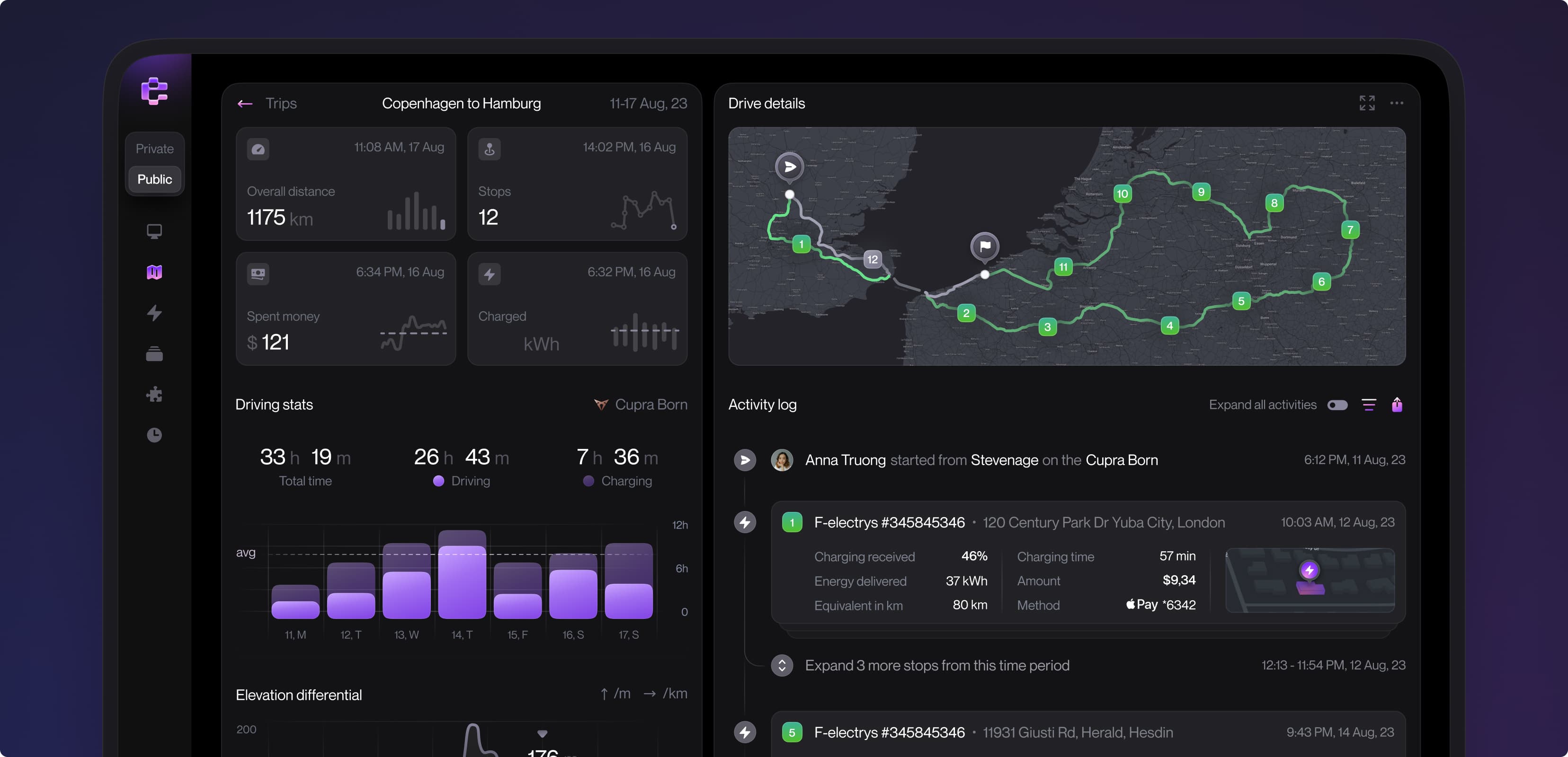

The electric vehicle (EV) revolution is here. In 2025, EV volumes accounted to 25.5% of market share. Looking ahead, the forecast is 43.2% of sales by 2030, and over 83% by 2040 (Source).
This means that for 1 in 4 drivers, the refueling experience has already shifted from a mundane 5-minute stop at a gas station to a new logistical challenge. In this new ecosystem, EV charging app development requires building a trusted and convenient tool.
At Fireart, we have seen that the biggest barrier to EV adoption today is what we call “charger station anxiety”. It’s the driver’s fear that when they arrive at the charging station, all spots will be taken, the station will be closed, or the app required to use it will fail.
Most existing solutions are unreliable. Drivers are forced to juggle 10 different proprietary apps, deal with “ghost chargers” (stations that appear available on the map but are actually broken), and navigate confusing payment flows. A truly smart EV charging mobile app must solve these friction points, with data reliability being the utmost requirement.
When we designed our award-winning EV charging concept Electrys, we aimed to fix the broken driver journey, turning a frustrating chore into a no-brainer experience. We started by conducting extensive research into customer pain points and requirements based on dozens of user interviews.
In this guide, we list the strategic and UX principles behind building a high-performance EV app and discuss how to design for the complex reality of the electric grid.
Article highlights
- The primary reason drivers abandon charging apps is a frustrating user experience. Issues like “ghost chargers” (broken stations shown as available) and payment friction instantly destroy user trust and lead to high churn.
- Effective app design must directly address a driver’s fear of being stranded. This is achieved through clear visual cues for charging speed, filtering to show only compatible connectors, and real-time data indicators.
- The app’s features depend on your role in the ecosystem. A Charge Point Operator (CPO) who owns hardware focuses on uptime and direct payments, while an e-Mobility Service Provider (eMSP) prioritizes roaming and partnerships.
- To succeed, an EV app must speak the language of the grid. It requires OCPP to communicate with and control the physical charging hardware, and OCPI to enable roaming, allowing your users to access all charging networks.
- The industry is moving toward authentication with ISO 15118, where the car itself handles payments. Your app’s backend must manage the cryptographic certificates required for this feature, which is becoming a key differentiator.
Table of contents
Considering building a smart EV charging app? Make use of our experience. Fireart can help you design a solution that delights users and scales across networks.
Explore our Product Design ServicesThe Broken Reality: Why UX Matters More Than Hardware
Here’s an expensive irony: we have futuristic vehicles capable of driving 300+ miles, yet the infrastructure supporting them often feels stuck in the early 2000s.
For a Charge Point Operator (CPO) or an EV startup, the mobile app is the primary interface of the product. If the hardware is working but the app crashes, the driver is stranded.
In our research, we found that user frustration stems from three failures:
- Ghost chargers.
Slower apps might show a station as "available," when in reality, it broke 20 minutes ago. This destroys user trust instantly. - Payment friction.
Users hate apps that force you to pre-load $20 just to charge $5 worth of electricity. - The app-charger delay.
A poor UI that doesn't explain the delay while the app communicates to the charger leads users to panic and abandon the session.
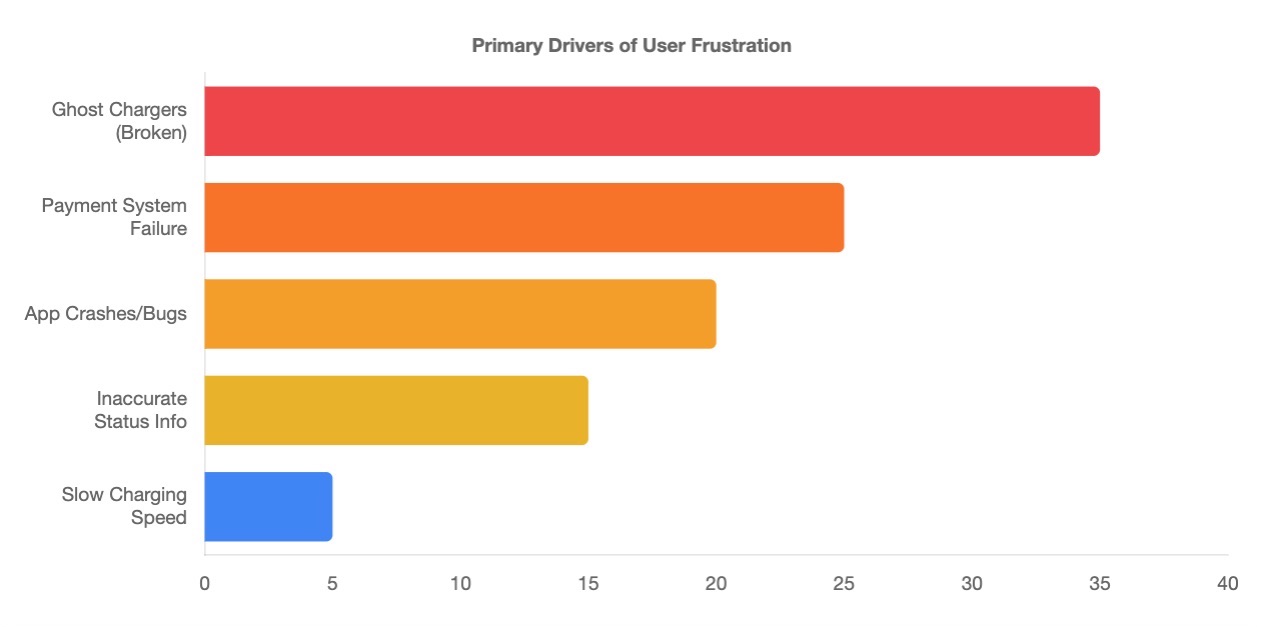
Effective EV charging app design is the only defense against these issues. The app that prioritizes real-time data transparency and removes friction is bound to win in the market crowded with "station locators," but starved for reliability.
Defining the Ecosystem: Fleet vs. Consumer Apps
Before writing code, you must define the operational model. The feature set for a public EV charging station app is vastly different from a B2B fleet management tool. Trying to serve both audiences with a single interface usually results in a product that serves neither well.
Consumer Apps (The Public Network)
For the everyday EV driver, the priority is convenience and speed.
- The User Goal: "I need to find a fast charger, compatible with my car, within the next 20 miles."
- Key UX Challenge: Reducing app fatigue. These users often have 5+ charging apps installed. To win their loyalty, your EV charging software development strategy must focus on allowing them to use one account across multiple networks and transparent pricing.
Fleet & Commercial Apps (The B2B Layer)
For logistics companies and corporate fleets, the priority is control and cost management.
- The User Goal: "I need to ensure my delivery vans are charged by 6 AM without triggering peak-hour electricity rates."
- Key UX Challenge: Telematics integration. These apps need deep visibility into vehicle location and state of charge (SoC). They require administrative dashboards for depot load management, which is automatic throttling of charging speeds to prevent blowing a fuse or massive utility demand charges.
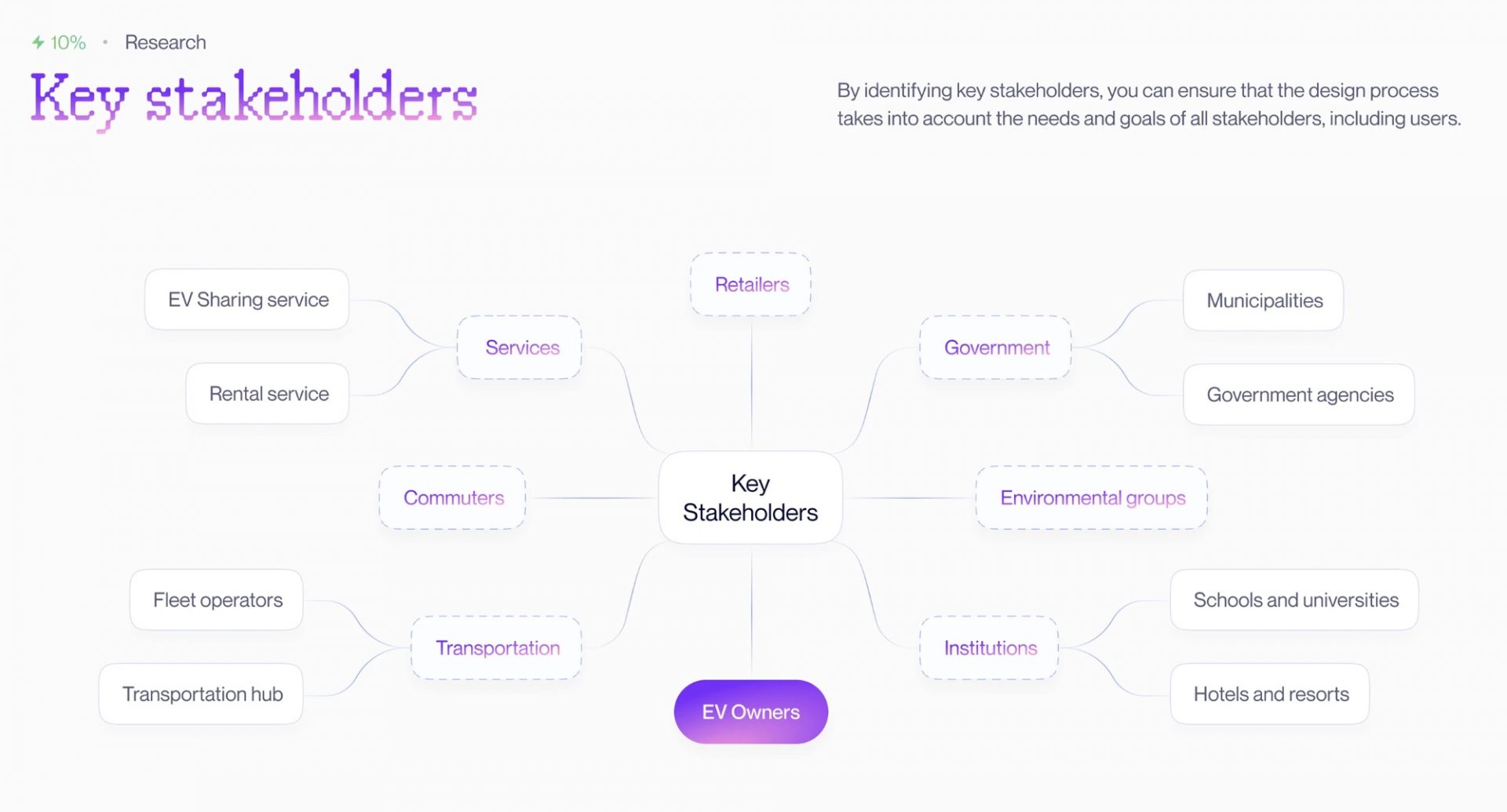
Understanding the difference between the key stakeholders of the EV charging ecosystem is critical. A consumer needs a pretty map; a fleet manager needs an audit trail for tax reimbursement.
The Business Model: CPO vs. eMSP
Beyond the user type, custom EV charging app development depends on where you sit in the value chain. Are you managing the metal or the relationship?
- Charge point operator (CPO):
You own and maintain the physical hardware. Your app is a "vertical" tool.- Focus: Hardware control, maximizing uptime, and direct payments.
- Focus: Hardware control, maximizing uptime, and direct payments.
- e-Mobility service provider (eMSP):
You don't own chargers. User relationship is your biggest concern. Your app is a "Horizontal" tool, like PlugSurfing or ChargePoint.- Focus: Roaming.
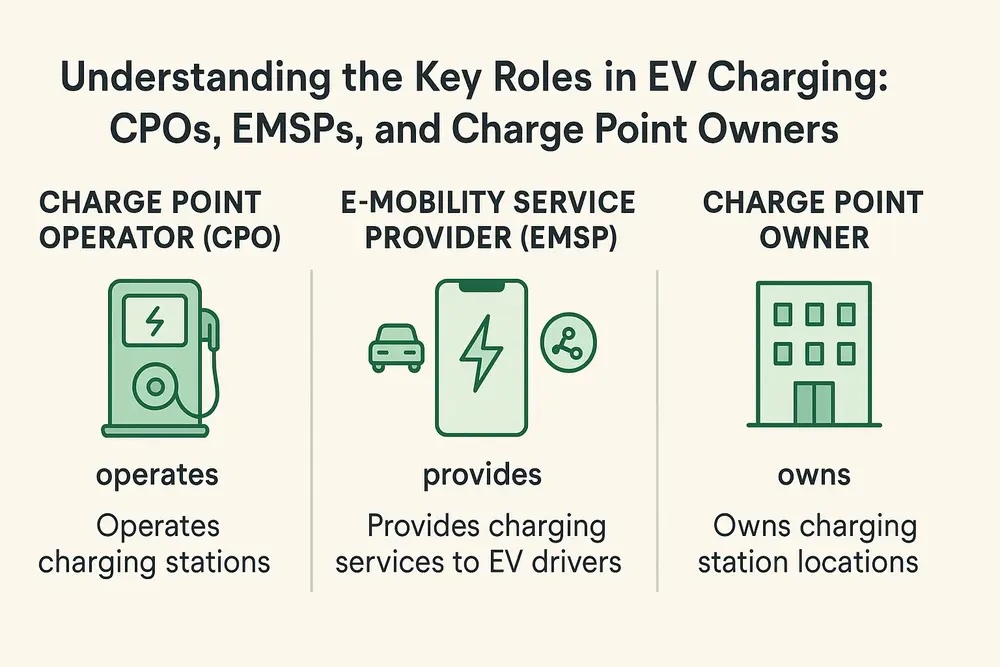
An eMSP cannot survive without OCPI (Open Charge Point Interface) integration. This protocol allows your app to talk to other networks. Without it, your app is a closed system where your users can only use your specific chargers. In a world where drivers demand universal access, it’s a recipe for churn.
Solving "Charger Anxiety" Through UX Design
Designing a smart EV charging app requires empathy for a driver who might be at 5% battery in the middle of a rainstorm.
At Fireart, we adhere to cognitive load principles. As we often discuss in our product design insights, when a user is driving at 65 mph, they cannot parse complex text. They need instant, visual confirmation of three things: Is it fast? Is it compatible? Is it working?
1. Visualizing Speed
The term "fast charging" is ambiguous. To a legacy EV, 50 kW is fast. To a modern Porsche Taycan, it is slow.
- The Fix: Use visual tiers on map pins: rapid (50–150 kW) and ultra-fast (150–350+ kW). Use color-coding or distinct iconography to differentiate. This prevents the frustration of a driver stopping for a 30-minute charge only to realize it will take 2 hours.
2. Connector Clarity
Driving to a station only to find the plug doesn't fit is a catastrophic failure of EV charging app ui design.
- The Fix: Filtering. During onboarding, ask the user to select their vehicle model. The app should then strictly filter the map to show only compatible stations (e.g., hiding CHAdeMO plugs for a CCS driver).
- If a station has 4 plugs but only 1 matches the user's car, the map pin should reflect the availability of that specific plug.
3. Designing for Real-Time Trust
The ghost charger phenomenon, when an app says "Available" but the charger is broken, is usually a data latency issue.
- The Fix: Many older apps refresh data every 60 seconds. In the EV world, a minute is an eternity. We advocate for using WebSockets instead of polling to push status updates the millisecond they happen.
- Use a "Last Updated" timestamp or a pulsing "Live" indicator on the station card. This visual cue reassures the user that the data is fresh and helps build trust.
| ❌ HTTP Polling (60s delay) | ✅ WebSockets (Real-time) |
|---|---|
| App says "Available" while the real charger is broken. | Shows the charger breaking and the app updates instantly to "Unavailable." |
Core Features That Prevent User Churn
While a map is the baseline, retention comes from features that solve the logistical headaches of EV ownership. To create a sticky EV charging app, offer intelligence beyond basic utility.
Smart Filters & Route Planning
Most drivers don't need "all" chargers; they only need the right charger.
- The "SoC" Factor:
Advanced apps integrate with the vehicle's telemetry to read the State of Charge (SoC). - The Benefit:
Instead of a generic route, the app says, "You will arrive at Station B with 12% battery." If the terrain is hilly or the weather is cold, the app adjusts the prediction. This eliminates the anxiety and increases trust.
Seamless Payments
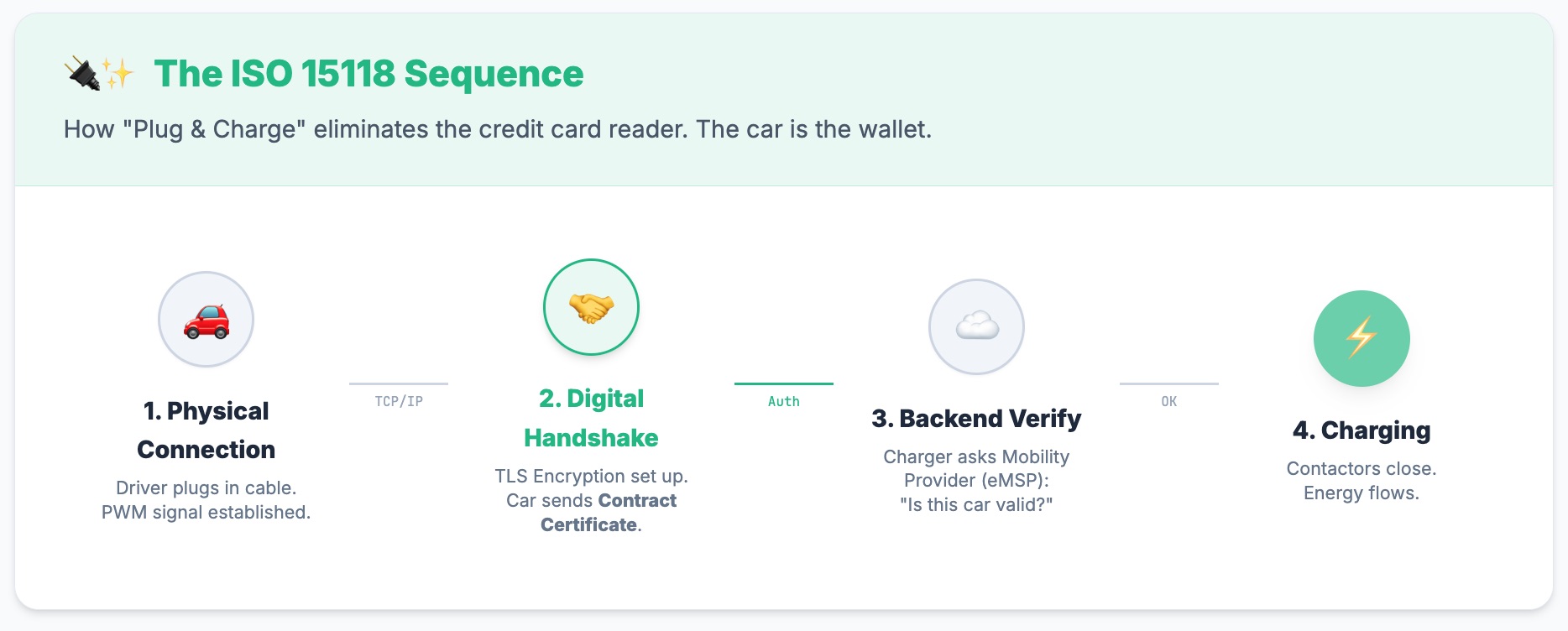
Payment friction is the number one complaint in user reviews.
- Avoid forcing users to pre-load funds. It feels predatory. Support direct credit card payments or Apple/Google Pay.
- ISO 15118 Support:
The industry is moving toward Plug & Charge. This standard allows the car to authenticate itself automatically when plugged in. Your backend architecture must be ready to manage the cryptographic certificates that make this possible.
Real-Time Session Live View
Once the car is plugged in, the user leaves. The app is their only link to the car.
- The Feature:
A remote monitoring dashboard showing charging speed (kW), current SoC, and time to full. - The Value:
Push notifications for critical events like interruption of charging or reaching the target prevent the dreaded penalties for blocking a spot after charging is done.
The Tech for Scalability
For a Product Owner, the challenge of building EV charging app functionality is picking the architecture that supports it. A scalable app stands on two pillars: protocol compliance and geospatial tech.
Protocols: The Language of the Grid
You cannot build an isolated app. It must speak the global standards.
- OCPP (Open Charge Point Protocol):
This is the internal language between your backend and the physical charger. It handles the command to "Start Charge" or "Unlock Cable." - OCPI (Open Charge Point Interface):
This is the external roaming layer. It allows your app to connect with other networks (e.g., ChargePoint users charging at EVgo stations). - Why it matters: If you skip OCPI, you limit your user base to only your own hardware. If you skip OCPP, you are locked into a single hardware vendor.
Mapping Engines: Mapbox vs. Google Maps
Geospatial data is the core interface.
- Google Maps:
Excellent for POI (Point of Interest) data and address accuracy. - Mapbox:
Often the superior choice for custom EV charging app development. Its routing engine is highly customizable, allowing developers to visualize how far you can drive with current battery and factor in elevation changes, which critically impact EV range.
Need an expert team to turn your EV app idea into reality? Fireart can handle end-to-end mobile app development, ensuring your tech stack is secure and compliant with global standards.
Develop your EV appReal-World Example: The Electrys Case Study
To prove that design drives adoption, look at our EV charging app design case, Electrys. It is a conceptual product we developed to solve the fragmentation of the EV market.
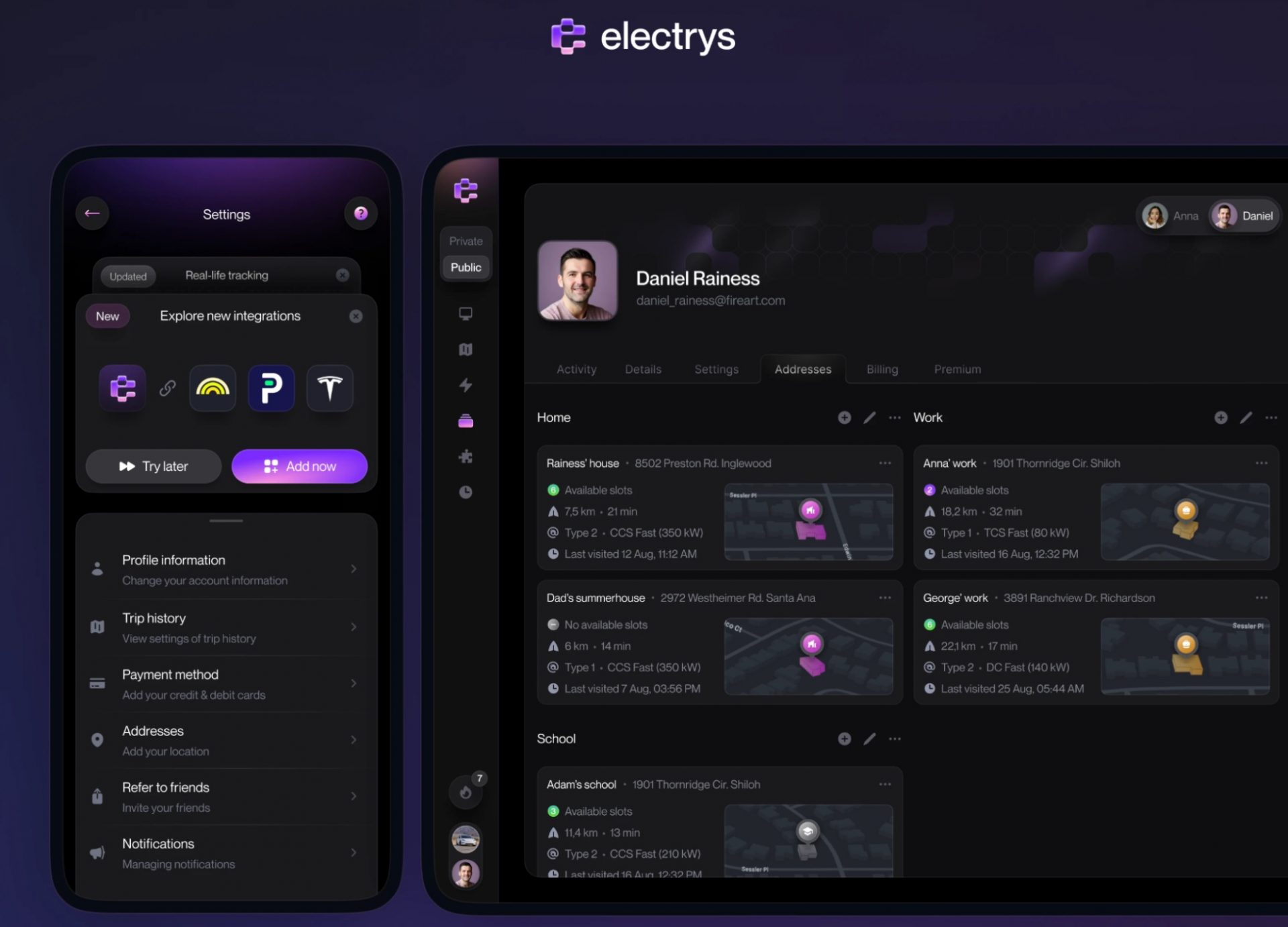
Applying design thinking for apps, our research revealed a core emotional barrier: charging is boring. It is a "dead time" chore. To fix this, we built an engagement engine.
Design Fixes:
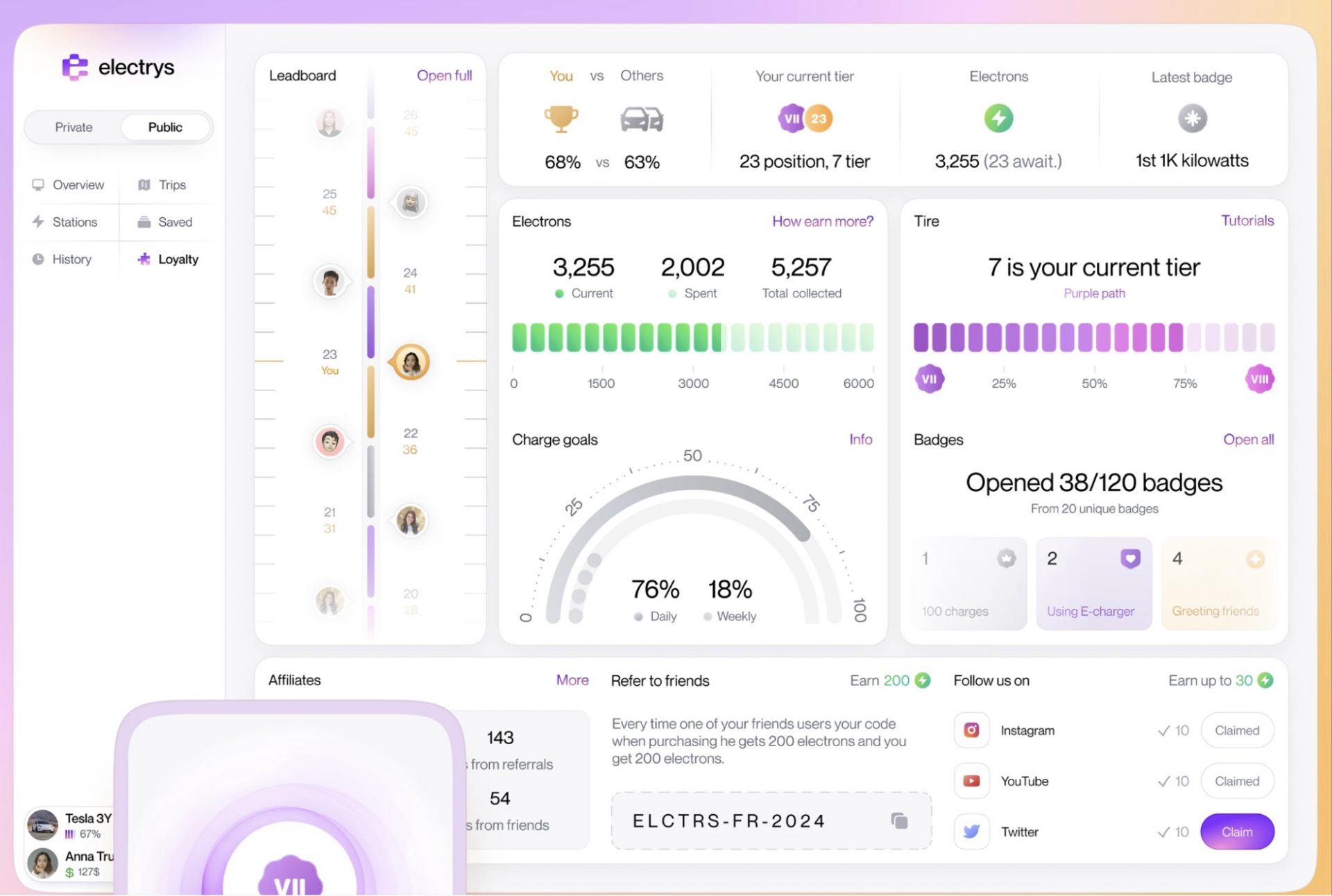
- Gamification:
We introduced an "Electron" points system. Users earn rewards for reviewing stations (improving data quality for everyone) or choosing off-peak charging times (helping the grid). This turns a passive wait into an active, rewarding loop.
- Sci-Fi Aesthetics:
We moved away from the sterile "utility bill" look of competitor apps. Using a dark-mode-first interface with neon accents, we evoked the high-tech feel of the vehicles themselves, aligning the app with the premium nature of the EV ownership experience.
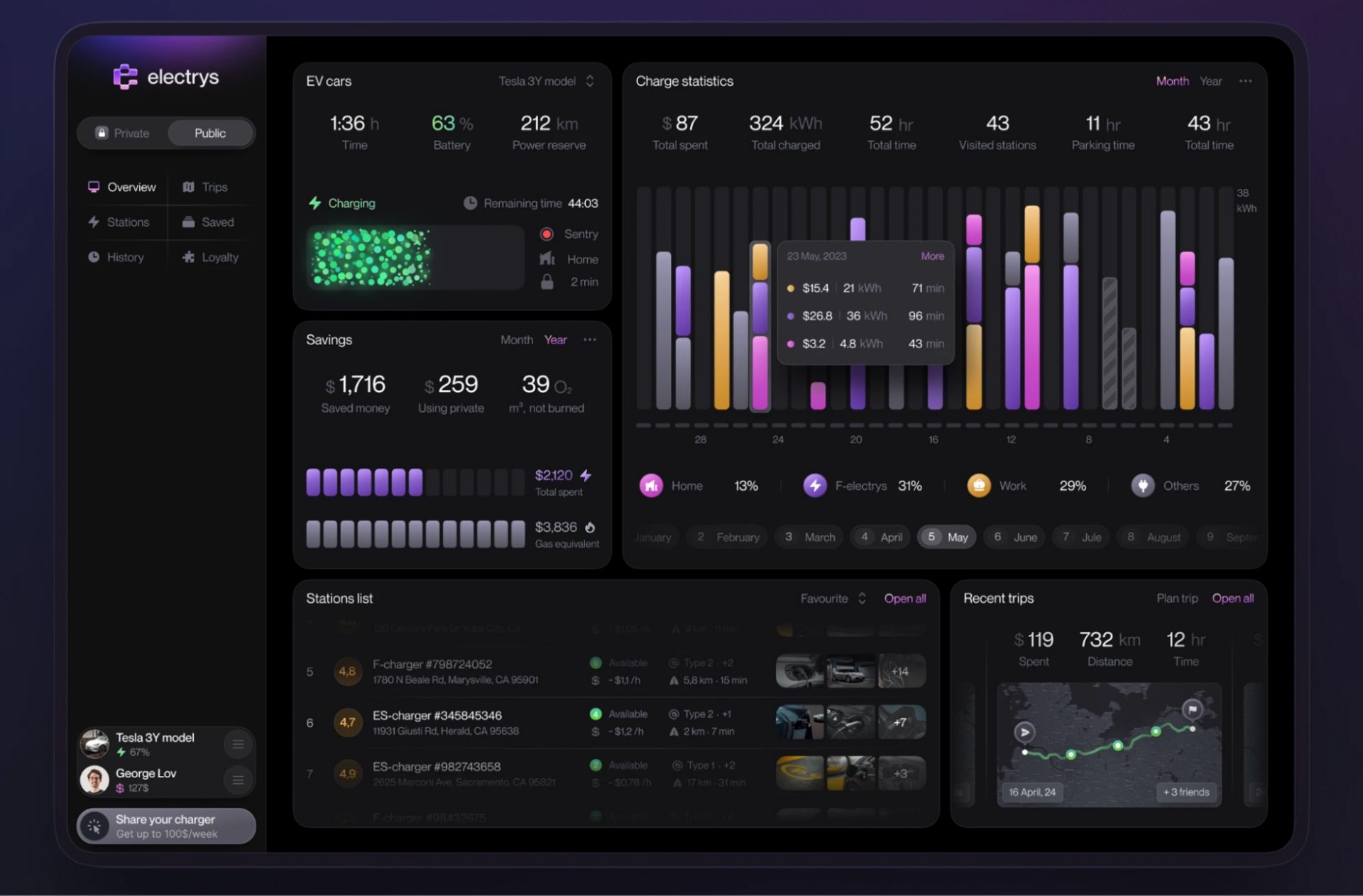
The result was a platform that was genuinely useful on multiple levels and built loyalty.
Conclusion
In the race to electrify the planet, software is the bottleneck. The hardware is ready, but the user experience is lagging behind.
Effective EV charging app development is about closing this gap. It requires a blend of empathy (solving anxiety), design (visualizing data clearly), and engineering (real-time protocols). By prioritizing reliability over novelty, you can build a solution that attracts users and earns their trust, keeping them loyal.
Start building your EV app today. Fireart’s experienced mobile development team is ready to help you navigate the grid.
Contact usFAQ: Common Questions About EV App Development
How long does it take to develop a smart EV charging app?
A basic MVP development phase focusing on station location and payments typically takes 3–4 months. An enterprise-grade solution with roaming (OCPI), telematics integration, and fleet management dashboards can take 6–9 months depending on complexity.
What is the difference between OCPP and OCPI?
OCPP connects the charger to the backend (allowing you to control the hardware). OCPI connects your backend to other networks (allowing your users to roam). You generally need both for a scalable commercial product.
How do we prevent "Ghost Chargers" in the app?
By using persistent data connections like WebSockets or MQTT instead of standard HTTP polling. This ensures that if a charger goes offline, the app status updates in milliseconds, not minutes.
Can we integrate "Plug & Charge" (ISO 15118)?
Yes, but it requires a strong backend capable of managing “Contract Certificates.” Your app essentially becomes a digital wallet that passes encrypted keys to the car, requiring banking-grade security standards like ISO 27001.
How much does EV app development cost?
Costs vary by scope. A simple locator app might start around $40k–$60k. A fully integrated eMSP platform with custom roaming billing engines and fleet features can range from $100k to $250k+.