

Intangible assets like brand equity account for 90% of the S&P 500’s value. Branding for tech companies is a core financial asset, yet founders focused on product-led growth often treat it as a nice-to-have.
This is a mistake. Weak tech company branding kills growth. It erodes trust, blurs differentiation, and lengthens sales cycles. It also makes it harder to hire engineers. If you cannot tell your story, your features do not matter.
At Fireart, we engineer tech branding like we engineer software. Our work with Replicant, a leader in conversational AI, remains one of our favorite tech branding case studies. It was a complete brand transformation. We replaced a generic identity with a human-centric brand that reflected their Thinking Machine™. This identity helped them stand out and contributed to their $78M funding round.
Article highlights
- Strong branding captures the buyers who are not yet in-market, reducing your reliance on paid ads and lowering customer acquisition costs.
- Technical audiences ignore marketing fluff in favor of product truth. Signal competence through performance, documentation, and high-precision aesthetics.
- Use systematic process for category design to align your brand DNA with your product interface and build a defensible moat against competitors.
- Most rebrands fail by focusing on aesthetics rather than business truth. Common anti-patterns lead to market confusion and erased differentiation.
Table of Contents
Fireart helps technology companies create scalable brand identities that resonate with investors and talent.
Explore our branding servicesThe economic case for branding in tech
The importance of branding for tech companies goes beyond aesthetics; it is a driver of financial performance. Investors, customers, and talent respond to the signals a strong brand sends.
| Metric | Weak Brand | Strong Brand |
|---|---|---|
| Sales Cycle | Long, friction-heavy, high risk | Short, trust-led, faster approval |
| CAC | High (reliant on paid search) | Low (high organic & mental availability) |
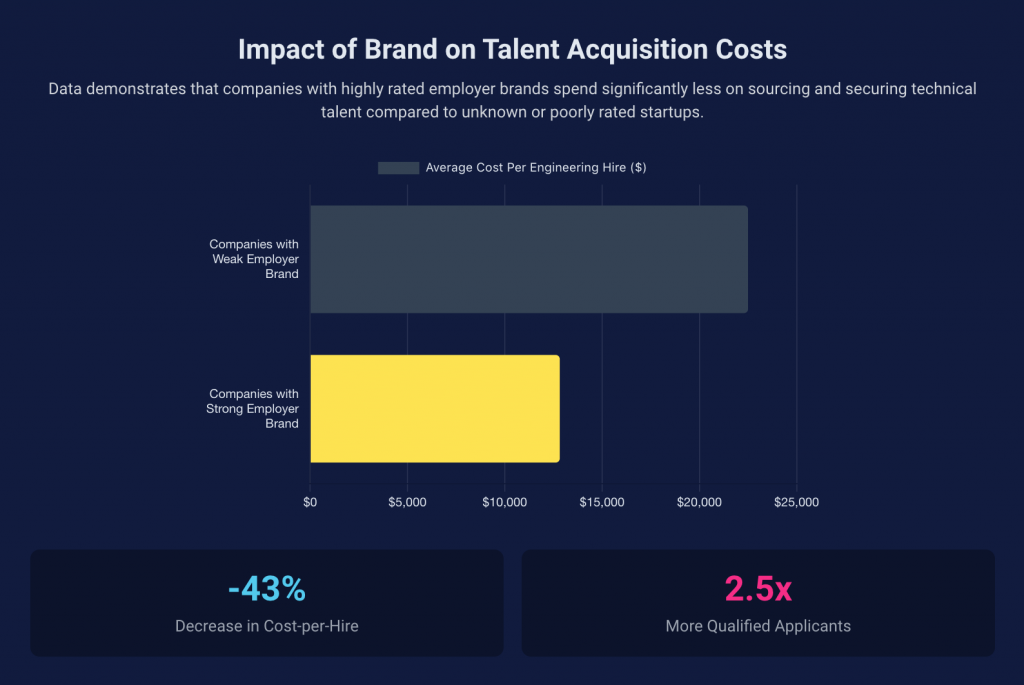
| Talent | High cost-per-hire; lower acceptance | Talent magnet; lower recruitment costs |
| Valuation | Based strictly on features/revenue | Multiplier based on “moat” and equity |
A valuation multiplier
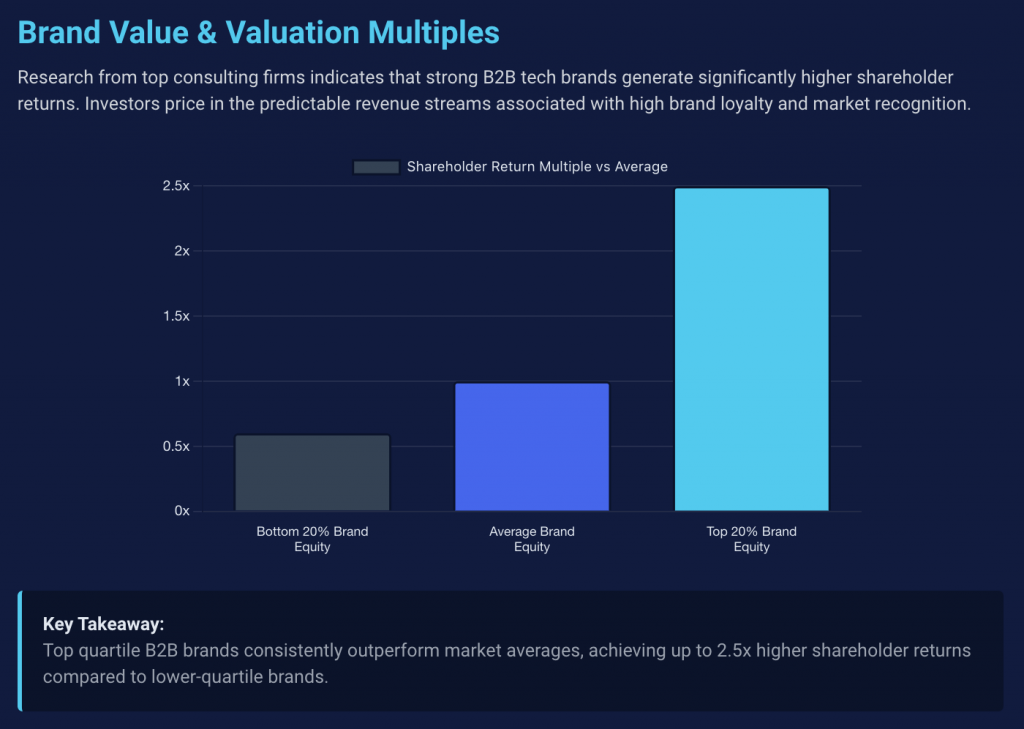
A strong brand is a leading indicator of stability that investors price into a company’s valuation. Well-managed brands outperform the market benchmark by 74%.
Branding signals a defensible moat. It implies pricing power, customer loyalty, and predictable revenue. In public and private markets, tech brand positioning influences P/E ratios and commands higher multiples during funding rounds or M&A.
The “95-5 rule”: slashing CAC
Marketing budgets are often wasted competing for the 5% of B2B buyers currently in-market. This is an expensive fight for bottom-of-the-funnel clicks.
A powerful technology brand strategy targets the other 95% – future buyers who are not yet looking for a solution. By building brand awareness through a clear positioning, you ensure your company is on the shortlist before a buyer even contacts a vendor. This reduces your reliance on paid ads and lowers your overall customer acquisition cost (CAC).
The trust premium
Tech products – especially B2B software – are intangible and often represent an operational risk. Buyers cannot physically inspect code or test every integration. The purchase is an exercise in risk aversion.
A strong brand identity for tech companies acts as a trust signal. A professional website and polished product UI communicate competence. This trust premium shortens the B2B sales cycle by giving procurement and legal teams the confidence to approve a purchase with less friction.
The skeptic’s gauntlet: Why tech audiences reject marketing fluff
Effective tech branding requires navigating the deep-seated skepticism of its target audience. Engineers and technical founders have a powerful BS detector. They are hostile to traditional marketing. To earn their trust, a brand must pass their gauntlet.
“Product truth” vs. “marketing BS”
On forums like Hacker News, users ignore buzzwords like synergize your workflow. They want product truth.
Instead of being sold a vision, they want to:
- Read your API documentation.
- See your latency metrics.
- Explore your GitHub repository.
For this group, credibility is built on performance and transparency. Technical audiences want to read your API documentation, see your latency metrics, and explore your GitHub repository. Speed is a brand attribute. If your software company branding promises innovation but the product feels janky, you lose trust.
Visuals that signal competence
In the past, whimsical vector illustrations — often called Corporate Memphis or Alegria— made complex tech feel approachable. But preferences have evolved.

If you sell infrastructure or developer tools, playful art direction can create a mismatch. Technical buyers on Reddit or X often view whimsical illustrations as a signal that a product lacks depth.
The current premium aesthetic, known as linear-core, signals precision. It features:
- Dark mode with desaturated backgrounds.
- Subtle glows and grid lines that evoke a developer environment.
- Bento grids that allow users to scan complex info quickly.
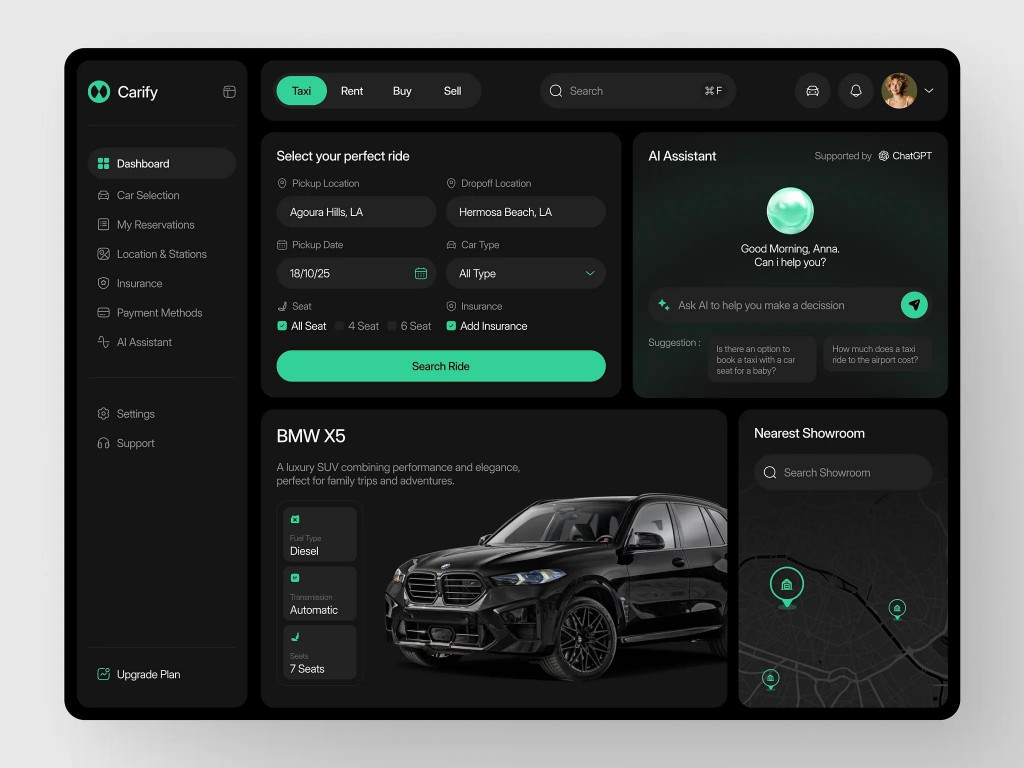
This digital branding for tech companies connects the visual identity directly to the product’s perceived competence. However, these trends are becoming ubiquitous, and a strong brand must use them as a foundation, not a crutch, to build a truly unique identity.
The tech branding playbook: A step-by-step guide
Branding for tech companies is a systematic process of engineering a business asset. Here is the step-by-step methodology we use that expands on the core branding design principles for startups and scales them for enterprise growth.
Step 1: Category design
Trying to be “a better version” of an existing product leads to feature wars. Focus on category design instead for a strong technology brand strategy and meaningful innovation in product design for companies.
The goal is to define a new problem that only you can solve, prompting the market to demand your specific solution. The company that successfully defines a new category (the “Category King”) captures approximately 76% of that category’s market cap.
Salesforce built a better CRM, but that wasn’t all – they designed the “Cloud Computing” category. This is the ultimate goal of tech brand positioning.
Step 2: Define the core identity
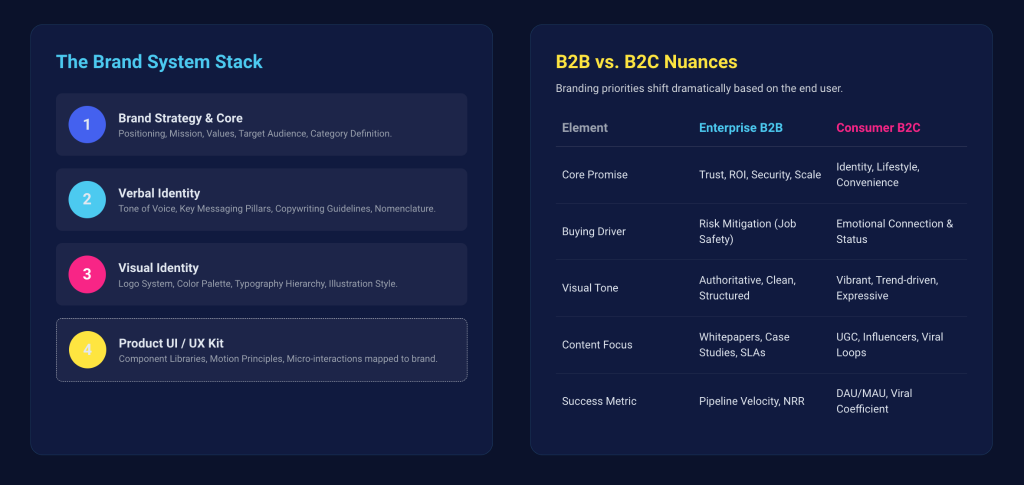
Before any design work begins, codify your brand’s DNA. This includes:
- Value Proposition
What is the one, undeniable promise you make to your customers?
- Brand Personality
If your brand were a person, would they be the wise mentor, the witty rebel, or the reliable expert?
- Voice & Messaging
Define the specific words you use and, more importantly, the ones you avoid. Does your brand say “utilize” or “use”? Does it address readers as peers or as esteemed clients?
Step 3: Build the visual system
This is where strategy becomes tangible. A visual system is an entire language of colors, typography, and imagery.
How did we build visual system for Replicant:
Replicant’s old brand felt cold and generic. It failed to communicate their core advantage: a powerful “Thinking Machine™” built by customer service veterans. It signaled “human replacement,” not “human empowerment.”
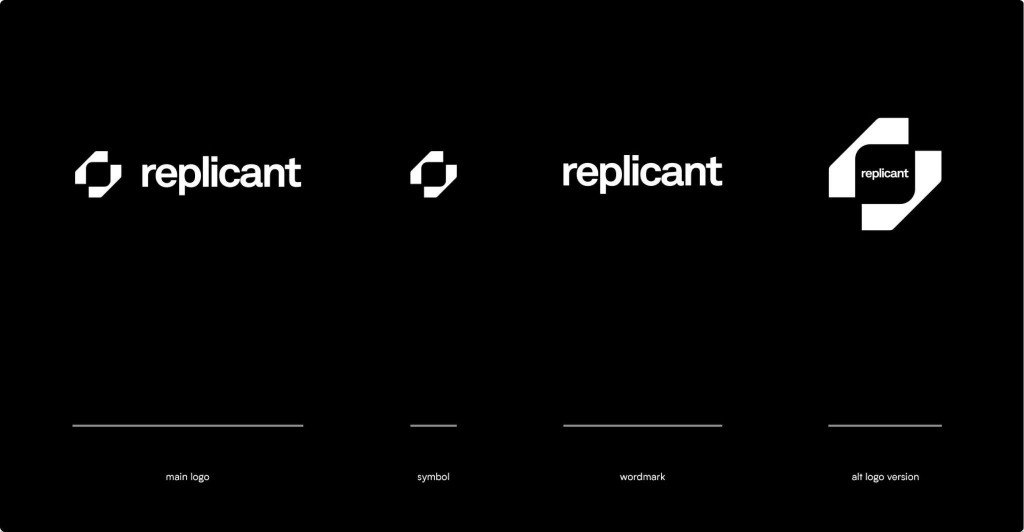
We created a new duality-driven identity:
- A visual system built on contrasts – warm vs. cool colors, sharp angles vs. organic curves to represent harmony between machine intelligence and human empathy.
- Fluid, interconnected shapes to visualize the AI as a constantly learning ecosystem.
- A new logo concept that wasn’t in the original scope but resonated so strongly it became a cornerstone of their new identity.
The result was a trustworthy brand identity for tech companies that helped Replicant connect with enterprise clients and investors.
Step 4: Align brand and product
A damaging brand mistake a tech company can make is having a stunning marketing website that links to an off-brand product interface. This disconnect shatters user trust.
To prevent this, operationalize the brand through a design system. A centralized library of components ensures every button and error message is on-brand. Alignment is critical for a consistent experience.
Common anti-patterns: The rebranding graveyard
Despite the high financial stakes, rebranding initiatives in the technology frequently fail. These failures are rarely the result of a “bad logo.” In our experience, tech company branding projects usually die by falling into one of these three common anti-patterns.
The cosmetic trap
Also known as “lipstick on a pig.” Rebrands fail when they are initiated because a founder is bored rather than because the business has evolved. Updating graphics while leaving a 2012-era spreadsheet software interface creates a disconnect.
A rebrand must be the visual manifestation of a business truth, not an aesthetic facelift.
The authenticity gap
A brand is a contract. If your new tech brand positioning promises autonomous AI workflows but the product requires heavy manual configuration, you destroy trust. Technical buyers do not forgive broken promises.
We see this frequently in the AI sector where software company branding promises “frictionless AI workflows,” but the underlying product still requires heavy manual configuration.
Erasing differentiation
Startups often strip away the idiosyncratic elements that built their initial loyalty to expand their total addressable market and appeal to a broader enterprise audience.
They adopt generic SaaS blue and sanitized copy. This is a fatal error in b2b markets. Great brands stand against something. If your tech branding looks like your competitors’, you have erased your advantage.
| Anti-Pattern | The Symptom | The Result |
|---|---|---|
| Cosmetic Trap | Changing the logo for no reason, because you’re “bored” | Market confusion; wasted budget |
| Authenticity Gap | Marketing promises more than the code delivers | Loss of trust; high churn |
| Erasing Differences | Removing unique edges to look “corporate and professional” | You blend in; zero differentiation |
How Fireart approaches tech branding
At Fireart, we treat digital branding for tech companies as an engineering discipline. We know that a pretty logo won’t survive the scrutiny of a technical buyer.
Here is how we partner with founders and product teams to get it right:
1. Strategic alignment
We start with your business model, not mood boards. We help you find a product truth you can actually defend and lock in a tech brand positioning that avoids the trap of generic marketing fluff.
2. UX-driven visual identity
We ensure your visual identity translates to the product UI. Whether you are an early-stage startup or an established enterprise, our branding process with deep expertise in product design ensures your visual identity translates into the product UI.
3. Design systems
A brand only works if it survives contact with reality. We operationalize your new brand identity for tech companies into a comprehensive design system. This provides your engineering and marketing teams with coded components and typography scales. This bridges the gap between your marketing site and your application.
Looking for a branding partner who understands technology products?
Let’s talk about your brandConclusion
Raw technical features are rapidly commoditized. The ultimate defensive moat is the emotional real estate of your company – your brand.
Branding for tech companies done via well-executed technology brand strategy brings valuation multiples, accelerates B2B sales cycles, and reduces cost of acquiring talent.
Ready to build a brand that supports your technology and business growth?
Contact us todayFAQ: Common questions about technology branding
What’s the difference between branding for a tech startup and an enterprise tech company?
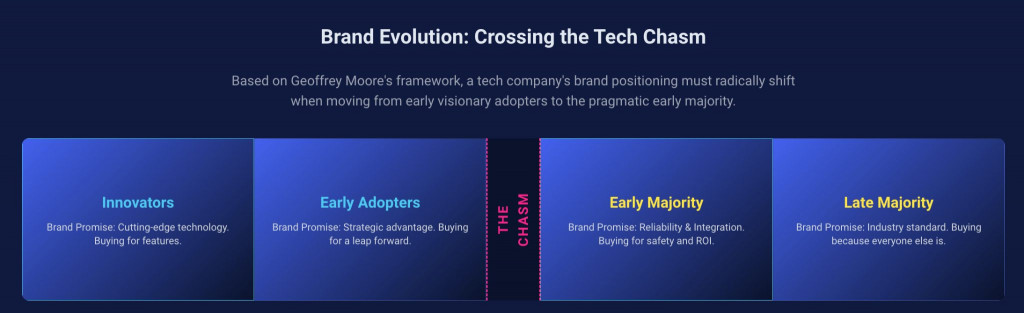
It comes down to the audience’s risk tolerance. Early-stage startups target visionaries. Enterprise tech brands target pragmatic buyers (like CTOs and procurement teams). The brand messaging must evolve from “disruptive” to “reliable” as the company scales.
How does branding align with product design and UX in tech companies?
The User Interface (UI) is the primary manifestation of a tech brand. If marketing promises a “frictionless solution” but the application’s UX is clunky and slow, it destroys trust. The solution is creating a design system that standardizes visual rules across marketing and product touchpoints.
Can a tech company build a strong brand without a massive marketing budget?
Yes. In the technology sector transparency often outperforms massive ad spends. Many successful brands built cult followings by focusing strictly on the developer experience (DX) and delivering lightning-fast app development.
How does a strong brand identity impact technical hiring?
Top-tier engineers evaluate opportunities based on the brand narrative and engineering culture. A strong employer brand acts as a talent magnet, reducing your cost-per-hire.
What should tech companies prepare before working with a branding agency?
Before engaging an agency for your tech company branding, define your strategic business goals (e.g., raising a Series B, targeting enterprise accounts, entering a new market). Bring your raw technical documentation, competitive analysis, and a clear understanding of your ideal buyer’s daily workflow. An expert agency will ask about your fundamental business reality.




 Kotlin
  C++
C++  C#
C#  Ruby on Rails
  Java
Java  Firebase
  Python
  Vue.js
  HTML5
HTML5  CSS3
CSS3  Azure
Azure