

The software industry operates with enormous failure rates. How to choose a web development company becomes a major question for a founder or CTO facing this high-risk financial decision.
Roughly 70% of all software projects face budget overruns or delays, and nearly a third are canceled before reaching production. The failures stem from misaligned scope, poor requirements specifications, and technical debt.
Standard advice suggests checking reviews and portfolios. But building a scalable SaaS platform requires more. You must audit deployment pipelines and understand infrastructure costs.
At Fireart, we build digital products from scratch and rescue failing ones. We know the difference between a transactional code vendor and a strategic product partner. Whether you need full-cycle delivery or IT staff augmentation services to strengthen your in-house team, your vetting process must be technical.
Article highlights
- Do not underestimate the cost of technical debt. Poor vendor code can consume 50% of your IT budget.
- Avoid the feature factory. Identify partners who validate business logic and challenge assumptions.
- Protect your IP. Establish legal and operational boundaries to prevent code hostage situations.
- Keep an eye on architectural documentation. Request infrastructure documentation and CI/CD pipelines during the vetting phase.
Looking for a reliable web development partner? Let’s talk about the technical decisions you need to make today.
Review our web development approachThe high cost of the wrong partner
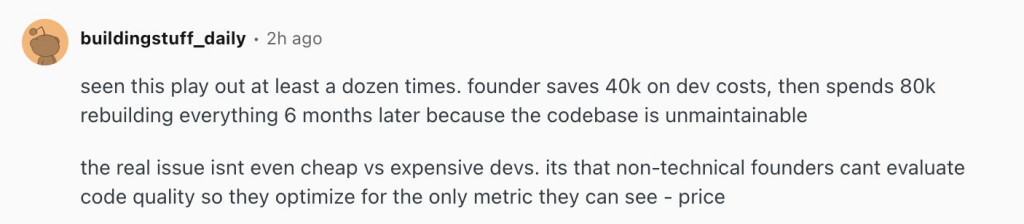
Contracting an agency that prioritizes sprint deadlines over scalable code imports technical debt. This debt acts as a shadow tax. Industry analyses show that in organizations saddled with technical debt, up to 50% of the IT budget is spent maintaining the system and fixing bugs.
Structural flaws caught during planning cost little to fix. Flaws that reach production cost exponentially more to resolve.
Code vendors vs. product partners
Understanding how to choose a good web development company starts with understanding the two types of agencies in the market.
| Agency Type | Motivation | Outcome |
|---|---|---|
| Code Vendor | Volume and billable hours | Executes specifications without question; results in brittle code. |
| Product Partner | Business objectives and user outcomes | Challenges logic; prioritizes scalability and market impact. |
The code vendor operates as an assembly line. They take your specifications and type what you tell them. They do not question your business logic or validate whether a feature is needed.
The product partner operates as an extension of your business utilizing a problem-first approach. They understand that a designed button is useless if the underlying database query takes five seconds to load.
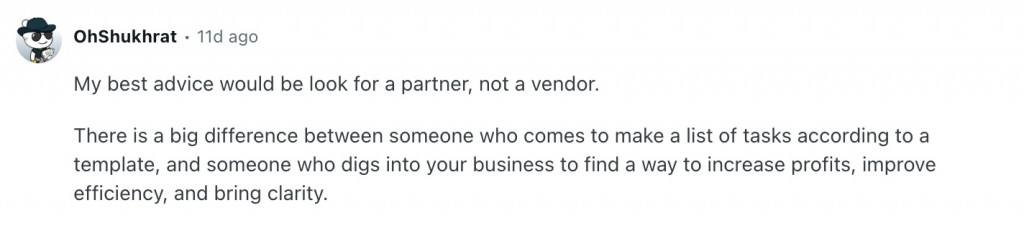
When choosing a tech stack or planning a roadmap, a true partner prioritizes business impact over immediate billing. The following criteria will help you separate the partners from the vendors.
10 criteria for choosing a web development company
Choosing a web design company based on per-hour cost comparisons is a false economy. Evaluate agencies through a technical lens to protect your capital. Here are the criteria experts use to vet development partners.
1. Product thinking vs. the feature factory
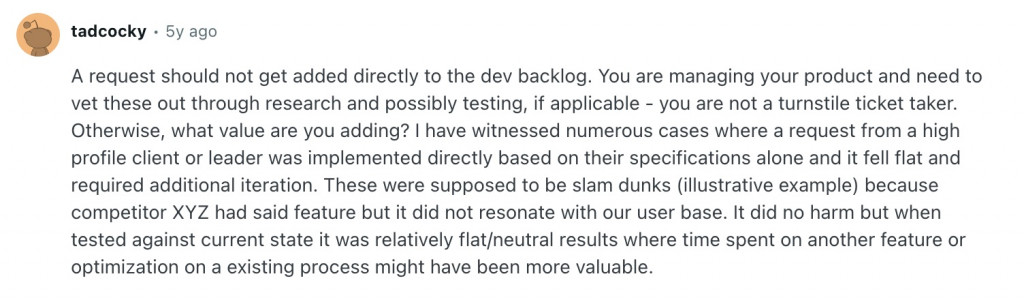
Look for an agency that prioritizes the business value generated by new features. Agencies that blindly execute requests operate as feature factories.
A product partner focuses on discovery. During the vetting process, ask them about a time they advised a client to abandon a requested feature. If they cannot provide an example, they are likely order-takers. Look for teams that tie technical initiatives to clear business outcomes (OKRs) and integrate user feedback into the development cycle. Look for teams that tie technical initiatives to clear business outcomes (OKRs) and integrate user feedback into the development cycle.
2. Architectural sanity over visual portfolios
Engineering leaders evaluate database schemas and system design. A UI built on top of an unscalable backend will crash under loads.
When evaluating companies, ask to see the technical documentation from their past projects. Look for Architecture Decision Records (ADRs) that explain why they chose a specific technology. Request entity-relationship diagrams or infrastructure maps. If their developers cannot speak about the scaling challenges they overcame on a portfolio project, they lack seniority.
3. Rigorous CI/CD and testing standards
You can audit the operational maturity of how a vendor handles code. High quality is enforced through automated guardrails.
Elite agencies utilize continuous integration and continuous deployment (CI/CD) pipelines. Ask potential vendors about their testing thresholds and pull request (PR) gating. Automated checks like static analysis and unit tests must be required before any new code merges into the staging environment.
4. Intellectual property ownership guarantees
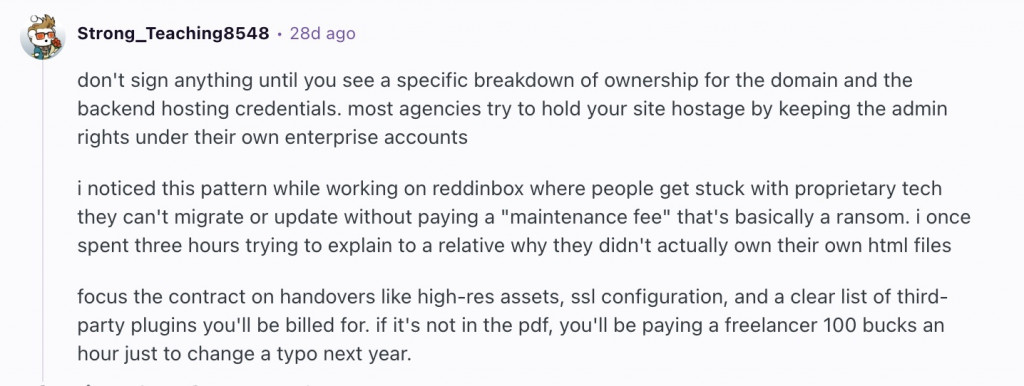
Allowing a third-party vendor control over the codebase and deployment infrastructure creates a vulnerability. Bad actors can weaponize this access, holding your source code or domain names hostage to force contract renegotiations.
To prevent a code hostage situation, establish digital ownership from day one. You must legally and administratively own the AWS/GCP root accounts and the master GitHub repository, with vendor granted restricted access. Mandate daily code commits to your repository. Professional developers do not resist daily commits.
5. Transparent pricing and hidden costs
Providers offering the best web development services are transparent about the total cost of ownership. Comparison based on the hourly development rate is a shortcut to budget evaporation.
Regardless of whether you choose a fixed price or time and materials (T&M) contract, audit the proposal for hidden costs. Three common traps include:
- Omitting the hours required to set up cloud environments and CI/CD pipelines.
- Relying on third-party plugins to speed up initial development.
- Contract clauses requiring you to pay a final IP release fee to officially hand over your source code.
| Cost Trap | Description | Fireart Solution |
|---|---|---|
| Buried DevOps | Omitting hours for cloud setup and CI/CD pipelines. | Full transparency on infrastructure engineering. |
| Proprietary Licensing | Using third-party plugins that require recurring fees. | Focus on open-source or fully owned assets. |
| IP Release Fees | Buyout fees required to officially hand over source code. | Immediate grant of ownership in the contract. |
6. True agile vs. fake agile
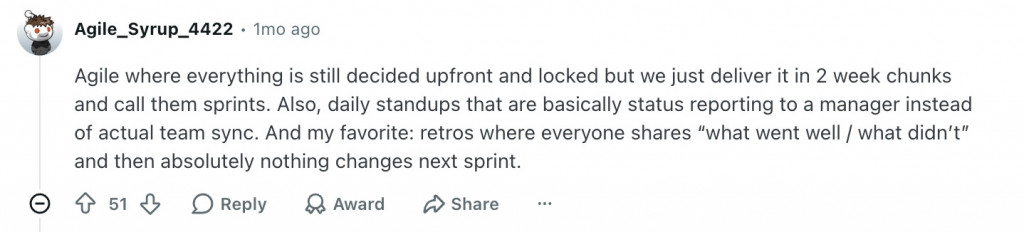
Agile methodologies are great for collaboration and adapting to user feedback. Many outsource agencies use the terminology of Agile over rigid processes – a phenomenon known as fake agile.
What to consider when hiring a web developer is how they run their teams. If project managers use the daily standup meeting to demand status updates and track billable hours, the process is flawed. In an Agile environment, standups clear technical blockers, and the team is empowered to suggest refactoring. Fake agile results in software that technically meets requirements but is structurally brittle.
7. Deep UX/UI integration
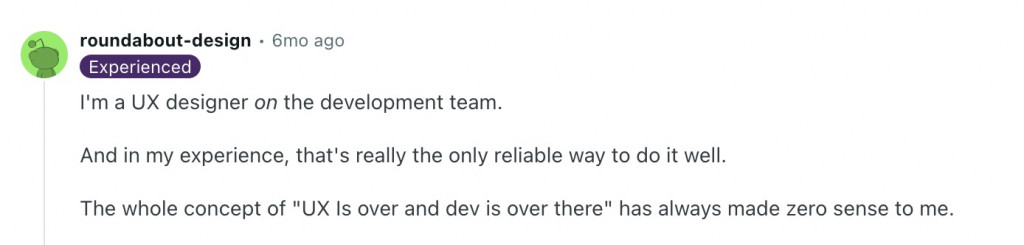
When developers execute code without validated designs, it leads to a disjointed user experience. The interaction between frontend logic and user interfaces requires specialized planning.
When evaluating how to choose a web development company, prioritize agencies with integrated design capabilities. Design-led development validates the user journey; the synergy between UX researchers and engineers prevents costly rework.
8. Bait and switch protection
The bait and switch occurs when an agency presents senior-level software architects during the sales pitch, only to swap them out for junior developers once the contract is signed.
Demand transparency about who works on your project. Your contract should specify the exact senior personnel assigned to your project, requiring your explicit approval before key roles are rotated. If you are utilizing software team extension, insist on interviewing the specific developers who will touch your code and including them into syncs.

9. Specific domain and tech stack expertise
If you are building a HIPAA-compliant healthcare portal, an agency experienced in Shopify e-commerce stores brings regulatory risks.
When discussing the web development tech stack, the agency must provide verifiable proposals and past projects in your ecosystem. Orchestrating LLMs for an AI integration requires a different skill set than CRUD application development. Look for specialized, recent expertise.
10. Post-launch SLAs and warranty governance
The true test of code quality begins at launch. Agreements that omit ongoing support are covers for post-launch abandonment.
Expert evaluation demands post-launch governance. Look for best web design service providers that offer 30-to-90-day defect warranty periods. Ensure service level agreements (SLAs) contain financial penalties for failing to meet guarantees.
Why companies choose Fireart as a web development partner
We are businesspeople serving businesspeople. We think in terms of your product’s success, as this means our success, too.
By choosing our development team, our clients make an investment in their business goals. We utilize a design-led, product-first approach, and we don’t hold back our doubts, advice, and challenging assumptions early to build products that scale securely.
We guarantee transparency regarding intellectual property, infrastructure, and team allocation. We build solutions supported by CI/CD pipelines, automated testing, and scalable architecture so debt never bottlenecks your growth.
If you need a dedicated team to build a SaaS platform or a web development company to augment your resources, we can help you reach your market objectives.
Have a project in mind? Let’s build a great product together.
Get a Technical Assessment TodayConclusion
Deciding how to choose a web development company dictates your time-to-market and security. The right partner accelerates delivery and gives you a scalable foundation.
By auditing CI/CD pipelines, demanding IP protection, and insisting on product thinking you can evaluate how an agency operates. Establishing legal governance, warranty periods, and clear communication standards helps you protect your capital.
Seek a strategic partner, not an order-taker.
Fireart Studio combines design excellence with scalable engineering to bring your product to life.
Let's build togetherFAQ: Common questions about web development agencies
What are the best questions to ask a web development company?
Ask operational questions: ‘How do you enforce quality via automated testing?’ and ‘Can you show me an Architecture Decision Record (ADR) from a past project?’ These separate partners from order-takers.
How to pick a web development company for redesigns?
Look for an agency that leads with UX audits and data analysis. If you want to know how to choose a web design agency for a rebuild, ensure they have a structured plan for managing database migration and handling technical SEO to preserve your search rankings.
How much does it cost to hire a web development company in 2026?
Costs vary by seniority. U.S. and Western European rates range from $120 to $200 per hour. Eastern European teams offer technical excellence between $50 and $85 per hour.
How do I avoid hidden costs in web development projects?
Demand a breakdown of DevOps, API integrations, and plugin fees. Ensure the contract transfers IP ownership to you immediately to avoid buyout fees.
What should be included in a web development contract?
A standard contract must include three legal protections: a Present Grant of Assignment transferring all IP to you instantly, an explicit 30-to-90-day defect warranty where the agency fixes bugs, and Service Level Agreements (SLAs) tied to financial penalties (Service Credits) for missing performance targets.




 Kotlin
  C++
C++  C#
C#  Ruby on Rails
  Java
Java  Firebase
  Python
  Vue.js
  HTML5
HTML5  CSS3
CSS3  Azure
Azure