

A first-time user who wants to try a DeFi app on Ethereum can face six steps before the first swap: install a wallet, write down a recovery phrase, buy ETH for gas, move it to the wallet, switch networks, then sign an approval and the swap itself. Since Ethereum’s Pectra upgrade went live on May 7, 2025, existing wallets can batch those confirmations and let the app pay the gas. Whether your users see six steps or two is now mostly a design decision.
That makes a fair test for a web3 design agency. It has to make signature requests readable, design the screens nobody puts in a portfolio (pending, failed and replaced transactions) and know where the contract ends and the interface begins. A studio that has only drawn crypto dashboards for Dribbble will learn all of that on your budget.
This guide compares ten web3 & blockchain design agencies for founders of crypto startups, product leads at DeFi protocols and exchanges, web3 game studios and marketing teams planning a token or protocol launch. We checked every agency against the same five criteria on November 8, 2026. The evidence is each agency’s own case studies, its Clutch profile and any pricing it publishes.
A disclosure before the list: Fireart Studio publishes this guide, and we are on it. Fireart sits at number one as a statement of fit for one buyer situation, a web3 game or NFT product that needs one team to design it and build the app around the client’s own chain logic. It is not a verdict on the other nine, and for DeFi, wallets or smart contracts the cards point elsewhere. The methodology section after the list explains how the cards were built, and our UI/UX design services page shows how we run this kind of work.
| Quick answer: For a web3-native studio that designs and builds dApp front ends, start with Avark. For smart contracts plus UX from one vendor, 10Clouds. For institutional crypto brands, Clay. For DeFi and wallet UX on a mid-range budget, Arounda. For protocol branding, Pony Studio. For a web3 game or NFT product built around your chain logic, Fireart Studio. |
Top 3 web3 design agencies at a glance
| Agency | Best for | Clutch rating | Starting budget |
|---|---|---|---|
| Fireart Studio | Web3 games and NFT products that need design and the app built around the client’s chain logic | 4.9 (40 reviews) | $10,000+ |
| Avark | Token and L2 teams that want brand, website and dApp front end from one web3-only studio | Listed, no reviews yet | $5,000+ |
| 10Clouds | Teams that want UX, full-stack build and smart contracts from one vendor | 92 reviews (its site cites 4.9) | $25,000+ |
TL;DR
- Need brand, site and dApp front end from one web3-only studio? Avark has shipped for Linea, Metacade and Beyond.
- 10Clouds is the only agency here that writes smart contracts, alongside UX and backend.
- Clay and Lazarev.agency serve well-funded crypto firms, with minimums of $50,000 and $100,000.
- Arounda has the most published DeFi and wallet UX at $25 to $49 an hour.
- Pony Studio and NOIR focus on protocol and token brands. Studio Simpatico builds marketing sites for crypto infrastructure firms.
- Halo Lab is a budget option for NFT and creator sites.
- Fireart Studio fits web3 games and NFT products that need the app built as well as designed.
Which web3 design agency fits which situation?
Match the agency to the riskiest part of your product, not to the best-looking portfolio. If the risk is in the contracts, you need engineers who write them. If it sits in signing and wallet flows, hire a team that has shipped them. If it is a launch date, hire one that can deliver a brand and a site on a fixed schedule.
Our evaluation criteria
Each card rates the same five criteria as Full, Partial, Not disclosed or Not offered. There are no scores, because a 9 out of 10 hides which part is missing.
- Web3 domain depth. Named web3 clients with case studies on the agency’s own site, not a “Blockchain” tag on a services page.
- Wallet and transaction UX. Published signing, wallet, swap or minting flows, and the states around them.
- Brand and launch. Naming, identity and websites for protocols, tokens and web3 products.
- Build capability. Front end, backend, wallet integration and smart contracts, each stated separately.
- Proof in live products. Shipped apps, sites and chains, with numbers where the agency publishes them.
Who this guide is for
- Founders of crypto and DeFi startups shipping a first or second version of a dApp or wallet.
- Product leads at protocols, exchanges and digital asset managers redesigning a live product.
- Web3 game and NFT teams that need the product designed and the app built.
- Marketing leads planning a token, L1 or L2 launch who need a brand and a website by a fixed date.
If you need smart contracts written or audited, a design agency is the wrong first hire. Only one agency on this list, 10Clouds, writes contracts, and none of them performs independent security audits.
H3: The 10 web3 design agencies covered
| # | Agency | Best for | Headquarters | Builds in-house |
|---|---|---|---|---|
| 1 | Fireart Studio | Web3 games and NFT products, design plus build | Warsaw, Poland | Front end, backend, wallet asset layer; no contracts |
| 2 | Avark | Token and L2 launches: brand, web, dApp front end | Manchester, UK | Front end and backend; no contracts |
| 3 | 10Clouds | UX plus smart contracts and full-stack build | Warsaw, Poland | Yes, including smart contracts |
| 4 | Clay | Institutional crypto and DeFi brands | San Francisco, CA | Front end only |
| 5 | Lazarev.agency | Research-led UX for crypto platforms and NFT tools | San Francisco, CA | Marketing sites only |
| 6 | Arounda | DeFi and wallet UX on mid-range budgets | Distributed (entity in Estonia) | Webflow sites, some web3 fixes |
| 7 | Pony Studio | Protocol naming, identity and websites | London, UK | Websites |
| 8 | NOIR | Early-stage token and RWA brands, with investment | London and Dubai | Websites and platforms |
| 9 | Studio Simpatico | Marketing sites for crypto infrastructure firms | New York, NY | WordPress sites |
| 10 | Halo Lab | Budget NFT and web3 startup sites and UI | Dubai, UAE (per Clutch) | Web front end and backend; no blockchain work |
1. Fireart Studio
Specializes in: Product design and engineering for web3 games and NFT products, built around the client’s own chain logic.
Headquarters: Warsaw, Poland
Founded: 2013
Team size: 60+ (Clutch lists 50 to 249)
Clutch rating: 4.9 from 40 reviews
Evaluated on the basis of:
- Web3 domain depth: Partial. One shipped web3 product with a public case study: Equine, a horse racing and breeding game on Cardano. Our fintech work also includes a crypto signals trading app, without a public case study.
- Wallet and transaction UX: Partial. Equine’s web platform reads NFT assets straight from players’ Cardano wallets. We have not published DeFi signing or swap flows.
- Brand and launch: Partial. Visual direction and motion design for Equine, and in-house branding and motion teams, but no published protocol or token launch brand.
- Build capability: Full. For Equine we built Next.js and React front ends, a React Native app, an Express.js backend and APIs, and integrated the client’s own 3D game engine, delivered as WebAssembly. The smart contracts stayed with the client.
- Proof in live products: Partial. Equine’s web platform went live on Cardano mainnet in 2024. The mobile app was built but not released. We report a 20% rise in returning players (vendor-reported).
Differentiator: One team designs a web3 game and builds the web app, backend and wallet asset layer around a client’s chain logic and 3D engine.
Proof of execution: Equine: product and UI/UX design validated with the client’s community of about 40,000, the web platform, custom backend and APIs, wallet-based NFT asset fetching and motion design. Fireart’s About page lists Equine among its 2023 London Design Awards projects.
Pricing: $50 to $99 per hour, projects from $10,000 (Clutch).
Potential limitation: One public web3 case study, no smart contract or audit work, and no published DeFi, wallet or exchange product. If the risk in your product sits in signing flows and on-chain finance, Avark and Arounda have more shipped proof.
My take: Fireart fits a web3 game or NFT product team that already has its chain logic and needs the product design and the app built around it. For a DeFi protocol or a wallet, start with Arounda or Avark, and if you also need smart contracts, 10Clouds.
2. Avark
Specializes in: Brand, website, product design and dApp front-end builds for token, L2 and web3 gaming teams.
Headquarters: Manchester, UK (Clutch lists Salford, Greater Manchester)
Founded: 2020
Team size: 10 to 49 (Clutch)
Clutch rating: Profile listed, no reviews yet
Evaluated on the basis of:
- Web3 domain depth: Full. A web3-only studio. Avark reports 100+ products launched and $250M+ raised on client projects (vendor-reported).
- Wallet and transaction UX: Partial. It builds cross-chain dApp front ends on Ethereum, Base, BSC, Avalanche and Fantom, but its case studies show reward and game flows rather than DeFi signing screens.
- Brand and launch: Full. Brand, website and app UI for Beyond, a native bridge for digital assets on Bitcoin, and brand plus a 3D website for Metacade.
- Build capability: Partial. Next.js front ends and back ends. Avark states that it doesn’t write smart contracts or Solidity.
- Proof in live products: Full. It designed and built the Reward Hub for the Linea L2 with the Linea and Consensys teams, starting in early 2025 ahead of the $LINEA token launch.
Differentiator: A web3-only team that takes a token or L2 project from brand to a working dApp front end.
Proof of execution: The Linea Reward Hub and its Daily Draw, Metacade on Base (brand, 3D website, product design and build, with close to two years of support) and Beyond (brand, website and app UI). None of the three case studies publishes results for Avark’s own work.
Pricing: Not published. Clutch lists $100 to $149 per hour and a $5,000 minimum, and Avark’s contact form starts at a $5,000 to $10,000 budget band.
Potential limitation: No Clutch reviews yet, so there is no independent record of delivery, and contracts must come from your own developers.
My take: The first call for a token or L2 team that wants brand, site and dApp front end from one web3-native studio and already has contract engineers.
3. 10Clouds
Specializes in: Web3 UX together with full-stack development and smart contracts for exchanges, DeFi products and blockchain infrastructure.
Headquarters: Warsaw, Poland (also Poznań and Wrocław)
Founded: 2009
Team size: 50 to 249 (Clutch)
Clutch rating: 92 reviews. Clutch did not show an overall score when we checked; 10Clouds’ own site cites 4.9.
Evaluated on the basis of:
- Web3 domain depth: Full. DCLEX (a blockchain stock exchange), Crescent (DeFi savings) and DevOps work for the Aleph Zero L1, plus several crypto and blockchain reviews on Clutch.
- Wallet and transaction UX: Partial. It connects contracts with wallets, indexers and custody providers. Its published UX cases show product screens rather than signing flows.
- Brand and launch: Partial. Branding for DCLEX. Brand is not its main line of work.
- Build capability: Full. Smart contracts in Solidity, Rust, Move and Cosmos modules, plus web, mobile and backend. It offers an internal security review and audit readiness, and coordinates external audits rather than doing them.
- Proof in live products: Full. For DCLEX it delivered branding, UX/UI, the web app, a Python backend and the smart contracts. A Clutch review from a trading company describes a crypto wallet and Solidity contracts.
Differentiator: The only agency of the ten that writes smart contracts.
Proof of execution: DCLEX, Crescent’s web and mobile apps, and Aleph Zero’s infrastructure DevOps.
Pricing: Not published. Clutch lists $50 to $99 per hour and a $25,000 minimum.
Potential limitation: Blockchain is one of several sectors, and the homepage now leads with financial AI agents. Clutch reviewers mention costs above the estimate and a delay after team members left.
My take: Pick 10Clouds when you want UX, backend and contracts from one vendor at mid-market rates. Keep the security audit with a separate firm.
4. Clay
Specializes in: Brand, website and design systems for institutional crypto and DeFi companies.
Headquarters: San Francisco, California, with offices in New York, Austin, Denver, Lisbon and Belgrade
Founded: 2009 per Clutch; Clay says it has worked in crypto since 2016
Team size: 80+ (site); Clutch lists 10 to 49
Clutch rating: 4.8 from 32 reviews
Evaluated on the basis of:
- Web3 domain depth: Full. Case studies for Sky (formerly MakerDAO), Grayscale and Nuant. Clay also lists Coinbase among its clients, without a case study.
- Wallet and transaction UX: Partial. Nuant is an institutional digital asset management platform with a design system. No wallet or signing flows are published.
- Brand and launch: Full. Brand strategy, identity, web design, design system and the Spark sub-brand for Sky.
- Build capability: Partial. Clay offers front-end development and built Grayscale’s ETF subdomain. No smart contract or wallet engineering.
- Proof in live products: Full. A client quote on Clay’s Sky page reports 40% more site traffic and 30% higher engagement (vendor-published).
Differentiator: Brand and web work for regulated crypto finance at the top of the market.
Proof of execution: Sky and Spark, Grayscale’s main site redesign and design system, and Nuant’s platform design.
Pricing: Not published. Clutch lists $150 to $199 per hour and a $50,000 minimum.
Potential limitation: The highest rates here. One Clutch reviewer gave a 1.0 rating and wrote that they spent $50k and got nothing of value; another called Clay not “super affordable.”
My take: A strong choice for an asset manager, exchange or mature DeFi protocol that needs an institutional brand and site. Early-stage teams will hit the $50,000 floor quickly.
5. Lazarev.agency

Specializes in: Research-led product UX for crypto platforms, NFT tools and wallets.
Headquarters: San Francisco, California (per Clutch; its site footer gives Mountain View)
Founded: 2015
Team size: 40+ (site); Clutch lists 50 to 249
Clutch rating: 5.0 from 19 reviews
Evaluated on the basis of:
- Web3 domain depth: Full. A dedicated web3 practice with case studies for Kin and Metastaq. Dollet, a wallet, and EllipX are also named on its web3 page.
- Wallet and transaction UX: Partial. NFT minting flows for Metastaq. Dollet is named without published screens or detail.
- Brand and launch: Partial. It builds Webflow marketing sites, and its web3 work is product-led rather than brand-led.
- Build capability: Partial. Design-led. It works with your developers on smart-contract and on-chain constraints and says it does not build apps or platforms on Webflow.
- Proof in live products: Full. For Kin, Lazarev reports 120% more traffic, a 40% shorter user journey and 25% higher new-user retention (vendor-reported).
Differentiator: Research and analytics-ready UX for complex crypto products.
Proof of execution: Kin’s navigation, developer portal, Kin Rewards UI and design system, and Metastaq’s no-code NFT collection creation, minting and storefront builder. Lazarev reports that 200+ brands have joined Metastaq.
Pricing: Not published. Clutch lists $100 to $149 per hour and a $100,000 minimum.
Potential limitation: The highest minimum on this list and no in-house dApp engineering. One Clutch reviewer had to ask several times what the team needed next.
My take: Choose Lazarev.agency as a web3 UX design agency for research-heavy work on a well-funded crypto platform with its own engineers. It is not the budget option.
6. Arounda

Specializes in: UX/UI for DeFi apps, crypto wallets and web3 websites, with Webflow builds.
Headquarters: Distributed team; its legal entity is registered in Estonia
Founded: 2016
Team size: 50+ (Clutch About section); Clutch lists 10 to 49
Clutch rating: 5.0 from 88 reviews
Evaluated on the basis of:
- Web3 domain depth: Full. Case studies for MYSO Finance, Infinity, Galaxy and Enzyme, plus Clutch reviews from a crypto wallet company and a DeFi infrastructure firm.
- Wallet and transaction UX: Full. For Infinity it designed a DeFi mobile wallet with token sales and transfers, an NFT store, dApp access and WalletConnect.
- Brand and launch: Partial. Branding and a Webflow site for Galaxy, a DeFi hub.
- Build capability: Partial. Webflow builds, and for MYSO it handled web3 development fixes on the original version. No smart contracts.
- Proof in live products: Full. For MYSO Finance, a Swiss DeFi lending platform, Arounda reports 70% retention and 15% more new users (vendor-reported).
Differentiator: Shipped DeFi and wallet UX in the lowest Clutch rate band on this list, which it shares with Halo Lab.
Proof of execution: MYSO Finance (flows, wireframes, a new platform section, website redesign, style guide and pitch deck), Infinity’s wallet app and design system, Galaxy’s brand and site, and Enzyme’s DeFi asset management website.
Pricing: Not published. Clutch lists $25 to $49 per hour and a $25,000 minimum.
Potential limitation: Clutch’s summary mentions minor communication issues on calls, and some reviewers wanted more specialists in the discovery phase. Its MYSO and Infinity results are vendor-reported, with no measurement period given.
My take: The best value here for DeFi and wallet UX if your contracts and backend live elsewhere.
7. Pony Studio
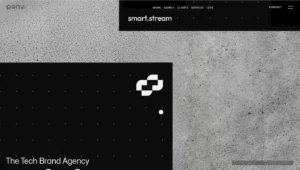
Specializes in: Naming, identity and websites for L1, L2 and infrastructure protocols.
Headquarters: London, UK
Founded: 2019 per DesignRush; the studio says it has been in the space for nearly 10 years
Team size: Under 49 (DesignRush)
Clutch rating: No Clutch profile found
Evaluated on the basis of:
- Web3 domain depth: Full. Case studies for SEDA (formerly Flux), Radius and Fluent.
- Wallet and transaction UX: Partial. Product UI for SEDA, with no wallet or signing flows published.
- Brand and launch: Full. Naming and identity for SEDA, branding and websites for Radius (rollup infrastructure) and Fluent (an Ethereum L2).
- Build capability: Partial. Lists website design and development, but its case studies credit branding and web design only.
- Proof in live products: Partial. The protocol sites are live. No outcome metrics are published.
Differentiator: Protocol branding with the naming work done in-house.
Proof of execution: SEDA’s name, identity, website and product UI, plus identity and websites for Radius and Fluent.
Pricing: Not published.
Potential limitation: No Clutch profile and no published results, so references are the only way to check delivery.
My take: A good pick for an infrastructure protocol that needs a name, an identity and a launch site. Teams that need dApp UX should look at Avark or Arounda.
8. NOIR
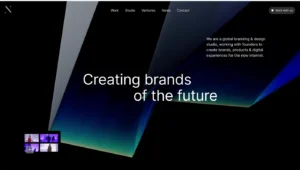
Specializes in: Brand strategy, platform design and websites for early-stage token and real-world-asset projects, with an investment arm.
Headquarters: London and Dubai
Founded: 2016
Team size: Not published
Clutch rating: No Clutch profile found
Evaluated on the basis of:
- Web3 domain depth: Partial. A published case study for CryptoAutos and long-running brand work for Numbers Protocol. Pages for MoonPay, Cartesi, Biconomy and Animoca say “portfolio client” without describing deliverables.
- Wallet and transaction UX: Not disclosed. No wallet or signing flows are published.
- Brand and launch: Full. Brand, platform design, website and development for CryptoAutos, and brand strategy, logo and icons for Numbers Protocol since 2021.
- Build capability: Partial. Lists website and platform development. No smart contracts.
- Proof in live products: Partial. NOIR quotes CryptoAutos figures of $58M+ in vehicle sales, $7.5M raised and a $40M market cap at token launch. Those are the client’s numbers (vendor-reported).
Differentiator: A studio that can also invest, with capital offered for equity or token equity.
Proof of execution: CryptoAutos, a real-world-asset car marketplace, and Numbers Protocol.
Pricing: Not published. A one-month Seed Sprint is listed for early-stage teams.
Potential limitation: Big-name clients without published scope, and an investment arm that mixes service work with equity stakes. Ask which role NOIR would play on your project.
My take: Worth a call for a pre-launch token or RWA founder who wants brand help and possible backing. Teams that want a pure fee-for-service vendor should look elsewhere.
9. Studio Simpatico
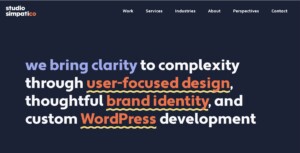
Specializes in: Brand and WordPress marketing sites, including for crypto infrastructure companies.
Headquarters: New York, NY
Founded: 2014
Team size: 2 to 9 (Clutch); the studio describes a team of seven designers and developers
Clutch rating: 5.0 from 44 reviews
Evaluated on the basis of:
- Web3 domain depth: Partial. Two named crypto infrastructure clients, Fireblocks and Blockdaemon.
- Wallet and transaction UX: Not offered. Its crypto work is marketing sites, not product UI.
- Brand and launch: Full. Fireblocks’ marketing website, printed collateral and visual identity work, and Blockdaemon’s marketing site.
- Build capability: Partial. Custom WordPress development. No blockchain work.
- Proof in live products: Partial. Both sites shipped. No crypto-specific metrics are published.
Differentiator: B2B crypto marketing sites from a small senior team that builds what it designs.
Proof of execution: Fireblocks, where the studio turned the triangle in the logomark into a recurring visual system across the site and collateral, and Blockdaemon.
Pricing: Not published. Clutch lists $150 to $199 per hour and a $25,000 minimum.
Potential limitation: A very small team with no dApp or wallet work, and one Clutch reviewer said QA could be more thorough.
My take: If you need a crypto web design agency for an infrastructure company that sells to institutions, Studio Simpatico is a sensible fit. It is not a product design partner.
10. Halo Lab
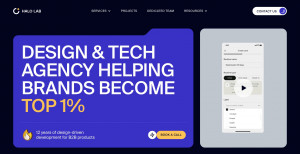
Specializes in: Web and product UI design with web development, including NFT and creator platforms.
Headquarters: Dubai, UAE (per Clutch). Its site lists offices in Warsaw and Boston.
Founded: 2013
Team size: 50 to 249 (Clutch)
Clutch rating: 4.9 from 100 reviews
Evaluated on the basis of:
- Web3 domain depth: Partial. Its site shows only a “Web3 & Blockchain” industry label. Two verified Clutch reviews cover NFT work.
- Wallet and transaction UX: Not disclosed. No wallet or signing flows are published.
- Brand and launch: Partial. Website redesign and branding for Chainstarters, an NFT and creator monetization platform.
- Build capability: Partial. React, Next.js and Webflow development, with no blockchain or smart contract work. Both web3 projects on Clutch were design-only.
- Proof in live products: Partial. For a Singapore NFT services firm, Halo Lab designed a landing page and web-app UI in Figma for about $22,000, and the client’s own team built it.
Differentiator: Low rates and a large team for NFT and web3 startup websites.
Proof of execution: Chainstarters (January to March 2023) and the Singapore NFT web app.
Pricing: Not published. Clutch lists $25 to $49 per hour and a $10,000 minimum.
Potential limitation: A thin web3 portfolio, and Clutch’s review insights flag room for improvement in bug testing.
My take: A budget option for an NFT or creator project that needs a site and web-app UI quickly. For DeFi or wallet flows, Arounda has far more proof at similar rates.
How this roster was assessed
We read each agency’s own web3 case studies, its Clutch profile and any pricing it publishes. All checks ran on November 8, 2026. We did not hire these agencies to test them, and we did not connect wallets to their clients’ apps. The only first-hand experience in this guide is Fireart’s own work, and its card uses the same fields as the other nine.
The starting pool was about 25 studios that recur in current web3 design shortlists and in Google results for blockchain and crypto design agencies. We dropped any agency whose web3 claims we could not match to a named project on its own site. A Dribbble shot of a wallet is not a shipped wallet, so concept work does not count as proof here. Numbers that come from the agency itself are labeled as vendor-reported.
| Agency | What we checked | Date |
|---|---|---|
| Fireart Studio | Equine case study and product design page; About page; Clutch profile | Nov 8, 2026 |
| Avark | avark.agency case studies (Linea, Metacade, Beyond), product build page, contact form; Clutch | Nov 8, 2026 |
| 10Clouds | 10clouds.com web3 UX, smart contract and case study pages; Clutch reviews | Nov 8, 2026 |
| Clay | clay.global crypto page and Sky and Grayscale case studies; Clutch | Nov 8, 2026 |
| Lazarev.agency | lazarev.agency web3 page and Kin and Metastaq case studies; Clutch | Nov 8, 2026 |
| Arounda | arounda.agency web3 page and MYSO, Infinity, Galaxy cases; Clutch | Nov 8, 2026 |
| Pony Studio | pony.studio blockchain page and SEDA, Radius, Fluent case studies; DesignRush | Nov 8, 2026 |
| NOIR | noir.io and CryptoAutos case study; Numbers Protocol announcement | Nov 8, 2026 |
| Studio Simpatico | studiosimpati.co crypto industry page; Fireblocks case summary; Clutch | Nov 8, 2026 |
| Halo Lab | halo-lab.com industry pages; Clutch profile and two web3 reviews | Nov 8, 2026 |
We also checked Refokus, Persona Studio, Mission Control and BRIX Agency, which appear on other web3 lists or in search results. Refokus publishes no web3 work. Persona Studio’s only web3 case is an NFT exhibition brand. Mission Control and Clay both list the same Sky project, and BRIX’s crypto page shows project labels and templates without described client work, so we left all four out.
What does web3 design actually cover?
Five different jobs share the label, and the agencies on this list are rarely strong at all five. Search for a crypto design agency and you get marketing shops, Webflow template studios and product teams on the same page, so define the job first. A studio that makes a protocol launch site look expensive may never have designed a failed-transaction state, and a team that ships DeFi dashboards may not do brand identity at all.
| Product type | Main users | What shapes the design | Agencies on this list that fit |
|---|---|---|---|
| Protocol, L1 and L2 brand and website | Developers, investors, community | Narrative, docs and ecosystem pages, launch deadlines | Pony Studio, Clay, NOIR, Avark |
| DeFi apps and on-chain dashboards | Traders, liquidity providers, DAO voters | Dense live data, signing prompts, slippage and fee display | Arounda, Avark, Lazarev.agency |
| Wallets and onboarding | First-time users | Recovery, gas, network switching, account abstraction | Arounda, 10Clouds |
| NFT products and web3 games | Players, collectors | Asset ownership shown in the UI, wallet asset fetching, game loops | Fireart Studio, Avark, Lazarev.agency, Halo Lab |
| Exchanges and crypto features in fintech apps | Retail investors | Risk warnings, KYC, regional rules such as MiCA and the UK FCA regime | 10Clouds, Clay |
If you are still choosing a visual direction, our roundup of crypto web design examples shows how exchanges and token projects handle color, grids and data. For exchanges and neobanks adding crypto, the fintech design agencies list covers teams with deeper regulated finance work.
Why do users drop off at the wallet step?
Because the wallet step is really a chain of steps: install a wallet, back up a 12- or 24-word recovery phrase, fund it with ETH for gas, switch to the right network, approve the token, then sign the swap. Each one loses people.
Here is a simple way to see what that costs. Suppose each step keeps 80% of the people who reached it. After six steps, 26% of the people who started are left (0.8 to the sixth power is 0.26). Cut the flow to two steps, for example a passkey sign-in and one confirmation, and 64% are left. The 80% figure is an illustration, not a benchmark, but the arithmetic holds for any rate you plug in: losses compound, so removing one step does more than polishing all six.
The tools to remove steps exist. ERC-4337 smart accounts support batched transactions, gas sponsorship through paymasters and passkey sign-in, and EIP-7702 lets existing wallets gain the same features at the same address, per Coinbase’s developer docs. EIP-7702 shipped with Ethereum’s Pectra upgrade, which went live on May 7, 2025. Whether your users see one confirmation or six is now mostly a product and design decision.
What a good web3 design agency does here: shows a plain-language preview before every signature, designs pending, failed and replaced transaction states, explains fees before the user commits, and works with your engineers on which steps can be batched or sponsored. Ask to see those screens in a live product, not in a Dribbble shot.
Which rules change a crypto design brief in 2026?
For products that reach EU and UK users, two regimes now decide what some screens must say and in what order. Neither is a design guideline, but both end up as design requirements.
| Rule | When it applies | What it changes in the design work | Source |
|---|---|---|---|
| EU Markets in Crypto-Assets Regulation (MiCA) | Crypto-asset service providers serving EU clients | Since July 1, 2026, only authorised providers may serve EU clients. In practice, onboarding needs country checks and should show which authorised entity serves the user | AMF on ESMA’s statement |
| UK FCA cryptoasset financial promotions rules | Promoting qualifying cryptoassets to UK consumers (since October 2023) | A prescribed risk warning, a 24-hour cooling-off period for first-time investors with a firm, and a personalised risk warning that must come before client categorisation and the appropriateness assessment | FCA review of the “back end” rules |
The FCA’s review is useful reading for designers. Every firm it sampled had a 24-hour cooling-off period in place, but some did not explain why the user was waiting, and some did not give “proceed” and “leave” equal prominence at the end of it. Those are design failures, and they are cheap to avoid if the agency knows the rules before the wireframes.
Why do web3 design projects stall?
Most stall because the design was approved against a version of the protocol that no longer exists. Four common causes:
Contracts change after the UI is signed off. A fee model, a lock-up period or a new chain gets added late, and half the flows need redrawing. Freeze the contract interfaces the UI depends on before high-fidelity design starts, or budget for a second pass.
Nobody designed the unhappy paths. Swaps fail, transactions sit pending, networks get congested and prices move between quote and confirmation. If the design files only show the success screen, the front-end team will invent the rest under deadline.
The launch date is set by the token, not the product. A token generation event or a mainnet date fixes the deadline months ahead, and the brand, website and app all land in the same week. Stagger them: brand and site first, app screens last.
Designs were never tested with real wallets. A flow that works in Figma can break when a browser extension wallet opens its own pop-up over it. Ask for testnet walkthroughs with the wallets your users actually hold.
What does a web3 design agency cost?
Eight of the ten agencies list rates on Clutch. They run from $25 to $49 an hour at the low end to $150 to $199 at the high end, and minimum projects range from $5,000 to $100,000. The same launch package can cost two to three times more depending on who you hire.
| Agency | Hourly rate (Clutch) | Minimum project (Clutch) | Pricing the agency publishes |
|---|---|---|---|
| Fireart Studio | $50 to $99 | $10,000+ | Not published |
| Avark | $100 to $149 | $5,000+ | Budget bands from $5,000 on its contact form |
| 10Clouds | $50 to $99 | $25,000+ | Not published |
| Clay | $150 to $199 | $50,000+ | Not published |
| Lazarev.agency | $100 to $149 | $100,000+ | Not published |
| Arounda | $25 to $49 | $25,000+ | Not published |
| Pony Studio | No Clutch profile | No Clutch profile | Not published |
| NOIR | No Clutch profile | No Clutch profile | One-month Seed Sprint listed, no price |
| Studio Simpatico | $150 to $199 | $25,000+ | Not published |
| Halo Lab | $25 to $49 | $10,000+ | Budget bands from $10,000 on its contact form |
Sources: Clutch profiles and agency sites, checked November 8, 2026.
Here is how the rates turn into a budget. Take a typical launch package for a new protocol: brand identity over 3 weeks at about 50 hours a week (150 hours), a protocol website over 4 weeks at 60 hours (240 hours) and dApp UI for staking over 6 weeks at 70 hours (420 hours). That is 810 hours. At $50 to $99 an hour the package costs $40,500 to $80,190. At $100 to $149 it costs $81,000 to $120,690, and at $150 to $199 it costs $121,500 to $161,190. Front-end development and wallet integration are not included.
What moves the number most: whether the agency also builds the front end, how many chains and wallets you support, how many unhappy-path states the dApp needs, and whether the brand needs motion and 3D for launch. For a line-by-line breakdown, see how we calculate product design cost.
What should you ask a web3 design agency before signing?
Ask for live products and the screens nobody puts in a portfolio. These questions separate teams that have shipped web3 work from teams that have drawn it:
- Which live dApps or wallets use your designs today? Can we connect a wallet and try them?
- Show us your pending, failed and replaced transaction states for one shipped product.
- How do you present a signature request so a first-time user understands what they are approving?
- Have you designed for smart accounts, gas sponsorship or passkey sign-in?
- Who builds the front end and integrates wallets? If you hand off, what does the handoff include?
- Have you designed onboarding for EU or UK users under MiCA or the FCA crypto promotion rules?
- What happens to the schedule if our contracts change after you finish high-fidelity design?
An agency that answers the second and third questions with screenshots from a live app has done this before. One that answers with concept shots has not, and that is fine for a brand site but risky for a dApp.
Which web3 design agency should you choose?
Start from the situation you are in. The table gives a first call and a second option for each one.
| Your situation | Start with | Also consider |
|---|---|---|
| Web3 game or NFT product with your own chain logic, designed and built by one team | Fireart Studio | Avark |
| Token or L2 launch: brand, website and dApp front end from one web3-only studio | Avark | Pony Studio |
| UX, backend and smart contracts from one vendor | 10Clouds | Avark, if your contract developers are in-house |
| Asset manager, exchange or mature DeFi protocol with $50,000+ for brand and site | Clay | Lazarev.agency |
| Research-led UX for a crypto platform or NFT tool, with your own engineers | Lazarev.agency | Arounda |
| DeFi app or wallet UX on a mid-range budget | Arounda | Halo Lab |
| L1, L2 or infrastructure protocol that needs a name, identity and marketing site | Pony Studio | Clay |
| Pre-launch token or RWA project that also wants investor support | NOIR | Pony Studio |
| Crypto infrastructure company selling to institutions, WordPress marketing site | Studio Simpatico | Pony Studio |
| NFT or creator project on a tight budget, site and web-app UI | Halo Lab | Arounda |
FAQ
What does a web3 design agency do that a fintech design agency doesn’t?
A good web3 design agency designs for things a bank app never shows: signature requests, gas fees, pending and failed transactions, network switching and self-custody recovery. It also knows the newer patterns, such as passkey sign-in and sponsored gas through smart accounts. A fintech studio covers KYC, payments and regulation, which crypto exchanges need as well.
How much does web3 design cost in 2026?
For the eight agencies here with Clutch profiles, rates run from $25 to $199 an hour and minimum projects from $5,000 to $100,000. In our worked example, an 810-hour package covering brand, website and dApp UI costs $40,500 to $80,190 at $50 to $99 an hour, before front-end development and wallet integration.
Should my design agency write smart contracts?
Usually not. Smart contracts hold user funds, so they belong with blockchain engineers and an independent security audit. A blockchain design agency should understand your contract interfaces well enough to design around them, and a few, such as 10Clouds, also employ engineers who write contracts. Keep the audit with a different firm from the one that wrote the code.
Do I need account abstraction in my dApp?
Not always, but it removes the steps that lose first-time users. ERC-4337 smart accounts support gas sponsorship, batched transactions and passkey sign-in, and since Ethereum’s Pectra upgrade in May 2025, existing wallets can use the same features. If most of your users are new to crypto, design the flow around it from the start.
Do UK crypto promotion rules affect my website design?
Yes, if you promote qualifying cryptoassets to UK consumers. FCA rules require a prescribed risk warning, a 24-hour cooling-off period for first-time investors with your firm, a personalised risk warning, client categorisation and an appropriateness assessment. All of that becomes screens and copy, so brief your agency on it before wireframes.
Can one agency handle the token brand, the website and the dApp?
Some can, but judge each piece on its own evidence. Avark and Arounda show brand, website and dApp work for the same clients, while Pony Studio and Studio Simpatico publish brand and website work only. If one agency will do all three, connect a wallet to a live dApp it designed before you sign.
Conclusion
The ten agencies here are good at different parts of web3. Avark and Arounda show the most shipped dApp and wallet work. 10Clouds is the one that writes smart contracts. Clay and Lazarev.agency bring large-budget brand and product teams, Pony Studio and NOIR focus on protocol and token brands, and Studio Simpatico and Halo Lab cover marketing sites at opposite ends of the price range. Start from the riskiest part of your product, then compare rates.
If yours is a web3 game or NFT product that needs one team to design it and build the app around your chain logic, that is the work we did for Equine. See our web design and branding services, or tell us about your product and we’ll say plainly if another team on this list fits better.





 Kotlin
 C++
 C#
 Ruby on Rails
 Java
 Firebase
 Python
 Vue.js
 HTML5
 CSS3
 Azure