

If a prospective buyer’s first interaction with your property is a map that crashes when they zoom in, you have already lost the sale. In a high-stakes market, agencies need real estate website examples engineered for conversion.
At Fireart, we believe that real estate UX/UI design hinges on cognitive economy and technical performance. The industry suffers from usability failures: delayed MLS data, infinite scrolls that destroy a buyer’s mental map, and login gates that inflate bounce rates.
We solve these friction points in the property sector.
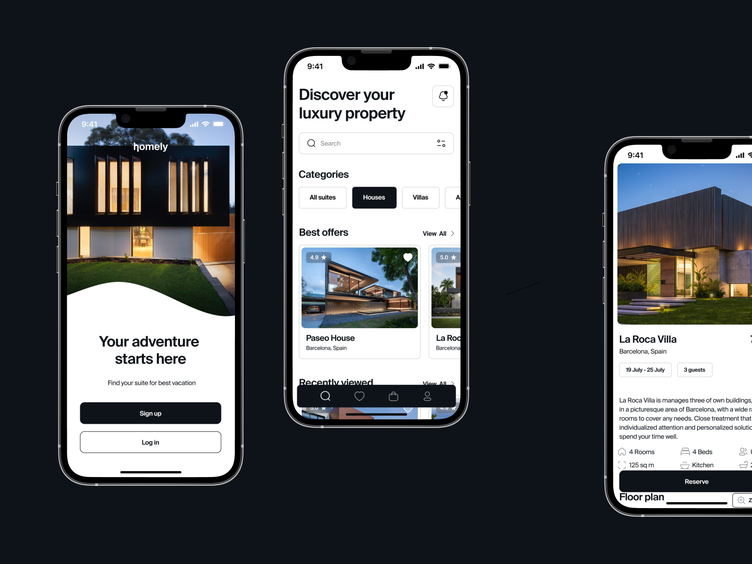
Example: When designing the Homely app, we streamlined residential search, ensuring the interface does complex filtering without making it hard for the user.
Effective PropTech website design balances high-throughput technical architecture like integrating regional MLS feeds with frictionless interaction.
In this article, we tear down 12 of the best real estate websites 2026 has to offer. We analyze these platforms through usability research to show you what drives leads.
Article highlights
- The cost of friction: Why map rendering and forced registration gates destroy conversion rates.
- Search is revenue: How to structure a split-view canvas and faceted filters for mass-market discovery.
- Spatial storytelling: Utilizing WebGL and 360-degree virtual tours to sell developments.
- The AI shift: Moving to natural language property search.
Transform your property catalog into a high-speed, autonomous conversion engine.
Engineer your custom web platformThe high cost of bad UX
When planning for a platform and calculating website development costs, stakeholders must treat UX as a revenue engine. In a real estate environment where a single transaction can be worth millions, an unusable interface burns your marketing budget.
Smartphones drive 60% of property discovery traffic, making mobile responsiveness non-negotiable. Industry benchmarks reveal that 53% of mobile visitors abandon a platform if it takes longer than three seconds to render. A high Lighthouse performance score is a direct proxy for lead retention and user trust.
The search bar is the entry point of your conversion funnel. Users who actively use advanced site search account for up to 44% of converted revenue. Despite this, platforms introduce friction that kills intent. Forcing a buyer behind a hard login gate to view property details causes session abandonment and fills CRM databases with fake names.
Usability research confirms that deploying infinite scroll on listing grids in custom real estate web development is disastrous for property evaluations. Buyers constantly compare listings, and infinite scroll destroys their mental map and makes returning to a specific property card impossible.
Strict pagination remains one of the most effective infinite scroll alternatives to keep users oriented.
Building for speed and search
With thousands of properties and fragmented data sources, the UX challenge shifts to search architecture. A mass-market aggregator must parse data without making the user wait. The interface must process queries instantly while handling zero-result search states to guide buyers to alternative neighborhoods rather than a dead end.
1. Redfin
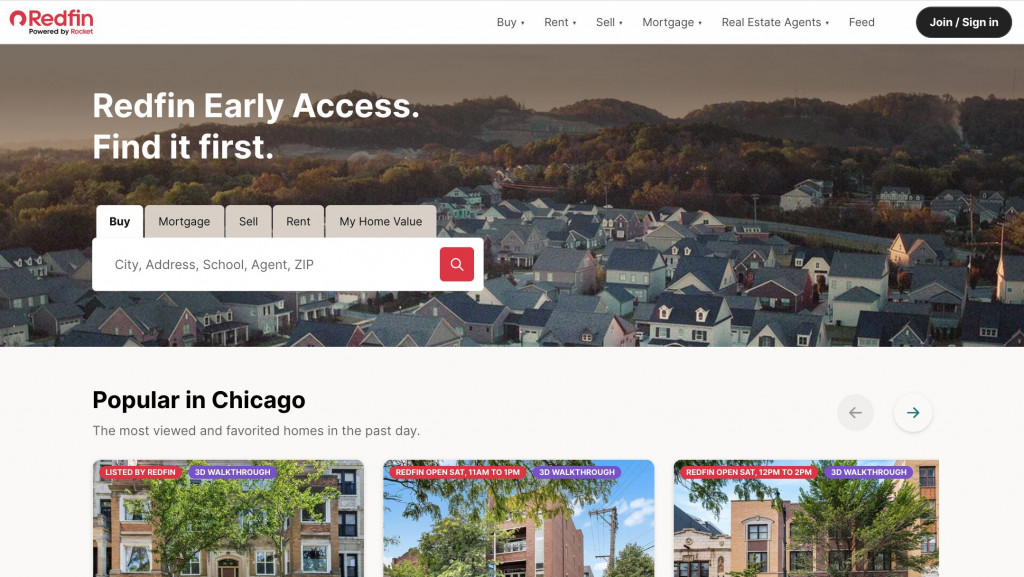
Redfin handles massive inventory without overwhelming the buyer. They employ a responsive split-view canvas that synchronizes an interactive map with a property grid. As users pan across zip codes, the grid updates instantly without a page reload. Their faceted search filtering is persistent, meaning users keep their selected parameters or map coordinates when adjusting price ranges. They rely on structured pagination to help buyers systematically compare homes.
2. Resider
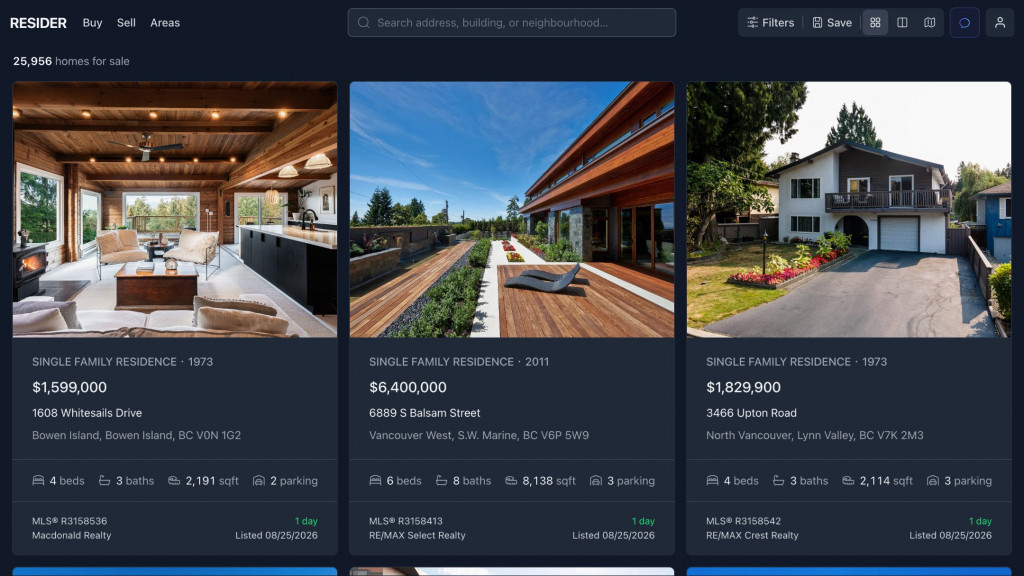
The way buyers query data is evolving. Resider leans heavily into conversational AI property search. Buyers can input a natural language search — such as, “Show me 3-bedroom houses near good schools under $800k” — and the engine processes the intent. Combined with dynamic map rendering, the platform surfaces match instantly. This agentic search reduces the time it takes to find a relevant listing, delivering guided market intelligence.
3. Anyone.com
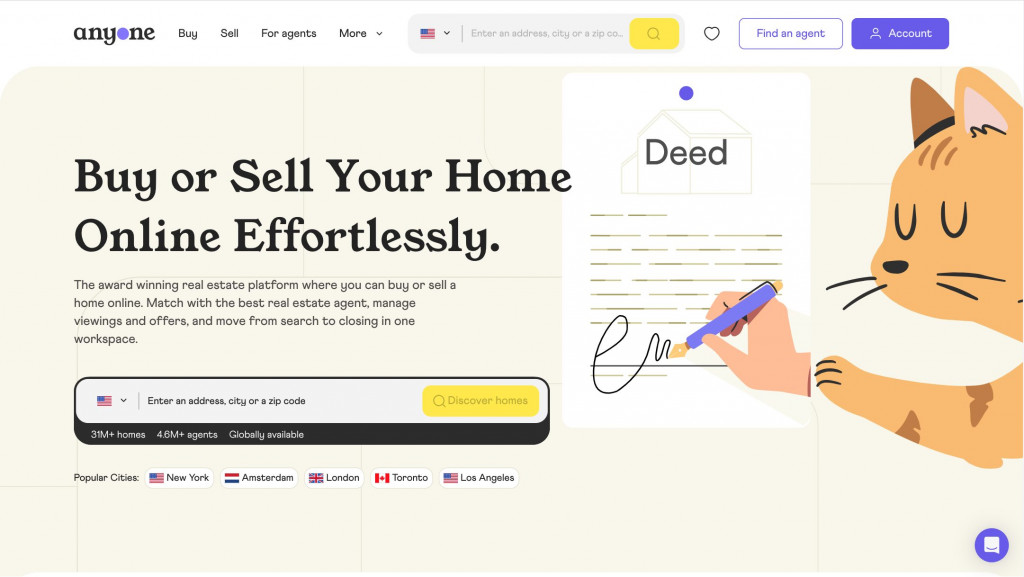
Real estate portals often suffer a drop-off between a user finding a home and reaching out to an agent. Anyone.com solves this by prioritizing frictionless discovery. The platform strips away pop-ups and lead-capture forms, providing a user flow that connects buyers directly to relevant agents based on their browsing behavior. Lead generation works best when it feels like a natural next step.
Storytelling and trust in luxury brokerages
Luxury brokerage branding competes on emotion and authority, selling a lifestyle and a community before the physical floor plan. To capture high-intent buyers/sellers, the digital experience must project the white-glove service expected during an in-person viewing. Where should agencies look for real estate web design inspiration? Look to platforms that balance immersive media with fast load times.
4. The Oppenheim Group
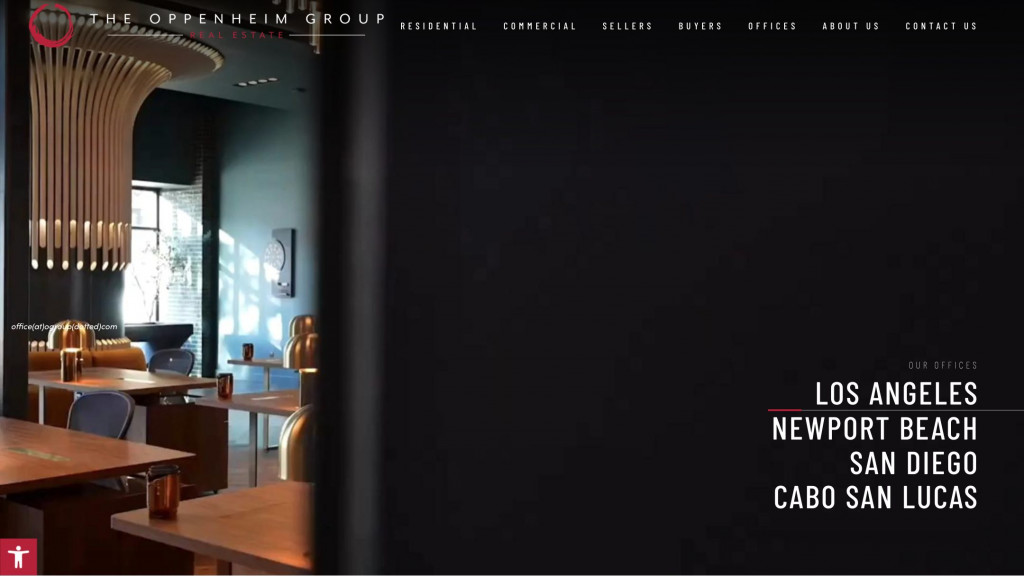
The Oppenheim Group uses a brand-led approach for its real estate agent websites. The site immerses visitors using cinematic hero videos without causing the browser to stutter. It integrates interactive neighborhood maps and guides for buyers and sellers, establishing the agents as hyper-local authorities and making lead capture feel like a consultation.
5. Village Properties
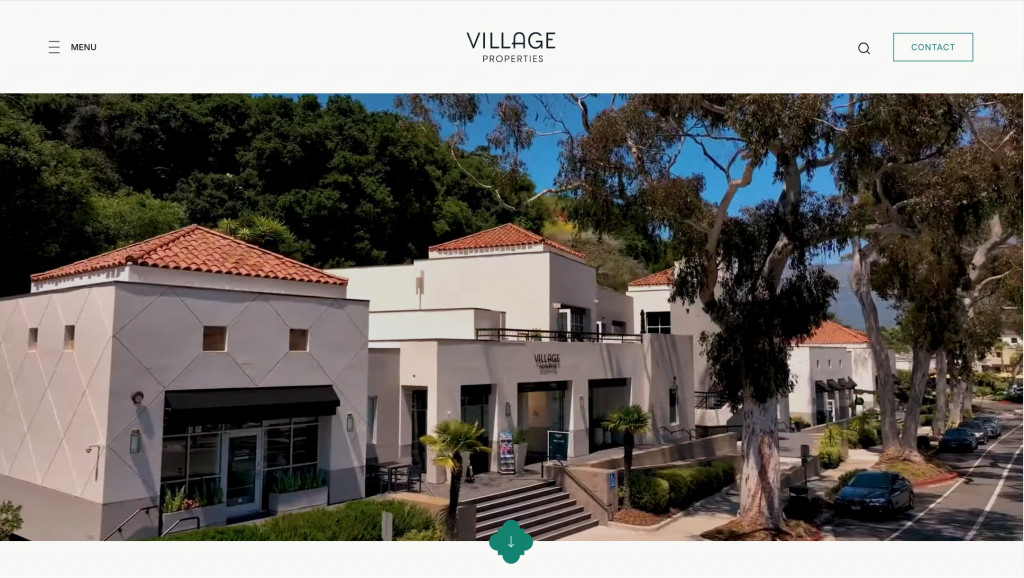
Village Properties proves independent brokerages win by leaning into hyperlocal identity. The site uses Spanish Revival visual cues to tie its brand to the Santa Barbara community. It features built-in accessibility controls, such as text enlargement and read-aloud functionality. Inclusive, accessible design supports business goals by removing friction for older buyers.
6. Costa Sunsets
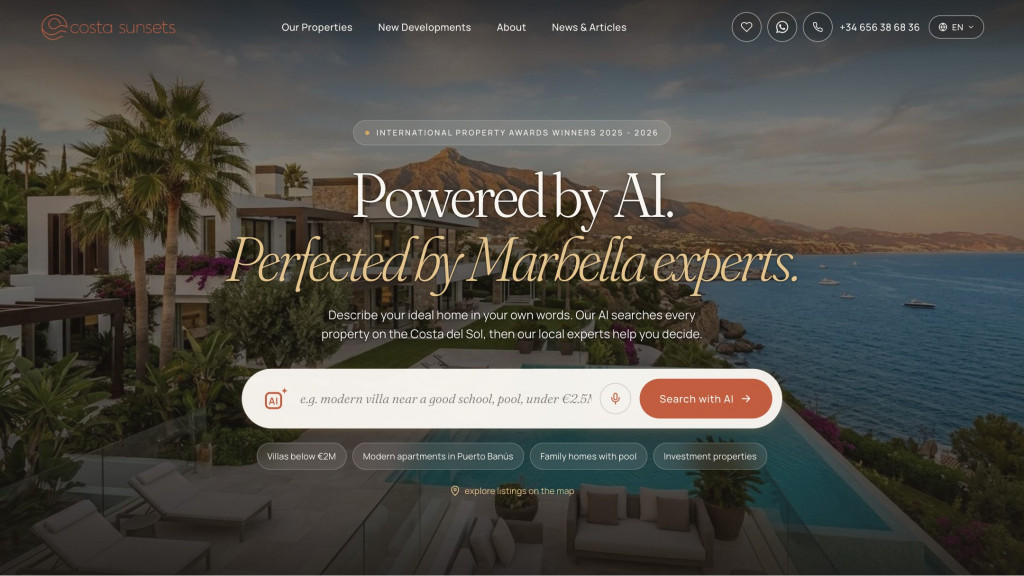
Costa Sunsets destroys the myth that visually stunning websites must be slow. Operating in the Costa del Sol market, the platform delivers aesthetic appeal, natural-language search, and dynamic map rendering while maintaining a 98+ Lighthouse performance score. Top-tier custom real estate web development delivers cinematic luxury while retaining the speed required to keep mobile users engaged.
See how we beat search friction to build a high-converting property discovery platform for Homely
Explore the Homely Case Study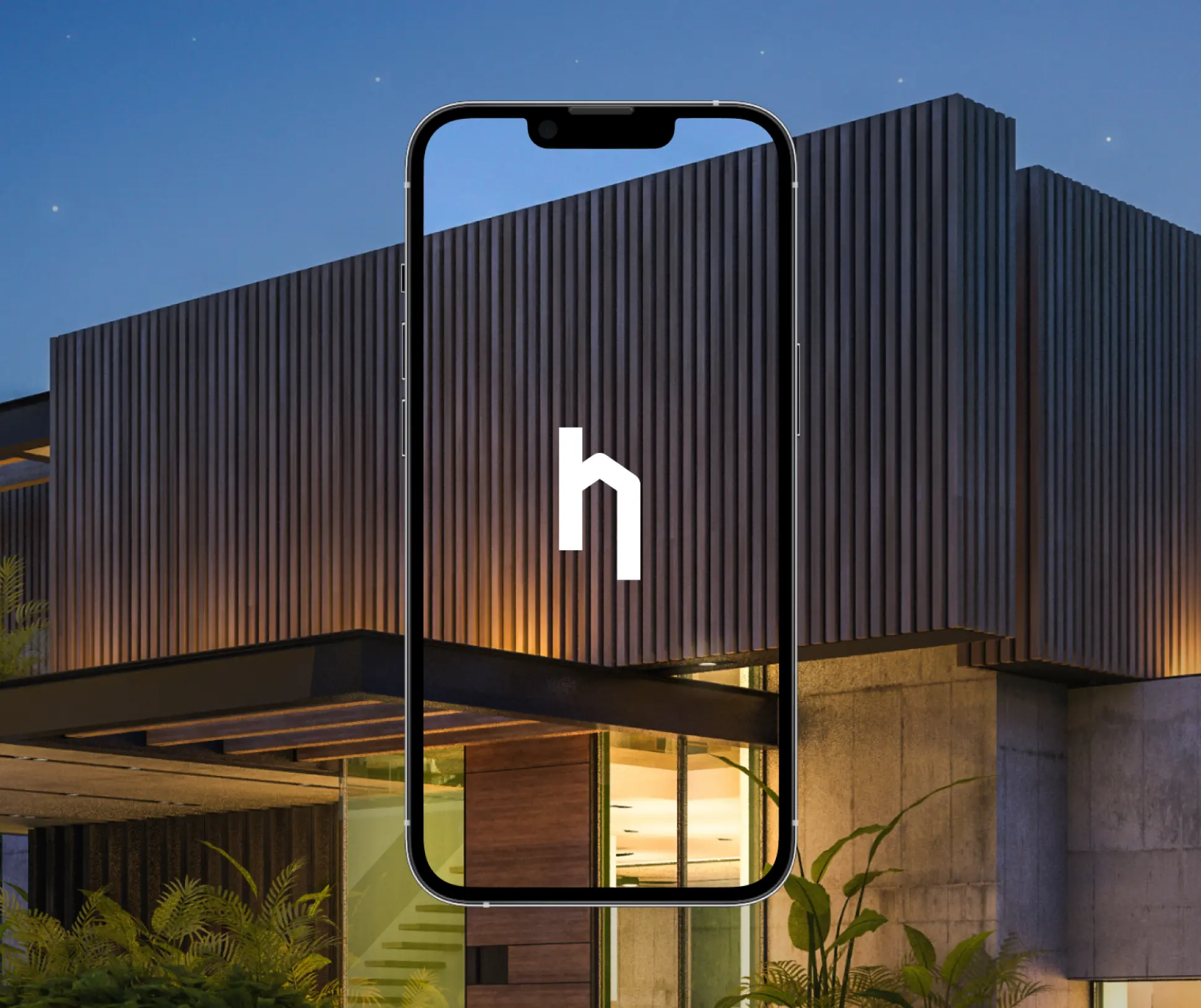
Spatial storytelling for developers
Selling an unbuilt tower or an exclusive destination requires spatial storytelling. Effective single-property development marketing makes a prospective buyer feel the dimensions, light, and atmosphere of a space through their browser. Here, immersive digital brochures replace standard Property Details Page (PDP) architecture.
7. Zorge 9
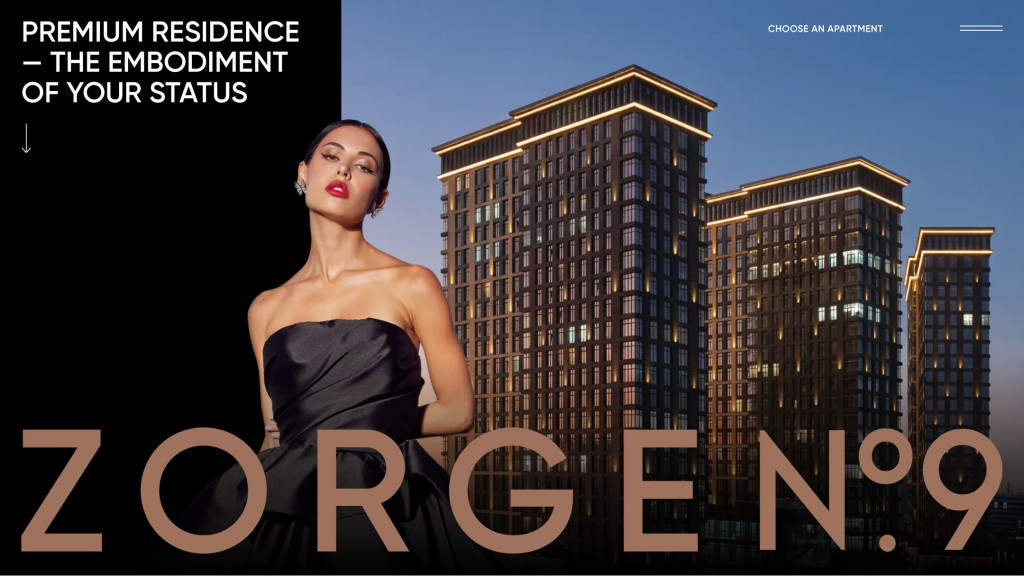
Zorge 9 utilizes WebGL 3D architectural rendering to let buyers interactively rotate models of the complex. Users can filter apartments floor-by-floor in real time and analyze ambient lighting at different times of the day. Immersive 3D capabilities now run smoothly in the browser without paralyzing load speeds.
8. 111 West 57th Street
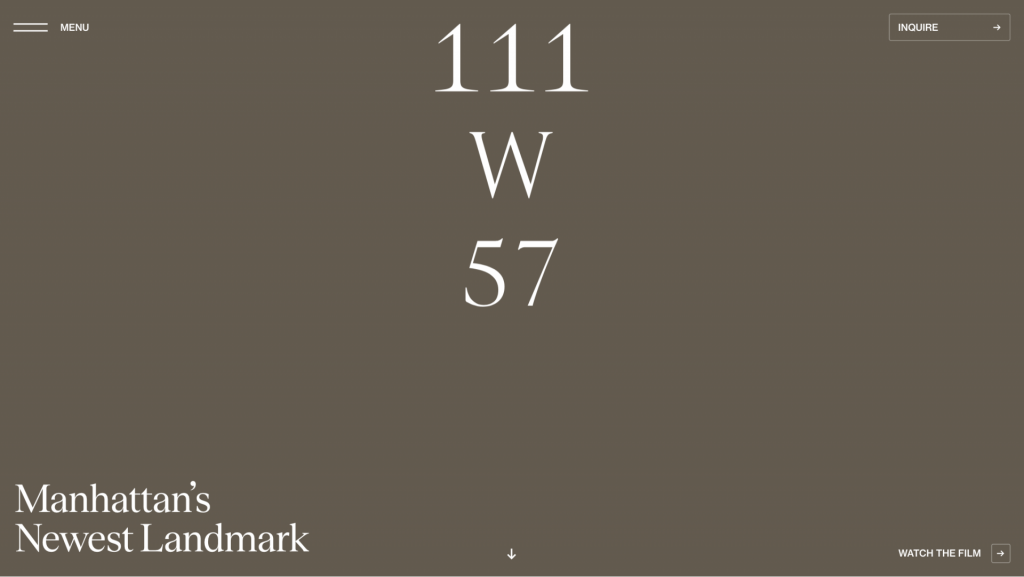
The 111 West 57th Street platform proves that ultra-luxury property developer website examples require visual restraint. Operating as a digital brochure, the site uses stepped-profile interactions and premium typography to mirror the physical architecture of the building. Editorial layouts build prestige and capture leads from ultra-high-net-worth individuals.
9. LET US Ibiza
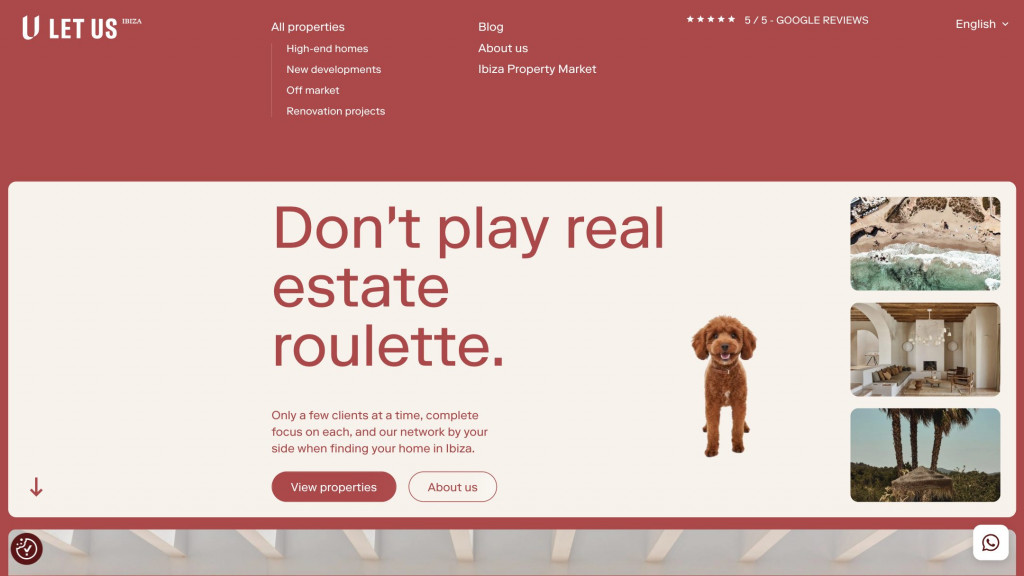
For international buyers, location context matters as much as the floor plan. LET US Ibiza favors an interactive, map-centric narrative. Property cards transition into video previews, blending localized lifestyle storytelling alongside the architectural showcase. This anchors the buyer in the geography before pitching the real estate asset.
10. Hutstuf
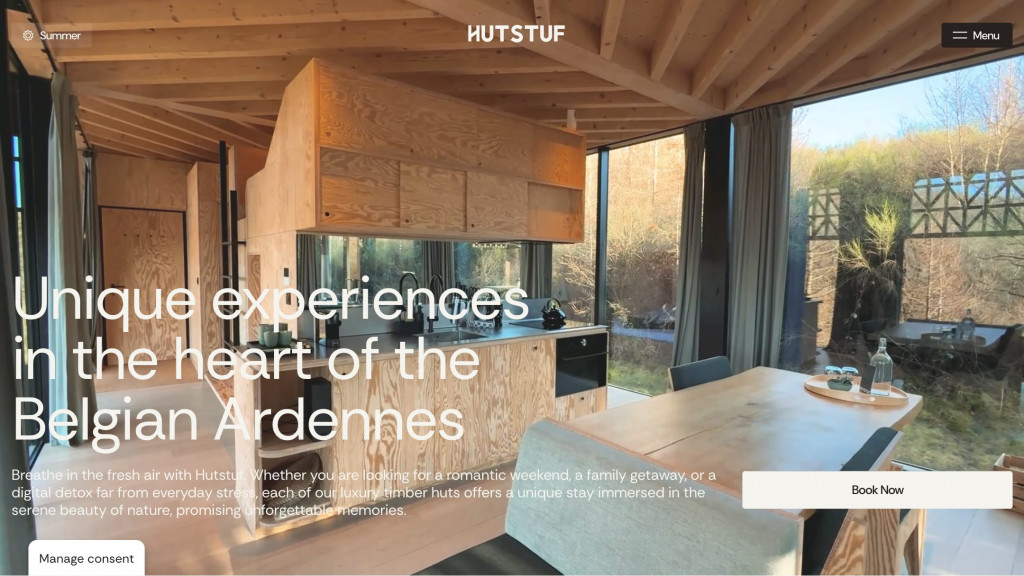
A digital product must feel like an extension of the physical product. Hutstuf offers architect-designed cabins in the Belgian Ardennes. The website interface mirrors this timber-built reality through a natural color palette and navigation restraint. Removing UI clutter focuses the user entirely on the spaces, aligning the digital aesthetic with the physical experience.
Mission-driven platforms
For land trusts and affordable housing platforms, the primary metric of success is inclusive access to information. This requires a commitment to accessible design and strict WCAG compliance. A community platform must be navigable by older demographics and users relying on assistive technologies.
11. Rondo CLT
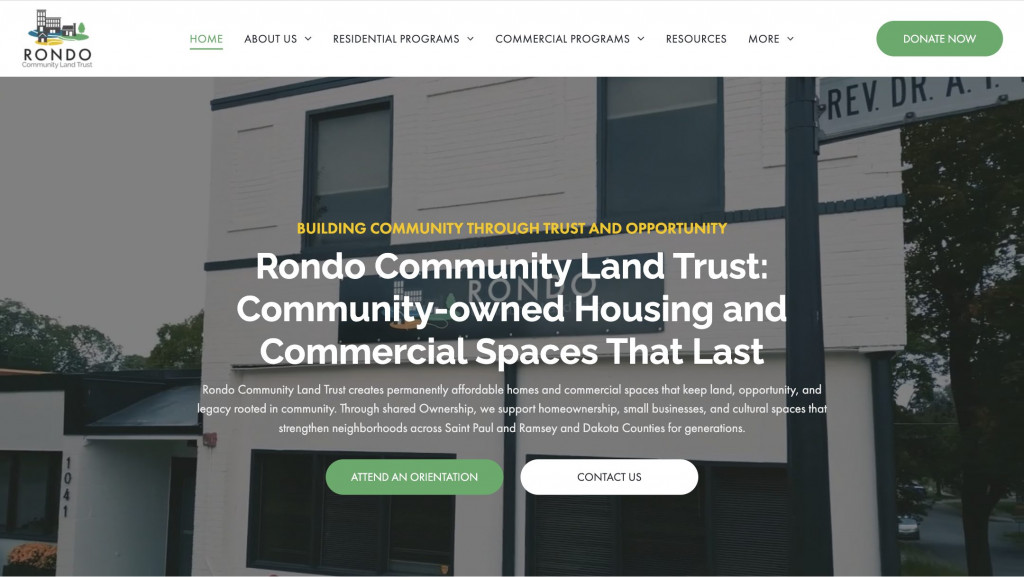
Rondo CLT executes mission-driven digital architecture. Operating in St. Paul, Minnesota, the organization focuses on affordable housing and commercial development. Their website utilizes clear, community-based storytelling and legible layouts. By prioritizing high-contrast typography, logical content hierarchies, and accessible navigation, the platform pairs strict WCAG compliance with a clean aesthetic. Usability ensures no user is walled off from housing information.
Discover how we built a community-driven platform for ByNext that removes the friction from managing local home services.
Explore the ByNext Case Study

Best practices for real estate web development
How to design a real estate website that converts? It comes down to technical execution. When undertaking a UX website redesign, avoiding architectural mistakes preserves your lead flow. Here are the standards for property platforms.
Kill the infinite scroll
Usability research dictates that infinite scroll must be removed from listing grids. Buyers need to build a mental map to compare properties. Infinite scroll breaks this process, blocks access to the page footer, and makes returning to a property card impossible. Stick to structured pagination or a state-preserving “Load More” button to keep users oriented.
Protect your SEO crawl budget
A granular filter system benefits users but threatens your search rankings. Unmanaged faceted search creates tens of thousands of URL variations based on the filters selected. If search engines crawl these parameter pages, your domain authority will plummet. Set canonical tags targeting the primary root category page to prevent search engine bloat.
Modernize your data integration
The backbone of any property portal is its IDX/MLS integration. Today, custom real estate web development requires utilizing the RESO Web API. Fetching data through APIs and using server-side rendering ensures that massive property databases load instantly. Because 60% of traffic originates on smartphones, prioritizing speed through a mobile-first web design approach is mandatory.
Perfect the property details page
Your Property Details Page (PDP) architecture must answer buyer questions immediately. High-end PDPs integrate 360-degree virtual tours, price history timelines, and contextual data like walkability scores and transit proximity. If a buyer opens a new tab to find neighborhood data or calculate mortgage rates, you risk losing their session.
Conclusion
A high-converting property platform requires strategic choices, from killing infinite scroll to integrating RESO Web APIs. These remove friction from the buyer’s journey. Your platform must perform with speed, accommodate natural search behaviors, and guide leads seamlessly toward a transaction. Treat your website as your most critical sales engine.
Fireart combines design with the technical architecture required to dominate the property market
Contact us todayFAQ: Real estate web development
How do you integrate MLS data without ruining site speed and SEO?
Modern custom real estate web development utilizes the RESO Web API combined with server-side rendering (SSR) to ensure your IDX/MLS integration loads instantly. To protect your SEO, use strict canonical tags on your faceted search filtering to prevent search engine crawlers from indexing parameter pages.
What is the measurable ROI of custom real estate UX over off-the-shelf templates?
Usability research shows that specialized UX yields massive returns. Given that users who interact with site search account for 44% of converted revenue, fixing broken navigation and eliminating zero-result search states directly increases your closed deal pipeline.
How is AI changing the property search experience?
Buyers use conversational AI property search to type natural language queries—such as ‘Show me 3-bedroom houses with a pool under $800k in Austin’—and the system returns relevant listings instantly. This reduces the time it takes for a buyer to find a property.
What are the mobile performance benchmarks for real estate platforms?
With 60% of property discovery happening on smartphones, industry data shows that 53% of mobile users abandon a site if it takes longer than 3 seconds to load. You need touch-optimized map controls, sticky filters, and a high Lighthouse performance score to keep buyers engaged.
Should we build our real estate platform in-house or outsource it?
If your team lacks experience in 3D WebGL rendering, AI-driven search algorithms, and API data pipelines, partnering with an expert team reduces launch risk and accelerates time-to-market. Our guide on how to outsource web development provides a roadmap for finding the right technical partner.




 Kotlin
  C++
C++  C#
C#  Ruby on Rails
  Java
Java  Firebase
  Python
  Vue.js
  HTML5
HTML5  CSS3
CSS3  Azure
Azure