

The reality for early-stage technology companies in 2026 is stark. According to CB Insights post-mortem data, 43% of venture-backed startups fail because they build products nobody needs, and 17% fail because their software is hard to use. When you can run out of cash due to poor product design, partnering with the best startup design agencies becomes a survival metric.
Pre-seed, seed, and Series A founders operate under short runways. They need a partner to execute zero-to-one startup product design that validates traction, speeds time-to-market, and satisfies investors during due diligence.
We evaluated design partners on clear metrics: funding raised, accelerator records (such as Y Combinator and 500 Global), and execution efficiency.
Give your market software they can touch
Launch with MVP servicesWhy early-stage companies need a specialized design partner
There is a clear operational difference between an enterprise agency and a startup partner. Technical founders who hire generic agencies often fall into a trap: spending $50,000 on brand guidelines and icons before verifying whether buyers have the problem.
Venture-backed startups need speed and validation. A startup design partner uses Lean UX, treating interfaces as hypotheses to test market demand at low burn rates. They deploy design tokens and interface scaffolding that compress delivery from months to weeks.
This approach influences fundraising. Investors evaluate prototypes as a test of discipline. Presenting a working prototype shows that the founders can ship software. Baking good UX for startups into your product yields high returns. The McKinsey Design Index shows that companies in the top quartile of design performance achieve 32% higher revenue growth and 56% higher total returns to shareholders than their peers.
A startup partner prevents design debt by building component libraries in tools like Storybook. Front-end engineers can deploy interfaces quickly, saving cash and maintaining clean architecture.
The top 10 startup design agencies evaluated
Selecting a startup design agency requires looking past the design portfolios. We evaluated 23 agencies against three criteria: funding raised after the engagement, accelerator credentials (such as Y Combinator and 500 Global), and execution efficiency.
| Agency | Primary specialization | Verified outcome |
|---|---|---|
| Fireart | Product architecture and zero-to-one MVPs | $500M+ raised by clients; 15M+ downloads for Rapchat |
| Eleken | Subscription SaaS interface design | Helped Datawisp close a $3.6M seed round |
| Excited | Mobile and SaaS interaction flows | Countd backed by 500 Global; XILO $2.04M seed raise |
We placed Fireart first based on clear metrics: over $500 million raised by client startups, products scaled past 15 million downloads, and an in-house engineering team that writes production code alongside design.
1. Fireart
A product design and development studio that takes venture-backed startups from concept to scale.
- HQ: Warsaw, Poland (with hubs in New York and London)
- Team: 70+ specialists
- Model: Sprints, dedicated squads, and fixed MVPs
How to find a startup design agency that writes code? Look at their engineering capability. Fireart pairs product design with front-end code, eliminating the bugs and delays typical of static handoffs.
We build investor-ready MVPs quickly. For solar startup Sprightful, we translated hardware data into a cloud platform in 10 months, validating their business model and securing them entry into the Endeavor Miami ScaleUp cohort. We also designed Rapchat, helping scale the app past 15 million downloads. Across our portfolio, our work has helped teams raise over $500 million.
2. Eleken
A subscription studio embedding product designers into B2B SaaS teams.
- HQ: Kyiv, Ukraine
- Team: 70
- Model: Flat monthly subscription ($3,800 to $6,000/month)
Eleken works with B2B SaaS products, focusing on web applications, administrative tools, and data dashboards.
Their subscription model limits scope creep and contract renegotiations as priorities shift. For Datawisp, Eleken rebuilt the interface using a card system, resolving usability concerns and helping the founders close a $3.6M seed round.
3. Excited
A studio building mobile and SaaS interfaces for early-stage products.
- HQ: Lviv, Ukraine
- Team: 30–50
- Model: Hourly ($50 to $99/hr) and milestone sprints
Excited is a design agency for startups with ties to European seed funds and 500 Global. Their small team works quickly without much overhead.
They build web and mobile interfaces. Their team designed the mobile MVP for health startup Countd in four months, leading to backing from 500 Global. They also redesigned onboarding and quoting flows for insurtech startup XILO ahead of their $2.04M seed round.
4. Humbleteam
A product squad specializing in 5-day discovery sprints and zero-to-one launches.
- HQ: New York, USA
- Team: 50–99
- Model: 5-day sprints and embedded squads
Humbleteam mentors at Techstars and designs for Y Combinator startups.
They turn founder briefs into prototypes in days. Their team shipped the mobile application for gig-economy fintech Stoovo in eight weeks, giving the founders the traction data needed to close a $7M round. They have also designed early product versions for Rocket Money and Parker.
5. Lazarev. Agency
A product agency translating artificial intelligence logic into SaaS interfaces.
- HQ: San Francisco, USA
- Team: 50–99
- Model: Fixed-fee validation sprints
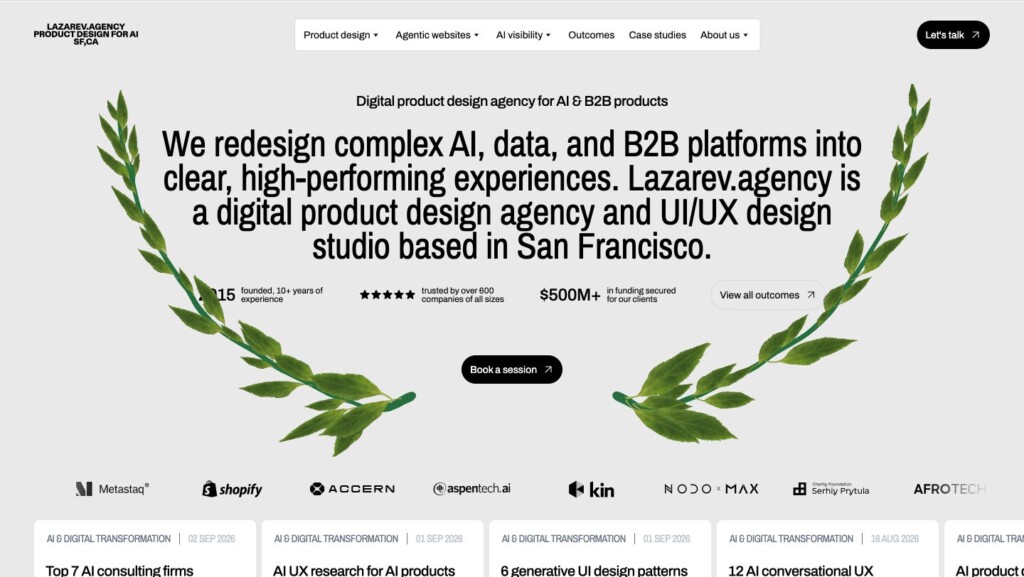
Lazarev. Agency provides UI UX design for startups building AI software. They use a design-to-valuation approach, tying screen flows to metrics investors review during due diligence, such as time-to-value and onboarding drop-off.
For Fieldstream, Lazarev converted marketing algorithms into a clear dashboard, demonstrating defensibility and supporting a $3.8M pre-seed round. They also designed systems for robotics startup Nimble ahead of a $106M Series C round.
Back your design with code that ships without friction.
Hire Web Development6. Bricx Labs
A design studio building interfaces for Y Combinator artificial intelligence startups.
- HQ: New Delhi, India
- Team: 40+
- Model: Monthly retainers and fixed sprints ($25k+ min)
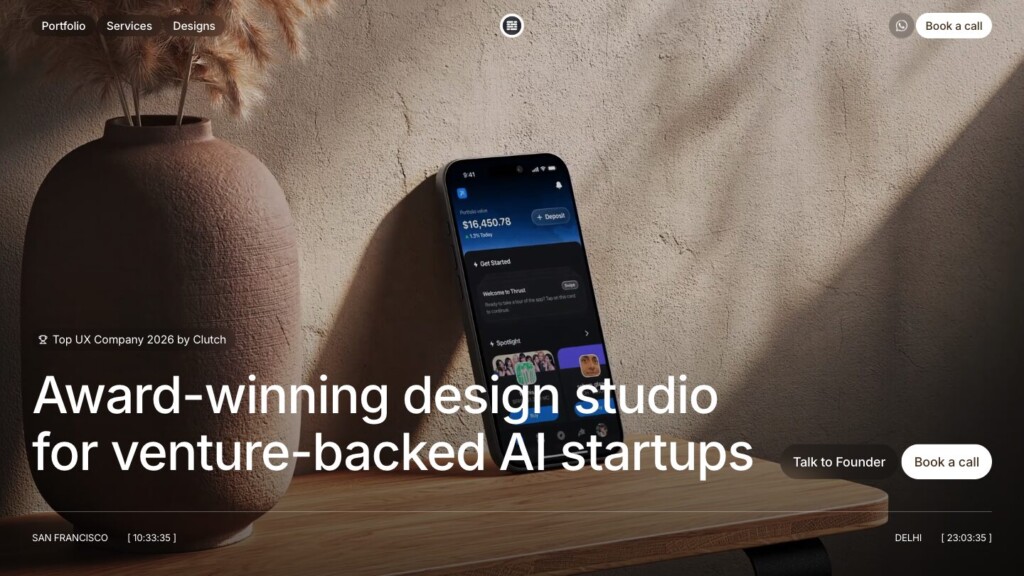
Bricx Labs designs for generative AI products, often shipping UI deliverables within seven days. Their team structures design tokens for model updates, avoiding rework when prompt logic changes.
For Writesonic (YC S21), Bricx rebuilt the onboarding flows and workspace, helping the company reach one million monthly visitors and close a $2.6M round. Their clients also include venture-funded AI companies like Sybill ($14.5M raised) and Gigamind.
7. Z1 Digital Studio
A product design studio building fixed-tier MVPs for non-technical founders.
- HQ: Seville, Spain
- Team: 50–99
- Model: Fixed-tier MVP packages ($40,000 to $80,000)
Z1 Digital Studio tests navigation and layouts using Blockframing before designers apply visual styling. They package builds into fixed-cost tiers to prevent cost overruns.
For Qamarero, Z1 designed and shipped a web and mobile ordering app. The software processed over 100,000 orders across four countries, helping the founders raise a €1M seed round.
8. Phenomenon Studio
A product studio designing healthtech and fintech platforms for venture validation.
- HQ: Tallinn, Estonia
- Team: 50–99
- Model: Dedicated sprint squads and retainers ($25k+ min)
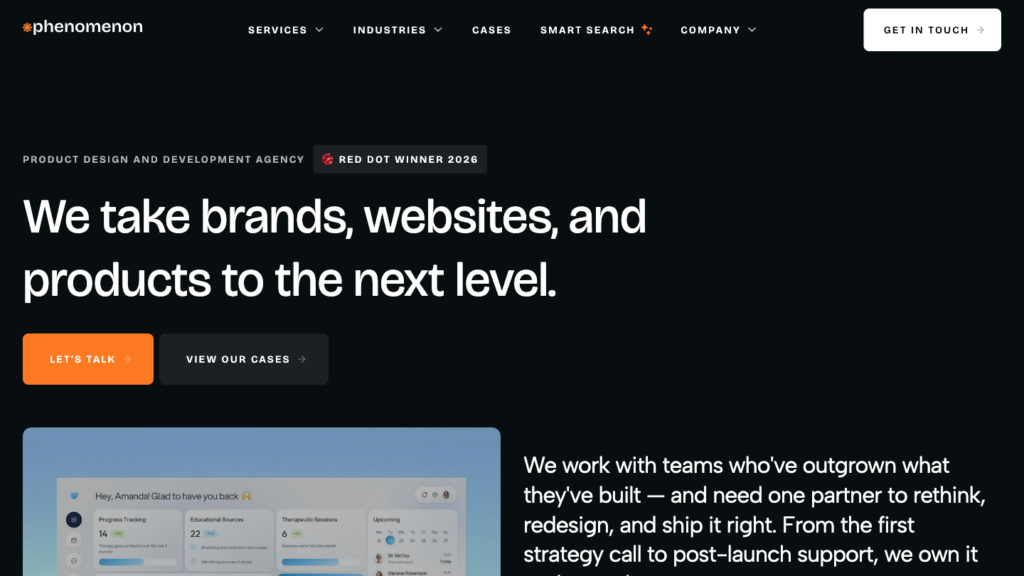
Phenomenon Studio works in regulated industries where clarity affects user safety and compliance. Their discovery framework cuts research-to-prototype timelines in half.
For health platform Wisdom, Phenomenon designed a mobile app for elderly users and caregivers. The prototype won a Red Dot Design Award and yielded the engagement data needed to close a $1.3M pre-seed round and sign a partnership with Samsung Electronics.
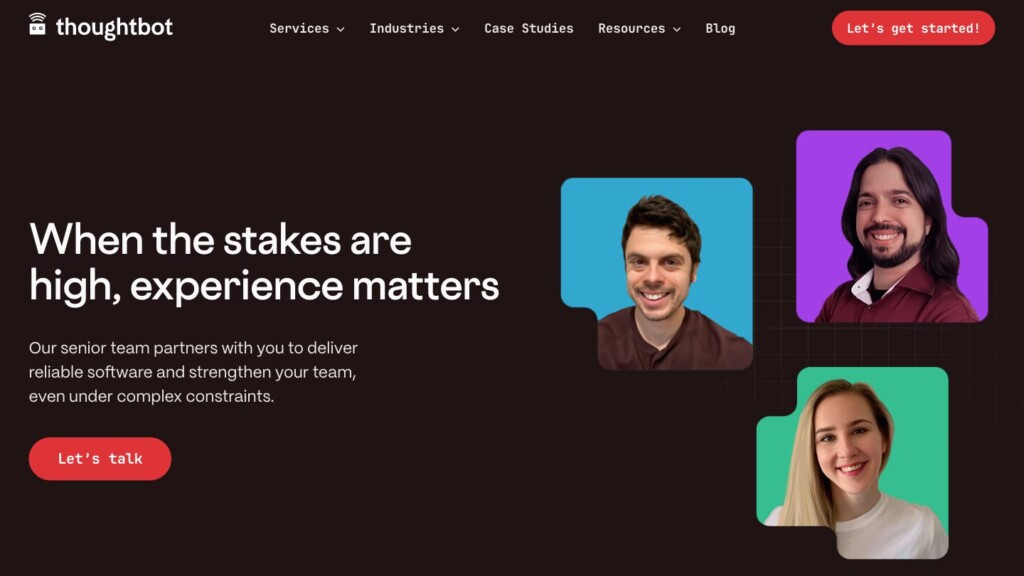
9. thoughtbot
A consultancy combining Lean UX discovery with software engineering for venture-backed products.
- HQ: Boston, USA
- Team: 100–149
- Model: Hourly ($150 to $199/hr) and 1–2 week design sprints
thoughtbot embeds designers alongside Ruby on Rails and React engineers in single squads. They treat interfaces as hypotheses, testing assumptions before writing backend code.
For Yammer, thoughtbot built the original MVP, bringing viral mechanics to business software and paving the way for a $1.2B acquisition by Microsoft. Their portfolio also includes early work for Splitwise and Postmates.
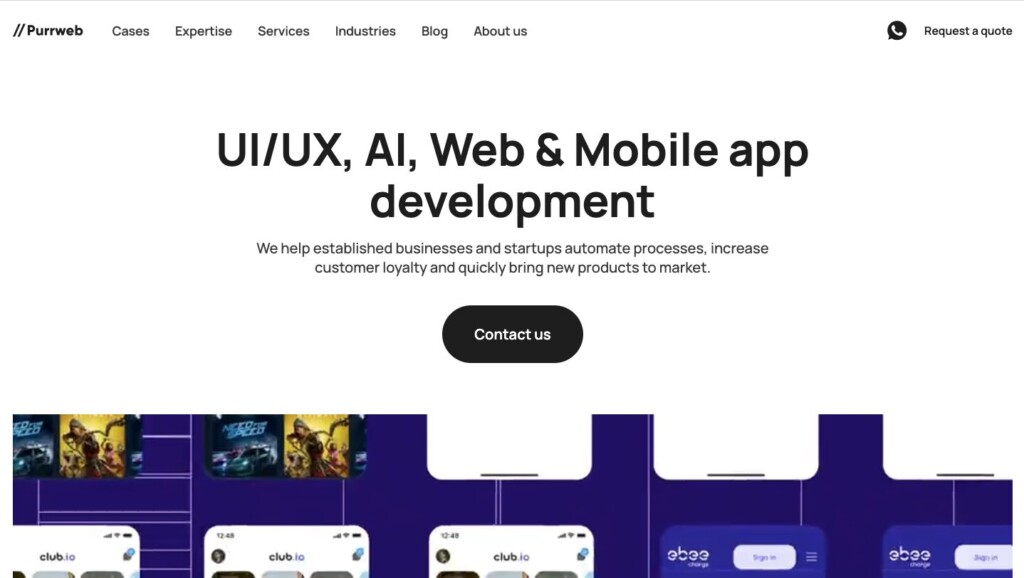
10. Purrweb
An MVP studio delivering cross-platform applications in under four-month timeboxes.
- HQ: Tortola, British Virgin Islands
- Team: 100–199
- Model: Fixed-scope 4-month MVP builds ($40,000 to $70,000)
Purrweb offers a design agency for startups model for teams launching on iOS and Android together. They cut secondary features during discovery to protect runway and meet four-month launch targets.
For Kuwaiti payment app KEM, Purrweb built a mobile prototype with simulated banking endpoints in four months. The software satisfied banking regulations, secured API access, and supported a $1M seed round that grew the app past 100,000 users.
Turn your company name into market authority
Position with Branding servicesHow to evaluate and choose a startup design agency
Agency directories display visual concepts that collapse under production constraints. When vetting a design agency for startups, find a partner that protects your runway.
Avoid feature factories: agencies that build every requested feature without testing user demand. Research shows 65% of founders who fail from lack of market need ran zero interviews before writing code.
A good partner challenges assumptions and cuts extra features so you can ship the main product flow before capital runs dry.
Demand technical deliverable hygiene. Check whether they deliver tokenized component systems that map into front-end frameworks like React or Flutter. If designers ignore API latency, screen sizes, and empty states, developers will waste sprint cycles rebuilding interfaces. For a checklist on assessing competence, review our guide on how to choose a web design agency.
Finally, match the contract model to your runway:
- Fixed-timeline MVP packages: Best for zero-to-one builds requiring fixed budgets to launch software.
- Monthly retainers: Best when you have users and need a designer to refine onboarding flows using customer feedback.
Whichever contract you choose, complete user testing 30 to 45 days before meeting investors. This leaves time to gather the engagement data needed to support your valuation.
How Fireart executes startup product design
At Fireart, we approach startup product design as an exercise in financial and operational discipline. When founders bring us a brief, our goal is finding the shortest path to customer validation.
We interview users and test feature priorities before creating wireframes. Knowing how to write an effective PRD helps us trim scope and protect cash.
Next, our designers build prototypes to test with users within days. We identify friction and adjust the interface before engineers write backend code. If you are raising a seed or Series A round, we turn those user journeys into materials, ensuring your product narrative and pitch deck design project maturity.
Because our studio houses software engineers, our Figma deliverables use design tokens and component-to-code parity. Your developers receive production-ready assets, avoiding rebuilds that inflate product design costs.
Let us map your sprint before the week ends
Schedule a consultationConclusion
Building a venture-backed company is a race against capital depletion. The interface often determines whether customers adopt the software and whether investors write checks.
Partnering with startup design agencies reduces risk. The right team filters feature requests, keeps velocity high, and links design tokens to code. Whether you choose a monthly squad, an MVP team, or a development partner, prioritize studios with proven funding track records and high deliverable standards.
Great product execution requires clarity, speed, and focus on customer value.
Frequently asked questions
How do founders choose the right design agency for startups?
Filter candidate agencies by verified fundraising outcomes and technical deliverable standards. Require case studies showing that prototypes helped founders raise pre-seed or seed rounds. Verify that design files use component tokens that map into frameworks like React or Flutter.
How much does startup product design cost?
Pricing depends on engagement structure and scope. Discovery sprints range from $10,000 to $25,000, while fixed-scope MVP builds run between $40,000 and $80,000. Monthly product design subscriptions range from $3,800 to $6,000.
Is a design subscription better than a fixed-scope contract?
Fixed-scope contracts suit zero-to-one builds where you need budget limits to ship software before capital runs out. Monthly subscriptions suit products with active users where you need a designer to refine funnels and dashboards based on data.
How do startup design agencies prevent design debt before Series A?
By establishing design tokens early. Agencies build component libraries in tools like Storybook, preventing discrepancies between designs and staging builds while reducing development time.
When should a startup hire an agency instead of an in-house designer?
Engaging a design agency for startups makes sense during pre-seed and seed stages when you need product velocity without equity dilution, recruiter fees, and management overhead. An agency provides user research, design systems, and engineering alignment, preserving cash until you confirm product-market fit.



 Kotlin
  C++
C++  C#
C#  Ruby on Rails
  Java
Java  Firebase
  Python
  Vue.js
  HTML5
HTML5  CSS3
CSS3  Azure
Azure