

Hiring a branding agency as a startup founder is a different job from hiring one as the CMO of a 2,000-person company. You get one serious attempt before the next raise. The product will keep changing under the logo. And the website has to carry the new brand on launch day, built by a team that was probably not in the workshops.
Most “best branding agencies” lists ignore that and rank global network agencies next to two-person studios. This guide does the opposite. It is written for three kinds of founders: the pre-seed or seed team that needs a credible identity before launch, the Series A or B SaaS company whose brand no longer matches its product, and the product-led company whose brand has to live inside the UI.
Every studio below is judged on the same five criteria: strategy before visuals, a digital-ready brand system, sector fit, senior creative ownership and proof of shipped brands. No star scores, no award counts.
I work at Fireart Studio, so I am biased, and I say so up front. Fireart sits at #1 because it fits one specific scenario best, and the card explains which. Where another studio is the better call, its card says that too.
TL;DR
- There is no single best branding agency for startups, only three kinds built for different situations: brand-first studios (Red Antler, Koto, Ragged Edge), SaaS brand-and-website studios (Focus Lab, Ramotion, Clay) and brand-and-product studios that build what they brand (Fireart, Halo Lab, Arounda, Phenomenon Studio).
- Logo taste rarely decides the outcome. Two things most proposals underspecify do: how many weeks of strategy happen before the first visual, and which files your developers receive at handoff.
- In G2’s April 2026 survey of 1,076 B2B software buyers, 51% said they now start research with an AI chatbot more often than with Google, up from 29% a year earlier. Your brand has to describe itself the same way everywhere it can be quoted.
- Since January 18, 2025, a US trademark application costs $350 per class at the USPTO, and since June 28, 2025 the European Accessibility Act has applied to many digital services sold in the EU. Name clearance and color contrast are now brand-stage decisions, not legal or engineering afterthoughts.
- Clutch’s September 2026 data puts the average branding project at $71,652, yet most projects fall between $10,000 and $49,999, and three of the most respected studios in this list have no Clutch reviews at all. Neither averages nor stars tell you much.
- Vet partners on who leads the work, how strategy is done and what developers get at handoff, rather than on star ratings, award lists or a portfolio reel.
Which branding design agency fits which startup situation?
There is no single best branding agency for startups, only studios built for different situations. Some are brand-first shops that shaped consumer categories. Some are SaaS specialists who can turn a positioning workshop into a website in one engagement. Others are product design studios where the brand is designed by the same people who will put it into your interface. Picking the wrong kind costs more than picking a weaker studio of the right kind.
Our Evaluation Criteria
What I actually check before shortlisting a branding partner
- Strategy before visuals. Does the studio run research, positioning and audience work before the first logo sketch? A logo with no positioning decision behind it usually gets redone at Series A.
- Digital-ready brand system. Do the deliverables include guidelines, design tokens or components a developer can use on the website and in the product? A brand that lives only in a PDF breaks the first time an engineer picks a color alone.
- Sector fit. Can the studio name startup, SaaS or tech clients similar to you? Named clients beat a “we love startups” page.
- Senior creative ownership. Who leads the work from kickoff to handoff, and is that person named? Senior people at the pitch and juniors in delivery is the most common complaint I hear from founders.
- Proof of shipped brands. Is there a live rebrand you can open in a browser, backed by a verified review or a named case study?
What these criteria do not measure: average star ratings, award counts or Dribbble followers. Every studio below that has Clutch reviews sits between 4.8 and 5.0, and three of the best-known brand studios on the list have no Clutch reviews at all. Stars do not separate them.
Why strategy outranks portfolio
Founders usually shortlist by portfolio, because portfolios are easy to judge and strategy is not. But a portfolio shows taste, and taste is not what breaks a startup brand. What breaks it is a positioning nobody agreed on, so the homepage says one thing, the sales deck another and the product a third.
The studios that hold up are the ones that force a decision about who you are for and why you win before anyone opens Figma. When I review a proposal, I look at how many weeks sit before the first visual. If the answer is “none”, the studio is selling a logo, not a brand.
Who this guide is for
- The pre-seed or seed founder who needs a credible identity before launch or a raise, on a budget under $50,000, and cannot afford a second rebrand in 18 months.
- The Series A or B SaaS team whose brand was made in a weekend and no longer matches the product, the price point or the buyers it now sells to.
- The product-led company whose brand has to live inside the UI, onboarding and app store pages, not just on a homepage.
Be honest with yourself about which of those you are. The right shortlist is different for each.
The 10 branding design agencies covered
Each studio below is the best fit for a different situation. Here is the short version before the detail:
- Fireart Studio: SaaS and app founders who need the brand, the website and the product UI shipped together by one team.
- Red Antler: Pre-launch and consumer-facing startups creating a category, especially when the company still needs a name.
- Koto: Series B and later companies repositioning across markets, including the Gulf.
- Ragged Edge: Fintech and AI scaleups that want a distinctive name, voice and identity, and have their own team to build it.
- Focus Lab: Growth-stage B2B SaaS companies that want positioning and a Webflow site at a published price.
- Ramotion: Funded startups that want a fixed-price package with naming, identity and a website.
- Clay: Companies designing brand and product in the same quarter, with budget for an engineering team.
- Halo Lab: Seed founders who need a fixed-price identity, a naming check and a Webflow site within two months.
- Arounda: Fintech and SaaS teams where product UI leads the brand, and who want to test a designer before committing.
- Phenomenon Studio: Product-led startups that already know their positioning and need high-craft visuals across site and app.
| Company Name | Best For | Engagement Model | Naming and Build Coverage |
| Fireart Studio | Brand, website and product UI shipped together | Custom quote from $10,000; 8–16 weeks strategy to guidelines | Naming not listed; in-house web and product build |
| Red Antler | Pre-launch and consumer category startups | Custom quote, from about $25,000; equity sometimes considered | Naming offered; UX, design and engineering credited on case studies |
| Koto | Series B+ global repositioning | Research-led programs; custom quote | Naming offered; design systems; in-house engineering not publicly claimed |
| Ragged Edge | Distinctive fintech and AI scaleup brands | Strategy-led programs; custom quote | Naming offered; build by client teams or partners |
| Focus Lab | B2B SaaS positioning plus Webflow site | Published monthly pricing from $15,000 per month | Naming not listed; Webflow sites, no custom web apps |
| Ramotion | Packaged brand plus website for funded startups | Published packages from $60,000, about 3.5 months | Naming offered; in-house web builds |
| Clay | Brand and product designed in the same quarter | Time and materials, fixed fee or retainer; $50,000+ minimum | Naming not listed; full-stack web and app build |
| Halo Lab | Fixed-price identity and site for seed founders | Fixed-price branding; projects from $5,000 | Naming offered; Webflow and Next.js builds; design tokens |
| Arounda | Product-led fintech and SaaS identity | Packages from $4,000; three-day free trial | Renaming within rebrands; product UI and Webflow builds |
| Phenomenon Studio | High-craft visuals across site and app | Packages from $4,000 on the pricing page | Naming and verbal identity not listed; web and product UI build |
Start with the card that matches your situation. If you are a SaaS or app founder launching brand and product together, that is the first one.
-
Fireart Studio
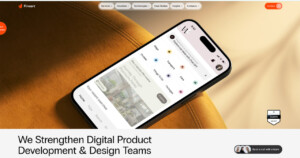
Brand-to-product systems SaaS and app identity In-house web build
Clutch record: 4.9/5 from 40 reviews
HQ / founded
Warsaw, Poland, 2013; presence in the US and UK
Minimum project
$10,000+ (Clutch); $50–$99 per hour
In-house web and product build
Yes: web development, UI/UX and product design teams
Fireart publishes its branding process and an 8–16 week timeline upfront, so founders can plan the brand around a launch or a raise. Evaluated on the basis of
- Strategy before visuals: The published process opens with a competitor audit of colors, wording and imagery, then audience and persona analysis, before several design directions are presented for a choice. On the Specialty Box rebrand, a discovery workshop and competitor research reduced the brand to four keywords before three creative directions were shown.
- Digital-ready brand system: Deliverables include guidelines and a brand book plus UI environments and rollout support across web and product touchpoints. The same company builds the website and the app, so the handoff happens inside one team.
- Sector fit: SaaS, FinTech, PropTech, MusicTech, e-commerce and health are the named industries. Verified branding work includes Replicant (contact-center AI) and Rapchat (music app).
- Senior creative ownership: Head of Branding Darko Pašalić is named on case studies, and product design and graphic design are led by named art directors, Tolik Nguyen and Dmitrij Hladkyi. Replicant’s team was a project manager, a creative lead and supporting designers.
- Proof of shipped brands: Branding work is backed by verified Clutch reviews from a CMO and a COO, with dates, budgets and scope. Branding is 5% of the reviewed service mix, so the evidence base is narrower than for web and product work.
Differentiator
Most branding studios hand over a guideline PDF and leave the website and product UI to someone else. Fireart’s core business is web and product delivery, so the identity is designed by people who will also apply it to screens, components and a production website. For a startup that is launching a product and a brand in the same quarter, that removes the gap where brands usually break: the first time a developer has to pick a button color on their own.
Proof of execution
- Replicant, a conversational AI startup: brand strategy, three to four mood boards, then a new logo, palette, typeface, iconography and photography direction, February to July 2022 (Clutch review by the CMO, 5.0 overall). Replicant closed a $78 million round shortly after, and the work won iDesign Gold in 2023.
- Rapchat, a music production app: product design, UI/UX and branding in an engagement running since April 2021; the COO reports the app passed 15 million downloads (Clutch, $200,000+ budget band).
- A Berlin health and wellness startup: branding plus UI/UX and app development from November 2020 to March 2021; the project manager reports thousands of users after launch (Clutch, $50,000–$199,999).
Pricing
Custom quote per engagement; Clutch minimum is $10,000. Full branding from strategy to guidelines runs 8–16 weeks, and projects typically start 2–4 weeks after agreement.
Potential limitation
Naming is not listed as a service. If you still need a company name, or you are building a consumer brand where culture, campaigns and retail packaging matter more than the product UI, a brand-first studio such as Red Antler is the better starting point.
My take
I put Fireart first for one scenario: a SaaS or app founder who needs the brand, the website and the product interface to ship together. If you only need a logo and a guideline file, you are paying for capability you will not use. If you need all three, one team owning the whole chain is worth more than a bigger brand-agency name.
4.9/5 ★★★★★
Based on 40 reviews
If Fireart’s limitation is your situation, because you still need a name or your brand has to carry a consumer category, the next two studios are built for exactly that.
2. Red Antler
Pre-launch startup brands Naming and verbal identity Consumer and AI startups
Clutch record: Unclaimed profile, no verified reviews
HQ / founded
Brooklyn, New York, 2007
Minimum project
No published pricing; Webflow partner listing says from $25,000
In-house web and product build
UX, visual design and engineering credited on several case studies
Evaluated on the basis of
- Strategy before visuals: Work starts by agreeing on the vision and the emotional territory the brand will own, with logo, type and messaging after that (TechCrunch profile, 2019). The new-business form sorts leads into pre-launch and in-market companies.
- Digital-ready brand system: UX, visual design and engineering are credited on Pika, Figure, Archer and Raft, and the studio has been a Webflow Premium Partner since December 2022. Brand portals or token files are not publicly claimed in the reviewed sources.
- Sector fit: AI and fintech startups including Pika, Ramp, Figure, Duckbill and Raft, plus consumer brands such as Casper and Hinge.
- Senior creative ownership: Co-founder and CEO Emily Heyward, Chief Creative Officer Kiser Barnes and two executive creative directors are named. Teams can be large: up to 18–20 people per client, according to the 2019 profile.
- Proof of shipped brands: A long list of live brands and press coverage, but no verified reviews on Clutch, G2 or Agency Spotter. Evidence comes from case studies and client announcements.
Differentiator
Red Antler treats a launch brand as company-building rather than design. It names companies, works with founders before launch and runs its own venture arm, Habitat Partners, which raised a $31 million first fund. Its co-founder said in 2019 that equity is sometimes part of a deal. Few studios on this list think about a brand the way an early investor would.
Proof of execution
- Casper: named the company and created its first visual identity, then stayed on as a strategic partner; the co-founder and CEO later described the studio as a sixth co-founder (TechCrunch, 2019).
- Volato, a private jet startup: a name built from the Latin verb for “to fly,” a wordmark with a cursive V, a palette and a dragonfly icon tied to the fleet call sign (Volato press release, July 2022).
- Figure, a humanoid robotics company: strategy, naming, identity, messaging, UX and engineering, with the brand designed to win investors and partners before consumers (Red Antler case study).
Pricing
Custom quote per engagement. The Webflow partner listing says projects start at $25,000; the co-founder has described the studio as probably not the cheapest option.
Potential limitation
Wrong fit for a seed-stage B2B SaaS founder with a fixed budget near $25,000 who needs an identity and a website and wants verified client reviews before signing. The portfolio and service mix lean toward consumer brands, campaigns and media.
My take
I would call Red Antler when the brand is the product: a new consumer category, a name that has to carry a whole company, a launch that depends on cultural attention. For a B2B tool sold to operations teams, a large part of what you pay for here, such as campaign thinking and media, will sit unused for two years.
3. Koto
Research-led repositioning Naming and custom type Global tech rebrands
HQ / founded
London, 2015; offices in LA, New York, Berlin, Sydney and, since September 2026, Dubai
Minimum project
No published pricing
In-house web and product build
Digital design and design systems; in-house engineering not publicly claimed
Koto’s Bolt case study shows how a research phase turned into a logo, typeface and checkout UI in one system. Evaluated on the basis of
- Strategy before visuals: On Bolt, about two to two and a half months of research and strategy, including more than 50 interviews, came before the first creative presentation (Brand New podcast, 2023).
- Digital-ready brand system: Design systems and product interfaces are listed services; Fluz and MachineX include product UI, and Rakbank got an app component library. Token files and in-house development are not publicly claimed.
- Sector fit: Bolt, Uniqode, Fluz, Mews, Coda, Faculty and Stack Overflow on the tech side, plus naming for Pairpoint, a Vodafone and Sumitomo venture.
- Senior creative ownership: Co-founders James Greenfield (CEO), Jowey Roden (CCO) and Caroline Matthews (COO) are named, with executive creative directors per office; Bolt and Uniqode were led by the New York ECD.
- Proof of shipped brands: Extensive case studies and trade-press coverage. No verified Clutch reviews.
Differentiator
Koto does strategy at a depth most studios only claim: dozens of customer interviews, several deliberately different strategic routes and a clear choice before anyone designs a logo. It also builds tooling around the brand, such as a generative asset tool for Stack Overflow. For companies selling into the Gulf, its bilingual Latin and Arabic work for Rakbank and its new Dubai office are rare among studios on this list.
Proof of execution
- Bolt, a fintech checkout company: a research-led repositioning, a new logo, a custom typeface with Pangram Pangram and full guidelines; kickoff in April 2022, launch in January 2023.
- Stack Overflow: repositioning for the AI era, a new logo, the Stack Sans typeface and a generative asset tool, launched in November 2025 and then extended to a full website overhaul (Design Week, July 2026).
- Rakbank, UAE: brand architecture uniting four banking divisions, an Arabic version of the logo, Latin and Arabic typography and an app component library (Koto case study, 2026).
Pricing
Custom quote per engagement. Third-party guides place its best fit at Series B and later.
Potential limitation
Wrong fit for a pre-seed or seed founder who needs a launch brand in four to eight weeks. The documented startup project, Bolt, ran about nine months from kickoff to launch, and the client list is weighted toward enterprises such as Amazon, Microsoft and Google.
My take
Koto is the studio I would shortlist for a Series B or later company that has outgrown its story and needs to reposition, not just refresh. Nine months is not slow for that kind of work; it is what real research costs. If you need to launch next quarter, that same rigor becomes a risk to your runway.
Koto and the next studio share a London base and a habit of long research phases. Where Koto scales to enterprise programs, Ragged Edge stays focused on challenger brands that want to look and sound unlike their category.
4. Ragged Edge
Challenger fintech brands Naming and verbal identity Brand-to-product co-creation
HQ / founded
London (single office), 2007; 47 people
Minimum project
No published pricing
In-house web and product build
Design systems co-created with client teams; builds done by clients or partners
Evaluated on the basis of
- Strategy before visuals: The studio works in three stages, Define, Create and Commit, with two named strategy directors. A 2016 UK public-sector statement of work shows one week of interviews and desk research, six weeks of positioning and five weeks on the name and story.
- Digital-ready brand system: For Wise, a product design system was co-created with Wise’s own product designers in shared Figma files, with color tested for accessibility (Creative Review, March 2023). Websites and products are built by client teams or partners; Solflare’s site was built by Bornfight.
- Sector fit: Wise, Marshmallow, Tilt, Solflare, Granola and Optimizely: mostly fintech and AI scaleups.
- Senior creative ownership: Co-founders Max Ottignon and Matt Bland and executive creative directors Matt Smith and Luke Woodhouse are named, and trade press credits named leads on individual projects.
- Proof of shipped brands: Several brands with outcomes reported by the studio and the trade press, but no verified reviews on Clutch or G2.
Differentiator
Ragged Edge builds brands around language as much as visuals. A copy director leads verbal identity, and its Wise work won a Design Week Award for writing in 2023. It designs for distinctiveness rather than safety, which is why it shows up on so many fintech rebrands in a category where most brands look interchangeable.
Proof of execution
- Tilt, a US fintech formerly called Empower: a new name, positioning, identity, verbal identity and illustration suite; Meta click-through rates rose 70% after launch (Creative Review, September 2025).
- Wise: “The World’s Money” rebrand across 175 countries, with a product design system co-created with Wise’s product team; the studio reports a 10% lift in website conversions.
- Granola, an AI notepad: repositioning, a hand-drawn G, a script based on a co-founder’s handwriting and out-of-home campaigns in San Francisco, New York and London, launched in February 2026.
Pricing
Custom quote per engagement. An independent London agency guide classes its investment level as high, aimed at strategy-led programs.
Potential limitation
Wrong fit for a pre-seed or seed founder who wants one agency to deliver the brand, a built website and product UI on a tight budget. It also has no office or published work in the Middle East.
My take
A 70% jump in click-through is the kind of number brand studios rarely get to publish, and it came from a name and a voice, not a media budget. Ragged Edge is one of the strongest choices on this list if your product team can build what it designs. If it cannot, budget a build partner before you sign, not after.
Red Antler, Koto and Ragged Edge all sell depth, and all three price for it. The next three studios are narrower: they specialize in B2B SaaS and usually deliver the marketing website in the same engagement. If the website is the main thing your brand has to fix, read our guide to designing a SaaS website before you brief any of them.
5. Focus Lab
B2B SaaS rebrands Verbal identity Webflow marketing sites
Clutch record
5.0/5 from 3 verified reviews; G2 4.9/5 from 44 reviews
HQ / founded
Fully remote, United States (started in Savannah, Georgia), 2010
Minimum project
Published: from $15,000 per month for 1–3 months
In-house web and product build
Webflow websites and UI kits; does not build custom web apps
Focus Lab is one of very few branding studios that publishes prices, which makes it easy to budget before the first call. Evaluated on the basis of
- Strategy before visuals: Discovery audits, competitive and audience analysis, and interviews with customers, executives and staff come first. A February 2026 G2 reviewer from a mid-market B2B SaaS company singled out that strategy preceded design.
- Digital-ready brand system: Website design, Webflow development and UI kits are in scope, and guidelines are also delivered in AI-ready formats such as markdown files and custom GPTs. Token files are not publicly claimed, and custom web apps go to partner agencies.
- Sector fit: LaunchDarkly, Merge, PolyAI, Doppel, Spellbook and Rows: almost entirely B2B SaaS and AI.
- Senior creative ownership: Partners Bill Kenney (CEO) and Will Straughn (President) and Creative Director Natalie Kent are named; Clutch reviews describe project teams of two to ten people.
- Proof of shipped brands: Verified reviews from a brand director and a CMO, with reported outcomes, plus 44 reviews on G2.
Differentiator
Focus Lab runs a fixed weekly rhythm: one working session early in the week and delivered work every Friday with a recorded walkthrough, instead of big reveal presentations. Combined with published prices and a 30-day money-back guarantee, it removes most of the uncertainty a founder faces when buying creative work for the first time.
Proof of execution
- Zello, a push-to-talk communications company: a complete rebrand from January to April 2023 with a two-to-five-person team; the brand director reported higher brand awareness and sales growth (Clutch, February 2024).
- PolyAI, a voice AI company: strategy, visual and verbal identity, and a website with interactive call-recording components and a page design system the client team now builds with.
- Spellbook, a legal AI startup: the identity was developed in weekly sessions with the client’s own UI designer, so the brand and the product site evolved together.
Pricing
Focused Branding from $15,000 per month for one to three months; Structural Rebrand from $25,000 per month for three to five months; retainers from $5,000 per month.
Potential limitation
Wrong fit for a consumer or e-commerce startup, a founder who still needs a name, or a team that wants the same agency to build a complex web app. The studio states it does not focus on consumer brands and does not build custom software.
My take
Published pricing is underrated in agency selection. A studio that tells you its price before the call has already decided which clients it wants, and that saves both sides weeks. For a Series A B2B SaaS company that needs positioning and a Webflow site, Focus Lab is close to a safe default.
Focus Lab sells a rhythm and a price list. Ramotion goes one step further and sells fixed startup packages, including naming and the website, which suits founders who want a single number to approve.
6. Ramotion
Packaged startup branding Naming and brand metaphor In-house web build
Clutch record: 4.9/5 from 29 verified reviews
HQ / founded
San Francisco, with Los Angeles and New York; founding year given as 2009 or 2011 depending on source
Minimum project
$50,000+ (Clutch); $150–$199 per hour
In-house web and product build
Yes: web design and Webflow, Jamstack or React builds
Ramotion prices startup branding as fixed packages, so founders can compare scope line by line before a call. Evaluated on the basis of
- Strategy before visuals: A published 14-stage process runs through a brand workshop, competitive analysis, a positioning hypothesis, a brand personality document, naming and a brand metaphor before any sketching. For Holidu, a 200-respondent test shaped the final logo.
- Digital-ready brand system: Guidelines and a brand portal are offered as a service, and websites are built in-house. For Firefox, Ramotion says the master-brand system let Mozilla launch three products without the agency. Token files are not publicly claimed.
- Sector fit: Descript, Island, Holidu, Truebill, Volusion, Murf AI, Okta and Firefox.
- Senior creative ownership: CEO Denis Pakhaliuk and Michael Chu, head of design and strategy, are named; several Clutch reviewers name Chu as their creative lead.
- Proof of shipped brands: 29 verified reviews. The most recent startup branding review, from Murf AI in May 2025, scored 4.0 overall with 3.5 for schedule and cost.
Differentiator
Ramotion puts a brand metaphor at the center of its process: a single idea that the logo, motion and website all express. Descript’s logo, for example, reads as an audio track, lines of text and a loading indicator at once. Combined with published packages that include naming and a website, it is the most productized premium option on this list.
Proof of execution
- Descript: logo, brand book, app icons, explainer animations and the marketing site, first built in React and later rebuilt in Webflow, with three years of ongoing support (Ramotion case study).
- Mobingi, a Japanese SaaS company: a complete rebrand and website from June to October 2017; the founder reports brand recognition up about 66% among prospects and industry experts (Clutch).
- Island, an enterprise browser: brand identity, simplified messaging for technical and executive buyers, a Webflow site and launch materials (Ramotion case study).
Pricing
Published packages: Brand Creation $60,000 over about 3.5 months; Brand Redesign $85,000; a small website adds $25,000–$60,000. Half is paid upfront.
Potential limitation
Wrong fit for a pre-seed founder who needs a logo and landing page within weeks for under $45,000, or a team that expects to change direction late. Changing direction after execution starts restarts the phase, under its published terms.
My take
The restart clause scares some founders, but I read it as a feature: it forces the decision to happen in the strategy phase, where it belongs. The Murf AI review is the warning on the other side. Agree in writing how many weeks go to research versus execution before you start.
Ramotion and Clay both sit in San Francisco and both start at $50,000 on Clutch. The difference is depth of engineering: Clay will build your web app as well as your website.
7. Clay
Brand and product design systems Fintech and enterprise SaaS Full-stack web and app build
Clutch record: 4.8/5 from 32 reviews (30 verified)
HQ / founded
San Francisco, 2016; remote-first with New York, Austin, Denver, Lisbon and Belgrade
Minimum project
$50,000+ (Clutch); $150–$199 per hour
In-house web and product build
Yes: front-end and back-end development for sites and apps
Evaluated on the basis of
- Strategy before visuals: The site describes discovery, research and strategy before branding, and the Sky case was built on a full brand strategy. A formal workshop or research method is not publicly documented in the reviewed sources.
- Digital-ready brand system: The strongest record in the SaaS group: design systems for Wealth, Sky, Tipalti and STC Bank, and the brand applied directly in the Eden app and the Wealth web app.
- Sector fit: Sky (formerly MakerDAO), Wealth, Eden, CafePay and Streetbeat among startups; 70% of its Clutch-reviewed clients are enterprises.
- Senior creative ownership: Co-founders Anton Zykin (CEO) and Dmitry Tsozik (design director) are named, and the site says co-founders oversee every project.
- Proof of shipped brands: 30 verified reviews, mostly positive, including one strongly negative review from 2024 that is worth reading before you sign.
Differentiator
Clay can take a company from identity to a shipped product with its own engineers, and it has done so in regulated finance. For STC Bank, a Saudi digital bank, it delivered the app, the website, a merchant portal and the design system. Alongside Koto’s Rakbank work, it is one of two studios here with documented Gulf banking projects, and the only one that built the product itself.
Proof of execution
- Wealth, an estate-planning startup: logotype, identity, illustration system, marketing site, web app and a “UI Playbook” design system, launched together (Clay case study).
- Streetbeat, an AI investing startup: brand creation, guidelines, logo and competitive analysis from April 2022 to September 2023 in the $200,000–$999,999 band; the CEO says the brand went from amateur to top-tier, and called the cost somewhat high (Clutch).
- Sky: rebrand, design system and website; the client reports a 40% rise in traffic. Figures in the matching Clutch review differ, so treat them as client-reported.
Pricing
Time and materials, fixed fee or retainer; Clutch minimum $50,000. Early-stage companies are pointed to its sister venture, Mission Control, which sells fixed-fee packages.
Potential limitation
Wrong fit for a seed founder who only needs an identity on a budget under $50,000, or who needs naming, which is not listed. One CEO review describes a $50,000 assessment followed by a $550,000 proposal.
My take
Clay makes most sense when the brand and the product are being designed in the same quarter and the budget covers both. If you are earlier than that, ask about Mission Control rather than trying to squeeze the main studio into a seed budget. The engagement model was not built for it.
The last three studios are closest to Fireart in shape: product and web studios with branding as one service line. All three are more affordable than the SaaS group above, and all three are stronger at carrying a brand into product design than at naming or long positioning work.
8. Halo Lab
Fixed-price startup branding Naming and design tokens Webflow and Next.js builds
Clutch record: 4.9/5 from 100 reviews (86 verified)
HQ / founded
2013; remote-first, Clutch lists Dubai as HQ, with Warsaw and Boston entities
Minimum project
$10,000+ (Clutch); pricing page from $5,000; $25–$49 per hour
In-house web and product build
Yes: Webflow and Next.js sites, product UI
Evaluated on the basis of
- Strategy before visuals: The branding page publishes five phases, from a discovery workshop (1–2 weeks) and strategy and messaging (2–4 weeks) to identity (3–5 weeks) and guidelines. The startup package compresses strategy into 6–8 days.
- Digital-ready brand system: A separate design-system service lists design tokens for color, spacing and motion, a versioned Figma library, WCAG 2.2 accessibility and token exports for developers.
- Sector fit: Pluto (UAE fintech), Develop Health, LinkByCar, Praiseworthy and Passion.io.
- Senior creative ownership: Co-founders Valentine Boyev (CEO) and Artem Borysenko (creative director) are named; case studies list roles rather than people, and one reviewer noted the team is not shown on the site.
- Proof of shipped brands: 100 Clutch reviews, several of them branding projects with reported outcomes.
Differentiator
Halo Lab offers the most documented scope for the money on this list: a dedicated naming service with trademark and domain checks, a token-based design system service with WCAG 2.2 named explicitly, and fixed-price branding. Its Clutch hourly band of $25–$49 is the lowest on this list, shared only with Arounda.
Proof of execution
- HomeQ, a Swedish rental marketplace: a full brand refresh with sub-brands plus B2C and B2B websites, from January 2023; the SVP of consumer marketing reports a clear effect on the bottom line (Clutch, $50,000–$199,999).
- WeSpire, an employee-impact platform: a new logo, brand kit and website redesign; the reviewer reports traffic up 35% and bounce rate down 20% (Clutch).
- Pluto, a UAE spend-management fintech: positioning from regional provider to global platform, voice, logo evolution, guidelines with motion and a Webflow site (Halo Lab case study).
Pricing
Fixed-price branding; projects from $5,000 on the pricing page, with the branding inquiry form starting at $10,000–$20,000. Reviewed branding projects mostly fall between $10,000 and $49,999.
Potential limitation
Wrong fit for a research-heavy repositioning of a complex category; 6–8 days of strategy is not enough for that. One reviewer also raised questions about legal recourse for US clients because the company is registered in Andorra, so confirm the contracting entity.
My take
For a seed founder with $15,000–$30,000 who needs a credible identity and a Webflow site within two months, Halo Lab is hard to beat on value. Branding is about 10% of its work, so ask to see the specific brand designers’ portfolios, not the agency reel.
9. Arounda
Fintech and SaaS identity Product UI and design systems Webflow builds
Clutch record: 5.0/5 from 87 reviews
HQ / founded
Odesa, Ukraine and Tallinn, Estonia; 2016
Minimum project
$25,000+ (Clutch); site lists brand identity from $4,000
In-house web and product build
Yes: product UI/UX, web design and Webflow development
Evaluated on the basis of
- Strategy before visuals: The branding FAQ describes research and strategy before identity, and rebrands include a brand audit and discovery sessions. Case studies typically run discovery, moodboard, logo concepts and guidelines; workshop formats and phase durations are not published.
- Digital-ready brand system: Design systems ship alongside brand work on Ping, FundedIQ, GT Protocol and Documotor, and the brand is applied in product UI for Klasha and FundedIQ. Token files are not publicly claimed.
- Sector fit: Documotor, Ping, Klasha, FundedIQ (a UAE fintech), GT Protocol and Lumera.
- Senior creative ownership: Founder and CEO Vlad Gavriluk is named; no creative director or brand lead is. Clutch reviewers describe teams of two to five people with a dedicated project manager.
- Proof of shipped brands: 87 Clutch reviews, with branding outcomes reported in several.
Differentiator
Arounda offers a three-day free trial with a brand designer, which is the cheapest due diligence available from any studio on this list. Its brand work is built to serve the product: identity, design system and app or web UI are often delivered in a single engagement for fintech and SaaS teams.
Proof of execution
- Fineyra, a crypto wallet and debit card: logo, palette, typography and guidelines plus website and app UX/UI from January to October 2024; the CEO reports estimated onboarding time down about 30% (Clutch, $10,000–$49,999).
- Documotor, a document-automation SaaS: a brand identity from scratch, website UX/UI, illustrations and a Webflow build from August to October 2023; launched on time, with an extra resource added at no cost to close a scoping gap (Clutch, CPO).
- RacquetMind, an AI tennis-training app: MVP UI plus a core identity; the founder says the brand made the early concept credible to users and stakeholders (Clutch, November 2024 to March 2025).
Pricing
Brand identity from $4,000 (moodboard, four to six logo drafts, colors, type and guidelines); typical projects from $6,000. Clutch lists a $25,000 minimum, but most reviewed projects were $10,000–$49,999.
Potential limitation
Wrong fit for a founder who needs a strategy-led brand platform with positioning, naming and verbal identity. Branding is 10% of its Clutch service mix, and naming appears only as renaming within a rebrand.
My take
Arounda is at its best when the identity is a means to a product launch rather than the main event. If you already know your positioning and need it to look credible in an app by next quarter, use the free trial to judge the designer you will actually get.
Arounda and Phenomenon Studio are similar in price and shape. The difference is visual ambition: Phenomenon’s web work wins design awards, and its brand systems are built to stretch into product and even in-game UI.
10. Phenomenon Studio
Brand systems for product UI Web3 and gaming startups Award-winning web builds
Clutch record: 5.0/5 from 52 reviews (35 verified)
HQ / founded
Registered in Dover, Delaware; teams in Tallinn and Lugano; 2019
Minimum project
$10,000+ (Clutch); $50–$99 per hour
In-house web and product build
Yes: Webflow and web development, product UI/UX
Evaluated on the basis of
- Strategy before visuals: The branding page lists six phases starting with team interviews, an identity audit, competitor analysis and a positioning snapshot. Published case studies mostly begin at the logo stage, with lighter discovery.
- Digital-ready brand system: The branding page says components are built for developers with design tokens, accessibility and reuse in mind; Shaga’s brand system runs into in-game UI, and Scrambly’s guidelines cover in-app visuals.
- Sector fit: Shaga Labs, Twinkle Technologies, MIRA Systems, Scrambly and HORMN: gaming, Web3, AI and health startups.
- Senior creative ownership: Co-founders Valerii Filimonov and Polina Chebanova are named; other leaders appear by first name and initial only, and no creative director is named.
- Proof of shipped brands: 52 Clutch reviews, with branding projects that report outcomes.
Differentiator
Phenomenon is the youngest studio on the list and one of the strongest on visual craft. Its site for Shaga’s Odyssey controller won Awwwards Site of the Day and a Developer Award in October 2024. Its brand systems are designed to stretch from a website into product screens, which suits startups whose product is highly visual.
Proof of execution
- Shaga Labs, a peer-to-peer cloud-gaming startup: brand strategy, identity, guidelines, a design system, websites and app UI since February 2024; the co-founder attributes 40,000+ new X followers and a $5 million raise to the period after launch (Clutch, client-reported).
- Twinkle Technologies, a B2B Web3 infrastructure company: rebrand with logo, palette, guidelines and social assets plus an eight-page website redesign, July to October 2025; new leads arrived shortly after launch (Clutch, $10,000–$49,999).
- XR Studios: competitor analysis, logo, guidelines and a modular website from January to August 2025; the reviewer reports website traction and positive industry feedback (Clutch).
Pricing
Branding from $4,000 on the pricing page (the branding FAQ says $2,500); website design from $6,000 and development from $13,000. Reviewed branding projects fall between $10,000 and $49,999.
Potential limitation
Wrong fit for a founder who needs naming, messaging and verbal identity, or real guidance choosing between strategic directions. A 2025 reviewer said the one thing to improve was explaining what each branding option would communicate.
My take
Phenomenon is a good choice when you already know what you stand for and need it to look exceptional across your site and product. If you need someone to tell you what you stand for, start with a strategy-led studio and bring Phenomenon in for execution.
How this roster was assessed
No numeric scores appear in this guide, and that is deliberate. Clutch ratings for the seven studios that have them sit between 4.8 and 5.0, so stars do not separate anyone. Three of the most respected brand studios here, Red Antler, Koto and Ragged Edge, have no verified Clutch reviews at all.
Each studio was assessed in October 2026 against the same five criteria, using its own website and case studies, Clutch and G2 profiles, published pricing, and trade press such as Creative Review, Design Week and TechCrunch. Where a claim comes only from the studio itself, the card says so. Where a criterion is not evidenced in public sources, the card says that too, rather than guessing. Absence of a claim is not a failure, but it is information you should have before a four- or five-figure commitment.
Fireart sits first because it fits one specific scenario best: a SaaS or app founder who needs brand, website and product UI shipped together by one team. You can review our case studies to judge that claim yourself. That placement is a statement of fit, not of rank. Red Antler will beat us on naming and consumer category launches, Koto on research-heavy global repositioning, and Ragged Edge on verbal identity.
Q2: What does a startup branding project actually include?
A startup branding project is the work of deciding who the company is for, how it sounds and how it looks, and then packaging those decisions so a website, a product and a sales team can use them without the agency in the room. Positioning, verbal identity, visual identity, a usable system and rollout support. A logo is one output of that work, not the work itself.
Start at positioning, not at the logo
The logo is the last thing that should be decided, because it depends on everything else. Which category do you want to own? Who is the buyer, and what do they already believe about your space? What are the two or three things you will say in every sales call? If those answers are not written down before the first sketch, the visual work will be judged on taste, and taste debates never end.
Here is why it matters more for a startup than for an established company. A B2B buyer today might see your founder’s LinkedIn post, ask ChatGPT for a shortlist, read a comparison article, land on your pricing page, book a demo and sign up for a trial. That is six surfaces in one buying journey. Gartner found in June 2025 that 69% of B2B buyers saw inconsistencies between a supplier’s website and what its sellers told them. A brand that only lives on the homepage cannot hold that journey together.
What the brand forces into the build
Branding decisions have legal and technical consequences that most proposals leave out. These are the ones a startup should check before approving a final direction:
| Brand decision | Rule that applies | What it forces into the build |
|---|---|---|
| Company or product name (US) | USPTO base application fee of $350 per class since January 18, 2025, plus surcharges of $100–$200 for incomplete or free-form descriptions | A clearance search before naming is final, and a filing budget per class you sell in |
| Company or product name (UK) | UK IPO online fee of £205 for one class plus £60 per extra class from April 1, 2026 | The same clearance step for UK launches; registration takes about 3 months if unopposed |
| Company or product name (UAE) | Per-class fees under Cabinet Resolution No. 102 of 2025; one-class totals quoted between roughly AED 5,750 and AED 6,500 | Confirm with a local agent; registration takes 4–6 months |
| Brand color palette | WCAG 2.2, criterion 1.4.3: 4.5:1 contrast for normal text, 3:1 for large text; 1.4.11: 3:1 for UI components | Accessible color pairs defined in the palette, not fixed later by developers |
| Digital product sold in the EU | European Accessibility Act, applied since June 28, 2025, for e-commerce, consumer banking and other covered services; microenterprises are exempt | Accessible components and contrast-checked brand colors in the design system |
Logos and brand names themselves have no contrast requirement under WCAG. Everything around them does: buttons, links, form labels and text set in brand colors.
Two artefacts to build this week
- A one-page positioning statement: buyer, category, the problem you solve, the proof you have and the three claims you will repeat. Send it to every agency on your shortlist and see which ones push back on it.
- A shortlist of three candidate names with a basic trademark knockout search in each market you sell in. If the name changes after the identity is designed, you pay for the identity twice.
Q3: Why do startup rebrands stall or fail?
Startup rebrands usually fail after the agency has left. The identity is approved in a presentation, the guideline PDF goes into a shared drive, and the website, the product and the sales deck keep drifting in different directions. The design was fine. The rollout was nobody’s job.
Some numbers put the risk in proportion. WebAIM’s 2026 analysis of the top one million home pages found low-contrast text on 83.9% of them, up from 79.1% a year earlier. A lot of that is brand colors chosen for a moodboard and never tested on a real screen. At the extreme end, Brand Finance estimated that the X brand was worth $673.3 million in 2024, down from $5.7 billion in January 2022, after the rename from Twitter.
The brand never left the presentation
The most common failure I see is a brand that exists as slides and a PDF. Developers get hex codes and a font name, and they make the hundred small decisions the guideline did not cover. Within months, it is common to find a dozen near-identical shades of the primary color across the product. The fix is not a longer PDF. It is a token file and a component library, which is what Q4 covers.
Changing what customers already recognise, without a reason they can see
Tropicana’s 2009 packaging redesign is still the cleanest warning. Unit sales fell 20% in about seven weeks, according to IRI data reported by Bloomberg Businessweek, and the old packaging came back. Gap dropped its new logo after roughly a week in 2010. Startups have less recognition to lose, but the same rule applies to a Series B company with paying customers: if the change is visible and the reason is not, people read it as instability.
Nobody budgeted for the rollout
Agency quotes usually stop at guidelines. Fonts for web and app, trademark filings, new photography, the website rebuild, sales collateral and app store assets all come after. ManyPixels recommends budgeting an extra 20–40% on top of the design fee for exactly these items. In my experience that is the minimum when a website is part of the change.
What clients say when they are honest about it
Honest client reviews tend to point at the same three gaps: time, handoff and guidance.
“I was impressed with their brand personality exercises and visual design process.”
Chaitanya Y., Director of Growth, Murf AI · Clutch Verified Review · ★★★★☆ (4.0)
The same reviewer scored schedule and cost at 3.5 and felt more time went into research and proposals than into execution. Strategy needs a deadline as much as design does.
“A rare mix of creative strength, structured thinking, and product intuition.”
Guto Araujo, Founder, RacquetMind · Clutch Review
He also noted that working only from Figma files left gaps in how the product itself was defined. A brand cannot fix an unclear product, and a good studio will tell you so early.
“Our partnership with the Koto team clarified both our business and brand imperatives.”
David Longworth, Senior Director of Design, Stack Overflow · quoted in Design Week, July 2026
Notice the order: business first, brand second. The rebrands that hold up are the ones that forced a business decision along the way.
Two artefacts to build this week
- A rollout list of every surface the brand touches, with an owner and a date: website, product UI, onboarding emails, pitch deck, app store pages, social profiles, invoices.
- A budget line for rollout of at least 30% of the agency fee, agreed before the agency is signed.
Q4: How do you carry a brand into the website and product UI without it breaking?
Translate the identity into design tokens and components before handoff, build the marketing site and the product from the same tokens, and have the brand designers review the first production screens. A brand survives contact with engineering only when engineers receive decisions they can use directly, not a document they have to interpret.
The approach most teams take
The agency delivers a guideline PDF with a palette, two typefaces, logo lockups and some example layouts. A developer converts that into CSS by eye. The product team, which was never in the brand workshops, starts adding colors for states the guideline never mentioned: hover, disabled, error, dark mode. Twelve months later the website and the app look like two companies.
Slack’s 2019 logo change is a well-documented version of this problem at scale. The old logo used 11 colors and, by Slack’s own account, broke on backgrounds that were not white or when it was rotated. A brand mark designed for one context had been stretched across hundreds of others.
The approach that holds up
- Define a token layer as part of the brand deliverable. Color, typography scale, spacing, radius, elevation and motion, named by purpose (for example color-action-primary) rather than by value.
- Test every text and component color pair against WCAG 2.2. That means 4.5:1 for normal text and 3:1 for large text and UI components. Fix the palette at the brand stage, where it is cheap, not after launch.
- Map tokens to a component library in Figma and in code. Buttons, inputs, cards and navigation should exist in both places under the same names.
- Build the marketing website from the same tokens as the product. This is the step most often skipped, because the website and the app are usually built by different teams.
- Run a brand QA pass on the first ten production screens with the designers who made the identity. Most drift appears in the first month.
The failure pattern to watch for
If your agency does not build websites or products, ask who will own steps 3 to 5. “Your developers” is a legitimate answer only if your developers have time and design sense. For many seed-stage teams, they have neither, and the brand degrades into whatever the UI framework defaults to.
How we handle it at Fireart
This is the gap Fireart is built around. The same company runs UI/UX design, web development and branding, so the token file is written by people who will also implement it. It is not the right setup for every company, as the cards above show, but it removes the handoff where most startup brands break.
Q5: What does a branding agency cost for a startup, and what drives the variance?
Most branding projects reviewed on Clutch cost between $10,000 and $49,999, even though the average is $71,652, according to Clutch’s pricing data updated in September 2026. The average is pulled up by a smaller number of large projects. For a startup, a realistic range is $5,000 for a basic identity from a small studio to $100,000 or more for strategy, identity and a website from a senior team.
Published ranges, side by side
| Scope | Typical range | Typical timeline | Source |
|---|---|---|---|
| Logo only | Under $10,000 at most logo studios | Not published | Clutch logo pricing, 2026 |
| Basic identity (logo, palette, type, short guide) | $5,000–$25,000 | 3–5 weeks | DesignRush, updated December 2025 |
| Strategy plus full identity | $20,000–$100,000+ | 8–16 weeks | DesignRush; Fireart’s published 8–16 week timeline |
| Strategy, identity and website | $25,000–$50,000 at startup-focused studios; $85,000+ at senior studios | 4–6 weeks at startup-focused studios; about 3.5 months for Ramotion’s package | The Branx guide, August 2026; Ramotion’s published packages |
| Enterprise rebrand | $100,000–$250,000+ | 4–6 months | DesignRush; The Branx |
DesignRush gives no methodology for its ranges, so treat them as editorial estimates. Clutch figures come from client-submitted reviews.
What actually drives the variance
- Strategy depth. A one-day workshop and an eight-week research and positioning phase both appear as “strategy” in proposals.
- Naming. Adds weeks and legal checks. Not every studio offers it.
- Number of touchpoints. A logo and a homepage are a different project from a full product UI, pitch deck and app store set.
- Who does the work. Clutch lists typical branding rates of $100–$149 per hour in the US, Canada and Australia, and $50–$99 in the UK and Poland.
- Senior time. The same studio can quote 2x apart depending on how many hours its creative director spends on your project.
Two hidden line items
- Trademark filings in every market you sell in. $350 per class at the USPTO, £205 for the first class at the UK IPO, and several thousand dirhams per class in the UAE. A three-market, two-class filing can exceed $3,000 before lawyer fees.
- Rollout. Font licences for web and app, photography, a website rebuild and collateral. Budget 20–40% on top of the design fee.
How to normalise two quotes
Ask both studios the same four questions before comparing prices:
- How many weeks happen before the first visual, and what is delivered in them?
- Which files do developers receive at handoff: a PDF, a Figma library, a token file?
- Who is the named senior lead, and how many hours of theirs are in the quote?
- What is excluded: naming, website, copywriting, rollout support, trademark search?
The nearshore question
On Clutch, branding studios in Poland typically bill $50–$99 per hour and several Ukrainian-rooted studios on this list bill $25–$49, against $100–$149 in the US. The savings are real for identity and product work. They shrink when the brand depends on native-level copywriting for a US or UK audience, or when your team needs in-person workshops. Ask who writes the verbal identity and in which language they think.
Q6: Should you hire a brand-only studio, a brand-and-product studio or a freelancer?
Hire a brand-only studio when culture and category are the problem, a brand-and-product studio when the product is the brand, and a freelancer or subscription when you need a clean logo before you have product-market fit. Most founders pick by portfolio and only discover later which kind they hired.
| Path | Fits when | Real cost you accept |
|---|---|---|
| Brand-first studio (Red Antler, Koto, Ragged Edge) | You are defining a category, launching a consumer brand or repositioning for a raise | You may still need a separate team to build the website and carry the brand into the product |
| SaaS-focused brand and web studio (Focus Lab, Ramotion, Clay) | You need positioning, identity and a marketing website in one engagement | Higher entry prices, from $15,000 a month to $60,000+ packages, and naming is not always offered |
| Brand-and-product studio (Fireart, Halo Lab, Arounda, Phenomenon) | Your product is your main brand touchpoint and you are shipping UI and brand together | Less depth in naming and consumer campaign work than brand-first agencies |
| Freelancer or design subscription | Pre-product-market fit, budget under $10,000, needs a credible mark fast | Little or no strategy; expect to rebrand properly within 18–24 months |
Where the brand-first path breaks
It breaks at handoff. A beautiful identity system lands with an engineering team that was not in the workshops and has a sprint to ship. If you choose this path, budget a design-engineering partner from day one.
Where the cheap path is the wrong trade
A $2,000 logo is a fine decision before product-market fit. It is a poor decision a month before a Series A, when investors, early enterprise buyers and the first senior hires will all judge the company on how it presents itself. Edelman’s 2026 brand trust report found 88% of people call trust in a brand an important or critical buying factor, on par with quality and value. A brand that looks provisional reads as a company that might be.
Q7: What should you ask a branding agency before signing?
Bring these questions to the first call. Each one is designed to expose a gap that a portfolio will not show.
Strategy and process
- “How many weeks happen before you show us a visual, and what comes out of them?” Tells you whether strategy is real or a kickoff meeting with a new name.
- “Who will you interview besides the founders?” Customers, sales and lost deals produce better positioning than founder workshops alone.
Deliverables and handoff
- “What exactly do our developers receive?” You want a Figma library and a token file, not only a PDF.
- “Have the palette and type been tested against WCAG 2.2 contrast?” If they look puzzled, you will pay to fix it later.
People and accountability
- “Who is the named senior lead, and how many hours are they on our project?” Names in the proposal, not just at the pitch.
- “Can we speak to a founder you rebranded 12–24 months ago?” You learn more from how the brand aged than from how it launched.
Pricing and risk
- “What is excluded, and what does a second round of a rejected direction cost?” Naming, copywriting, the website and trademark searches are the usual exclusions.
A studio that struggles with any of these questions in the first call is showing you something important.
Choosing your branding partner
The best branding agency for your startup is the one built for your situation. A brand-first studio for category and culture. A SaaS brand-and-web studio for positioning and a site in one go. A brand-and-product studio when the interface is where customers meet the brand.
If you are a SaaS or app founder who needs the brand, the website and the product UI to ship together, talk to Fireart’s branding team. We will tell you in the first call whether we are the right fit or whether one of the studios above is.





 Kotlin
 C++
 C#
 Ruby on Rails
 Java
 Firebase
 Python
 Vue.js
 HTML5
 CSS3
 Azure