| Agency | Best for | Why it stands out |
|---|---|---|
| Fireart Studio | Sports tech, fitness and sports media products that need design and code from one team | Built the Pure Plank smart-fitness app, redesigned Wodify, and runs an embedded design team for a US sports streaming company; 4.9 on Clutch from 40 reviews |
| InCrowd | Clubs, leagues and rights-holders building fan apps, ticketing and fan data | Sports-only since 2015; runs The Hundred app and the Sky Sports Scores app (2.5M monthly users) |
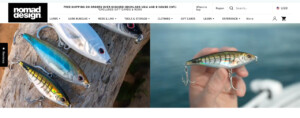
| Nomad | League and club brand identity | Led the Premier League’s 2023 identity refresh and Tottenham Hotspur’s 2024 identity |
Hiring a sport design agency is not like hiring a design agency for anything else. A club’s fans will wear the work on their chests and start a petition the afternoon they dislike it. A league app has to survive the moment every user refreshes at once in stoppage time. And a fitness startup has about a week before most new users stop opening the app.
The search term “sport design agency” also hides three different jobs. Identity studios make crests, kits and league marks. Sports digital specialists run fan apps, ticketing and fan data for clubs and leagues. Product studios design and build sports tech and fitness products. The agencies that rank for the term rarely say which of the three they are built for.
I wrote this guide for the people who have to make that call: founders of sports tech and fitness startups, heads of digital at clubs and leagues, and brand leads at sports companies and new leagues. At Fireart we design and build digital products, including fitness and sports media apps, so I know which of these jobs we are good at and which we are not.
Every agency below is judged on the same five criteria: sport-specific proof, brand system depth, fan and athlete UX, build capability and engagement fit. Positions reflect fit for a situation, not a quality score. Where another studio is the better choice than us, I say so.
TL;DR
- There is no single best sport design agency, only studios built for different jobs: identity studios for crests, kits and league marks, sports digital specialists for fan apps and ticketing, and product studios for sports tech and fitness. Pick the job first, then the name.
- Fans watch with a phone in their hand. An IBM study of 20,589 fans released in August 2026 found that 72% use sports apps and only 20% use no second device while watching.
- Retention is the real test for fitness and sports apps. Adjust’s 2022 benchmarks show health and fitness apps keeping a median 24% of users on day one and 7% by day 30.
- Accessibility is a legal requirement, not a nice-to-have. The European Accessibility Act has applied since 28 June 2025 to online sales, e-tickets and passenger transport sites and apps, and WCAG 2.2 became a W3C Recommendation in December 2024.
- Fans can veto a rebrand. Leeds United consulted more than 10,000 people on its 2018 crest and still dropped it within about five days after a petition passed 77,000 signatures.
- Vet partners on shipped sport work, who writes the production code, how they test with real fans and how long trademark clearance will take, rather than on award counts or follower numbers.
Which sport design agency fits which situation?
There is no single best sport design agency, only kinds of studio built for different situations. A studio that can make a crest fans will tattoo may never have shipped an app that handles a ticket rush. A team that builds flawless fitness apps may have no business redesigning a 140-year-old club badge. The first question is which of those problems you have.
Our evaluation criteria
I check the same five things before shortlisting anyone for sport work:
- Sport-specific proof: Named sports clients and shipped, dated work. A league, club, tour, sports tech company or fitness brand you can look up beats a generic “sports” tag on a portfolio filter.
- Brand system depth: Whether the identity holds up beyond the logo, on a sleeve patch, a stadium screen, a broadcast graphic, a merch tag and a 16-pixel app icon.
- Fan and athlete UX: Evidence of apps, websites, live data, ticketing or training products designed around how fans and athletes actually behave.
- Build capability: Whether the studio ships production code or hands over design files for someone else to build.
- Engagement fit: Team size, budgets and the kind of client each studio suits, from a seed-stage fitness startup to a global governing body.
What these criteria do not measure: star ratings, award counts or social followers. Nine of the ten studios below have no Clutch reviews at all, because leagues and clubs rarely leave them.
Why build capability outranks portfolio polish
In sport, the work is judged in public on the worst day, not the best one. A crest is judged the morning it leaks. An app is judged in the ten minutes before kick-off, when ticket wallets, live scores and push notifications all fire at once. A design that looks perfect in a case study but breaks at the turnstile costs more trust than a plainer one that works.
That is why every card below says plainly whether a studio builds what it designs. Several of the best identity studios in sport do not, and that is fine, as long as you budget for a separate build partner from day one.
Who this guide is for
- Founders of sports tech and fitness startups who need a product designed and built, and who will live or die on week-four retention rather than launch-day visuals.
- Heads of digital at clubs, leagues and federations who need fan apps, ticketing and websites that survive matchday traffic and turn fans into known customers.
- Brand and marketing leads at sports companies and new leagues who need an identity that can launch fast and age well. New competitions keep arriving: the PWHL grows to 12 teams in 2026-27, and Ultimate Sevens played its first season in September 2026.
The 10 sport design agencies covered
- Fireart Studio: Sports tech, fitness and sports media products that need design and code from one team.
- InCrowd: Fan apps, ticketing and fan data for clubs, leagues and rights-holders.
- Nomad: League and club identity systems, including the Premier League.
- Further (formerly DesignStudio): Global sports identity plus motion and immersive content.
- Work & Co: Real-time apps for tours and governing bodies with enterprise budgets.
- Doubleday & Cartwright: Naming and launching new franchises and teams.
- RARE Design: Pro team logos, uniforms and custom typefaces.
- Athletics: Sport identity systems that also need a website built.
- Fanbrandz: League event identities and brand-asset portals.
- Torch Creative: College athletics marks and mascot libraries on modest budgets.
| Agency | Best for | Engagement model | Sport coverage |
|---|---|---|---|
| Fireart Studio | Sports tech, fitness and sports media products | Design and build projects; designers embedded in client teams | Fitness tech, sports media |
| InCrowd | Fan apps, ticketing and fan data | Long-term digital partner, services only | Football, cricket, rugby, F1, racing |
| Nomad | League and club identity | Identity projects and ongoing brand custody | Football, tennis, baseball, rugby sevens, broadcast |
| Further | Identity plus motion and immersive content | Identity, motion and live production in one group | Football, tennis, MMA, gaming |
| Work & Co | Real-time apps for tours and governing bodies | Enterprise product teams within Accenture Song | Golf, sports nutrition, fitness, cycling |
| Doubleday & Cartwright | Naming and launching new teams | Naming, identity and launch campaigns | Hockey, basketball, soccer, golf |
| RARE Design | Pro team logos, uniforms and custom type | Identity and uniform projects | Basketball, hockey, golf, college |
| Athletics | Identity systems that need a website built | Strategy, identity and web build | Soccer, tennis |
| Fanbrandz | League event identities and brand-asset portals | Long-term league partner | Baseball, hockey |
| Torch Creative | College marks and mascot libraries | Logo and mascot projects | College athletics, hockey events |
The cards start with the digital specialists, move through the identity studios and finish with the narrower specialists.
1. Fireart Studio
Specializes in: Sports tech and fitness apps · Sports media product design · Design plus React Native and web build
- Headquarters: Warsaw, Poland, with an office in New York
- Founded: 2013
- Team size: 50+ designers and JavaScript developers
- Clutch rating: 4.9 from 40 verified reviews
Evaluated on the basis of
- Sport-specific proof: Fitness tech and sports media rather than clubs and leagues. The work includes the Pure Plank smart plank app, a Wodify redesign for gym communities, and a design team embedded with a US sports streaming company since October 2023. There is no club or league identity work in the portfolio.
- Brand system depth: Product-level branding: Pure Plank’s brand and app icon were part of the scope. Branding is 5% of Fireart’s service mix on Clutch, and no crest, kit or venue systems are publicly claimed.
- Fan and athlete UX: Pure Plank gives real-time sensor feedback on form, an activity score, gamification, guided goal setting and casting to a TV. Wodify’s screens include a workout-day calendar, a built-in timer, quick logging and an events and divisions dashboard.
- Build capability: Ships production code. Pure Plank runs on one React Native codebase for iOS and Android, with a custom backend, an admin panel for workouts, community moderation and analytics, and an in-app store with Apple Pay and Google Pay.
- Engagement fit: Project teams for startups and mid-market companies (55% of its client mix on Clutch is mid-market), or designers placed inside an existing product team.
Differentiator
Most of Fireart’s sport work sits where hardware, data and a phone screen meet. A smart plank that scores your form in real time is a sensor problem, a UX problem and a backend problem at once, and Fireart designed and built all three layers rather than handing a Figma file to someone else. For product teams that already have engineers, Fireart can also supply a design lead and designers who work inside the client’s own two-week sprints.
Proof of execution
- Pure Plank, a fitness board founded by former pro wrestlers Adam Copeland and Jay Reso: UI/UX, branding, a React Native app for iOS and Android, a custom backend and an admin panel. The app launched on the App Store and Google Play, and the case page notes press coverage of the product in Forbes, Newsweek and Sports Illustrated.
- A sports media streaming company in Austin, Texas: since October 2023, Fireart designers led by a Fireart design lead have worked inside the client’s product team, including on a new app. In a June 2024 Clutch review, the client’s VP of Product Design rated the work 5.0 and called the new app the company’s showpiece.
- Wodify, an all-in-one workout and gym-community app: a UI/UX redesign and a new UI framework covering daily workouts, timers, logging and competition divisions.
Pricing
Clutch lists a $10,000+ minimum project and $50-99 per hour. Design team augmentation is available for teams that need designers inside their own sprints.
Potential limitation
Not the right pick for a crest, a kit or a league identity; Nomad, Doubleday & Cartwright or RARE Design are better placed for that. The fitness case pages also publish no download or retention figures, so ask for product metrics on a call rather than relying on the cases.
My take
Sport products that struggle after launch rarely fail on visuals. They fail when the workout timer drifts, the sensor data lags behind the athlete, or the app forgets what the user did yesterday. That is why I would put a team that designs and builds together on any fitness or sports tech product, and why our fitness app UI guide spends more time on logging and feedback loops than on colour.
Fireart builds products for sports companies. The next agency builds the digital estate of clubs and leagues themselves.
2. InCrowd
Specializes in: Fan apps and digital ticketing · First-party fan data and CRM · Matchday web and app platforms
- Headquarters: London, UK
- Founded: 2015
- Team size: 50-249 on Clutch; BuiltIn London lists about 120
- Clutch rating: Profile exists, no reviews yet
Evaluated on the basis of
- Sport-specific proof: Very strong. InCrowd works only in sport, and its client list includes Arsenal, Crystal Palace, the ECB and The Hundred, MCC, PREM Rugby, World Rugby, UEFA, Formula 1 and Sky Sports.
- Brand system depth: Works inside clients’ existing identities. The Hundred app re-themes itself to each team’s colours, but no crest, kit or league identity work was found.
- Fan and athlete UX: Fan apps, ticket wallets, live match centres, single sign-on and streaming, such as the Palace TV+ service for Crystal Palace.
- Build capability: Ships native apps and ticketing in production. It sometimes partners on web front ends, as with UNRVLD at Crystal Palace, and load-tested the Sky Sports Scores app to 75,000 requests per second against a 50,000 target.
- Engagement fit: A mid-size, services-only agency since 2024, when its product business was split off under the same parent group. It suits rights-holders moving to direct-to-fan revenue, according to SportBusiness.
Differentiator
InCrowd connects the app, the ticket and the fan record, then publishes the numbers. Few agencies in this list can show monthly active users, crash rates and ticket volumes for their sports work. That makes it easier to judge than most, even though the figures are its own.
Proof of execution
- The Hundred (ECB): the official app since 2021, themed per team with a ticket wallet and live insights. InCrowd reports 2.5 million digital tickets used between 2021 and 2025 and 2 million video views in 2025.
- Sky Sports Scores: a native app moved off Sky’s in-house systems in a single cutover. It serves 2.5 million monthly active users and 120TB of traffic a month, with a reported crash rate of 0.5%.
- Crystal Palace FC: a rebuilt web and app estate, a data warehouse and the Palace TV+ streaming service, with self-reported growth of 230% in video subscription revenue and 79% in kit sales.
Pricing
Not published.
Potential limitation
The wrong choice for a new crest, a league identity or a kit system: it is a platform, data and marketing shop, not a brand studio. Most of its metrics are self-reported and there are no third-party reviews, so ask to speak to a current club client.
My take
A club with a dated badge and a broken app should fix the app first. Fans forgive an old crest far faster than a ticket wallet that fails at the turnstile. If your revenue plan depends on knowing who your fans are, InCrowd is the kind of partner to talk to, and our roundup of sports website design examples shows how much of that starts with the club site itself.
InCrowd assumes the identity already exists. The next two studios are the ones leagues call when it does not, or when it needs to change.
3. Nomad
Specializes in: League and club identity systems · Broadcast brand systems · New-franchise naming and identity
- Headquarters: London, UK
- Founded: 2016
- Team size: 26-50 (Creativebrief)
- Clutch rating: No profile found
Evaluated on the basis of
- Sport-specific proof: Very strong. The work page lists the Premier League, Sky Sports, MLB, the World Baseball Classic and the FA WSL, and press coverage adds Tottenham Hotspur and the WTA.
- Brand system depth: Very strong. The Premier League refresh merged two versions of the lion into one master mark, replaced six colours with three gradients and cut the typeface to two weights, across the sleeve patch, pitch, stadium and broadcast. The Spurs identity added a variable font made with F37.
- Fan and athlete UX: Digital is listed as a service, but no named website or app builds were found.
- Build capability: Not publicly claimed. Plan for a separate build partner for anything interactive.
- Engagement fit: A small, founder-led studio, co-founded by executive creative director Stu Watson. It suits rights-holders that need an identity created or looked after.
Differentiator
Nomad is the current custodian of the Premier League brand, and Watson led the original 2016 Premier League identity while at DesignStudio. It also works fast when it has to: in 2026 the studio named, designed and trademark-checked six Ultimate Sevens team identities in six weeks.
Proof of execution
- Premier League 2023/24 refresh: the updated identity debuted on 11 August 2023 at Burnley v Manchester City, across sleeve patches, pitch, stadium and broadcast.
- Tottenham Hotspur (November 2024): a nine-month project with input from more than 300 players, staff and fans, which revived the THFC monogram and added a variable font and a stand-alone cockerel.
- Sky Sports (July 2017): a rebrand across nine channels with Sky Creative, including a custom Sky Sports Display typeface in five cuts.
Pricing
Not published.
Potential limitation
The wrong choice if you need a working app, a ticketing flow or a live-data site, because you would still need a build partner. There are no third-party reviews, so references have to come from the studio.
My take
The Premier League refresh is the case I would show any club board that wants a bold new look. Nomad kept the lion fans already knew and fixed the system around it. That restraint is harder to sell in a pitch than a revolution, and far less likely to end in a petition.
Nomad looks after the Premier League’s identity today. The studio that created it in 2016 has since become a much larger group.
4. Further (formerly DesignStudio)
Specializes in: League and club brand identity · Sports-entertainment brand platforms · Motion and immersive production
- Headquarters: London, UK, with offices in New York and Dubai
- Founded: 2009 as DesignStudio; renamed Further in September 2025
- Team size: No current official figure; the group formed in May 2024 when DesignStudio merged with motion studio Analog and immersive specialist Pixel Artworks
- Clutch rating: No verified profile (similarly named profiles on Clutch and DesignRush belong to unrelated companies)
Evaluated on the basis of
- Sport-specific proof: Very strong. Its work includes the Premier League, UEFA Champions League, Borussia Dortmund, Wimbledon, UFC and EA SPORTS.
- Brand system depth: Very strong. The 2016 Premier League identity covered a simplified lion, the Premier Sans typeface, a colour system and a shirt badge, after about 600 iterations. The Borussia Dortmund system is built on the 34-degree angle of the Yellow Wall terrace, with custom type made with Blaze Type.
- Fan and athlete UX: Moderate. It produced a digital toolkit and prototypes for the EA SPORTS app, but production app builds are not evidenced.
- Build capability: Hands off design and prototypes. Motion, VFX and immersive content are produced in-house through Analog and Pixel Artworks.
- Engagement fit: A private-equity-backed group suited to global rights-holders and sports-entertainment brands.
Differentiator
Further can take an identity from the badge to the screen to the venue in one group. Analog co-produced Chapter II of the UFC 306 show at Sphere, which won two Sports Emmys in May 2025. Few identity studios can also produce the content that runs on a 360-degree screen.
Proof of execution
- Premier League (2016/17 season): the identity launched when the league dropped its title sponsor, with a new lion, typeface, colour system and shirt badge.
- Borussia Dortmund (October 2023): a brand system rolled out across the stadium tunnel and big screen, social media, BVB TV and future kits.
- UFC 306 at Sphere: Emmy-winning production design and graphic design for Chapter II, co-produced by Analog. The studio also designed the UEFA Champions League identity in 2018.
Pricing
Not published.
Potential limitation
The wrong choice for a team that needs a working fan app or ticketing platform built. After the 2024 merger and 2025 rename, ask which people from the original DesignStudio sport work will be on your project.
My take
When an identity has to perform on a stadium screen, in broadcast idents and inside a venue like Sphere, a group that owns motion and immersive production saves months of hand-offs. For a club below the top tier, it is likely more studio than the brief needs.
The identity studios above stop at the design file. The next agency does the opposite: it builds real-time products for one of the biggest names in golf.
5. Work & Co
Specializes in: Real-time sports apps · Sports and fitness brand e-commerce · Spatial and immersive sports UX
- Headquarters: Brooklyn, New York, USA; part of Accenture Song since January 2024
- Founded: 2013
- Team size: About 400 at the time of the Accenture acquisition
- Clutch rating: Profile exists, no reviews yet
Evaluated on the basis of
- Sport-specific proof: Moderate. The PGA TOUR work is deep, and the client grid adds Gatorade, Equinox and Rapha with case material, plus MLB, NBA, Nike and Lululemon as names only.
- Brand system depth: Builds digital design systems, such as one shared by the PGA TOUR’s website and apps, rather than kits or venue identities.
- Fan and athlete UX: Very strong. Real-time leaderboards, shot data and a spatial app for Apple Vision Pro.
- Build capability: Ships native app code, including a SwiftUI iOS app with real-time data via AWS AppSync. Some web and XR development was shared with partners: PGA TOUR credits Captech, Ensemble and Shockoe on the website, and Quintar developed the Vision Pro app.
- Engagement fit: Enterprise scale. DesignRush lists a $50,000+ minimum project.
Differentiator
Work & Co has shipped tour-scale real-time fan products on four surfaces: iOS, Android, web and Apple Vision Pro. The awards back up the craft, with two Webbys for the PGA TOUR site and app and a Red Dot for the Vision Pro app.
Proof of execution
- PGA TOUR apps (November 2022): strategy, design, iOS and Android development and QA over about a year, with a real-time leaderboard and shot data.
- PGATOUR.com (February 2023): a design system shared by web and app, which won two 2024 Webby Awards for navigation and UI.
- PGA TOUR Vision for Apple Vision Pro (February 2024): Work & Co led UX and design, and the app won a Red Dot in 2024. Separately, the Gatorade Gx app was a CES 2022 Innovation Awards honoree.
Pricing
Clutch lists a $5,000+ minimum and $100-149 per hour, while DesignRush lists $50,000+. Neither figure is backed by reviews.
Potential limitation
The wrong choice for a club or league identity or a smaller budget. There is only one deep sports case, no Clutch reviews, and the studio now sits inside a global consultancy, so confirm who leads your account.
My take
I would shortlist Work & Co for a tour or league app where live data is the product and the budget is enterprise-sized. For a startup’s first fitness MVP, a leaner team that designs and builds in one room will usually get to a testable app faster; our notes on MVP development explain how we scope that first release.
Work & Co builds the product fans use during the season. The next studio is often hired before there is a season at all: when a team needs a name.
6. Doubleday & Cartwright

Specializes in: Team naming and identity · Franchise launch campaigns · Sportswear and athlete collaborations
- Headquarters: Brooklyn, New York, USA, with an office in Los Angeles
- Founded: 2010
- Team size: 15 people on the about page; third-party estimates run higher
- Clutch rating: No profile found
Evaluated on the basis of
- Sport-specific proof: Very strong. Clients include the NBA, WNBA, NHL, NFL and MLS, with team work for the Utah Mammoth, Milwaukee Bucks and Inter Miami CF.
- Brand system depth: Strong. For the Utah Mammoth the studio worked on the name, the Mountain Mammoth mark and a custom Mammoth Sans typeface, and it claims uniforms, merchandise, broadcast and digital touchpoints for its launch projects.
- Fan and athlete UX: “Digital & Interactive” is listed as a service, but no shipped website or app is documented.
- Build capability: Not publicly claimed.
- Engagement fit: A mid-size, culture-led studio that suits franchise launches, renames and new leagues.
Differentiator
Doubleday & Cartwright treats a team like a fashion brand as much as a sports property. Its portfolio puts Jordan and Union LA collaborations next to NHL and MLS team creation, which shows in identities built to sell on the street, not just on the pitch.
Proof of execution
- Utah Mammoth (May 2025): name, primary mark and custom typeface, revealed after a 13-month process with more than 850,000 fan votes.
- Milwaukee Bucks (April 2015): a full rebrand, which the studio says took about six weeks to NBA approval.
- Inter Miami CF (2018): naming, the heron crest and the identity system for David Beckham’s MLS club.
Pricing
Not published.
Potential limitation
The wrong choice for an engineering-heavy fan app or ticketing build, since no shipped digital product is documented. With a core team of about 15, ask early which founders will lead your project and when they are free.
My take
Naming is the hardest part of a new team, and the part most agencies underprice. The Mammoth process shows what it takes: thirteen months, four rounds of fan voting and a trademark refusal that knocked out one of the shortlisted names. If you are launching a team, budget for that time before you budget for the logo.
Doubleday & Cartwright names new teams. The next studio has quietly redrawn a large share of the NBA.
7. RARE Design
Specializes in: Pro team identity systems · Uniform and City Edition design · Athlete signature logos
- Headquarters: Hattiesburg, Mississippi, USA
- Founded: 1999
- Team size: 2-9 (Clutch)
- Clutch rating: Profile exists, no reviews yet
Evaluated on the basis of
- Sport-specific proof: Very strong. Sports Illustrated credits the studio with four NBA rebrands (Hawks, Hornets, Grizzlies and Pelicans), and recent work covers the NHL’s St. Louis Blues and LIV Golf teams.
- Brand system depth: Strong. The work spans logos, uniforms, court and field design and custom typefaces, such as the Ragtime typeface for the Blues and a typeface and guidelines for each of four LIV Golf teams.
- Fan and athlete UX: Not publicly claimed.
- Build capability: Delivers identity files and guidelines; no websites or apps.
- Engagement fit: A small boutique suited to leagues and teams buying an identity or uniform programme.
Differentiator
Founder Rodney Richardson was a Nike team sports and basketball designer before starting RARE, and the studio still works the way uniform programmes do: alongside the league’s kit partner. The Blues’ 2025 identity, for example, was credited to RARE together with Fanatics.
Proof of execution
- New Orleans Pelicans: the original logo in January 2013, and later the 2023-24 City Edition uniforms and secondary logo.
- Atlanta Hawks (June 2015): two new logos and three new uniforms.
- St. Louis Blues (June 2025): a three-year brand evolution with a refreshed Blue Note, new secondary marks and a custom typeface.
Pricing
Not published.
Potential limitation
The wrong choice if you need a website, an app or a ticketing build. With 2-9 people, capacity is tight, so book early if your launch has to land with a league’s uniform calendar.
My take
The best pro team identities are built for the jersey first and the screen second, and RARE’s portfolio shows that order of priorities. Pair a studio like this with a digital partner who can carry the marks into an app icon, a ticket and a loading screen, because that hand-off is where most rebrands lose detail.
RARE draws for teams that already exist. Athletics is one of the few identity studios here that also writes the code for the site the identity lives on.
8. Athletics
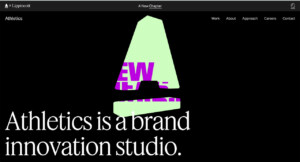
Specializes in: League identity systems · Youth and grassroots sport branding · Brand-to-web design and build
- Headquarters: Brooklyn, New York, USA
- Founded: 2004
- Team size: About 25
- Clutch rating: No profile found
Evaluated on the basis of
- Sport-specific proof: Moderate. Sport clients include MLS, Nashville SC, the Seattle Sounders, USTA and Nike, but sport is one vertical among many, next to clients such as IBM and Google.
- Brand system depth: Strong. The MLS crest system (2014, with Gigunda and Berliner Benson) lets each club adapt the league crest in its own colours, and its 2015 rollout covered kits, the website, the apps and fantasy.
- Fan and athlete UX: Digital experiences are documented for non-sport clients; no sport app or ticketing work was found.
- Build capability: Yes. Athletics has in-house developers, a head of creative technology and WordPress VIP partner status, and runs its own AI platform.
- Engagement fit: Mid-market to enterprise. On 6 October 2026, Lippincott announced it would acquire the studio, with closing expected on 2 November 2026.
Differentiator
Athletics can take a sport brand from strategy to identity to a working website without changing teams. For organisations that do not want to manage a brand studio and a web agency separately, that saves a hand-off where intent usually gets lost.
Proof of execution
- Major League Soccer (2014): a league crest system adapted by every club, rolled out across kits, digital and fantasy for 2015.
- Nashville SC (February 2019): crest and a sound-wave-based identity for the club’s MLS entry.
- MLS GO (June 2023): name and identity for the league’s youth programme. For the Seattle Sounders’ 2023 identity, Athletics led research and strategy, while another studio, Column, did the final design.
Pricing
Not published by Athletics. A third-party directory, MarketingMonk, lists $150-250 per hour and a $25,000+ minimum.
Potential limitation
The acquisition closes in November 2026, so team, pricing and independence may change; ask about that on the first call. The sport portfolio is thinner than a specialist’s, and there is no sport app or ticketing work to point to.
My take
The MLS crest system is still one of the smartest league identities in North America, because it gives every club room to be itself without breaking the league mark. That is the kind of systems thinking I would want for a youth league or a federation with dozens of member clubs.
Athletics builds identities for leagues. The next studio works on the events those leagues stage and the brand rules behind them.
9. Fanbrandz
Specializes in: League event identities · Brand style guides · Brand-asset portals
- Headquarters: Montclair, New Jersey, USA
- Founded: Roots in 1987 as Frederick & Froberg
- Team size: Six staff listed on the about page, plus collaborators
- Clutch rating: No profile found
Evaluated on the basis of
- Sport-specific proof: Strong, concentrated on MLB and NHL tentpole events, with Clio Sports awards from 2014 to 2016 for NHL event identities.
- Brand system depth: Strong for events. The 2025 4 Nations Face-Off work covered the logo, theme art, broadcast animations, centre-ice graphics and arena signage.
- Fan and athlete UX: Designs web and social layouts for events, but no fan-facing apps.
- Build capability: Yes, for business-to-business tools. Fanbrandz built MLB’s brand-asset site, first in 2000 and in new generations in 2013 and 2025, and an NHL version in 2011.
- Engagement fit: A very small, long-term league partner.
Differentiator
Fanbrandz builds the plumbing most fans never see: the style guides and asset portals that licensees, broadcasters and partners use to get a league’s marks right. That infrastructure decides whether an identity survives contact with hundreds of third parties.
Proof of execution
- 2025 4 Nations Face-Off (NHL): logo, theme art, broadcast animations, centre ice and arena signage.
- 2025 World Series (MLB): event identity including web and social layouts.
- MLB brand-asset portal: built in 2000, rebuilt on a custom CMS in 2013 and replaced with a new generation in 2025.
Pricing
Not published.
Potential limitation
The focus is event identities and style guides, not fan-facing products or full club rebrands. With six listed staff, it is a specialist partner rather than a full-service agency.
My take
Event identities have the shortest shelf life in sport, often a single week, which makes speed and consistency more important than novelty. The asset-portal work is the underrated part: a brand that licensees can download correctly is worth more than a brand that wins an award and gets stretched on the first T-shirt.
Fanbrandz serves the pro leagues. The last studio on the list does most of its work for college athletics, on budgets that are a matter of public record.
10. Torch Creative
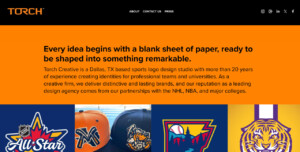
Specializes in: College athletics marks · Mascot caricature systems · Event and league logos
- Headquarters: Dallas, Texas, USA (per its website; Clutch lists Glen Ellyn, Illinois)
- Founded: 2005 (Clutch)
- Team size: 2-9 (Clutch)
- Clutch rating: Profile exists, no reviews yet
Evaluated on the basis of
- Sport-specific proof: Strong, mostly in college athletics, with clients such as Cincinnati, Texas Tech, Southern Illinois and BYU, plus NHL Winter Classic and All-Star logos.
- Brand system depth: Logos and mascot pose libraries; limited depth beyond the marks themselves.
- Fan and athlete UX: Not publicly claimed.
- Build capability: Hands off files; no web or app work.
- Engagement fit: A very small studio with modest, publicly documented budgets.
Differentiator
Torch is one of the few sport design studios whose prices are on the public record, because public universities disclose what they pay. For an athletic department that needs a mascot with a pose for every sport, that transparency makes budgeting simple.
Proof of execution
- University of Cincinnati (September 2025): a refreshed Bearcat mascot portfolio, the first since 2006.
- Texas Tech (October 2025): sport-specific caricatures of the Raider Red mascot.
- Southern Illinois University (February 2019): a new Saluki athletics logo.
Pricing
Public records give a rare benchmark. SIU paid $10,000 for its logo, through IMG College Licensing, plus $3,450 for a font. The University of New Mexico reports paying Torch about $12,000 for a proposed university logo, a figure that covered 20 design options.
Potential limitation
A mark-making specialist. It is the wrong choice for a full brand strategy, a pro team identity system or anything digital.
My take
Not every sport brand needs a strategy deck. A college athletic department with a tired mascot often needs exactly what Torch sells: a strong mark, a pose library and a price the finance office can approve. Pair it with a web partner when the marks need to move online, as covered in our guide to building a fitness website, much of which applies to athletics sites too.
How this list was assessed
Every agency was checked in October 2026 against the same five criteria, using its own case studies, Clutch and DesignRush profiles, league and club announcements, and design press such as Design Week, Creative Review and Dezeen. Each studio had to show dated public sport work, and where sources disagreed on a credit or a number, the card says so or leaves it out.
No numeric scores appear in this guide, and that is deliberate. Nine of the ten studios have no Clutch reviews at all, because leagues and clubs rarely leave them. A star average would reward the studios that chase reviews, not the ones that do the best sport work.
Where a studio’s public record does not evidence a criterion, the card says so instead of guessing. Absence of a claim is not a failure, but it is information you should have before you sign.
What was left out
- Sports Design Agency, Tom O’Grady’s Chicago studio, which ranks first in search for the term. O’Grady led the NBA’s 1990s identity era as the league’s creative director, but most of the marquee credits date from that tenure rather than recent agency work.
- Studios whose sport case studies could not be verified, such as agencies that list sports clients on their case page without any case behind the logo.
- Global networks such as AKQA and R/GA, whose sport work sits inside much broader client rosters and is hard to compare with specialist studios.
- Freelancers and Dribbble service listings, however good, because the guide compares teams that can staff a project.
Why Fireart is first
Fireart sits first because this is our blog and because sports tech, fitness and sports media products that need both design and production code are exactly what we build. That placement is a statement of fit, not of rank. Nomad, Further and RARE will beat us on any crest or kit, InCrowd on club ticketing and fan data, and Work & Co on tour-scale apps with an enterprise budget.
What does a sport design agency actually do?
A sport design agency designs the visible layer of a sports organisation or sports product: the crest and wordmark, kits and uniforms, broadcast and venue graphics, and the apps, websites and products fans and athletes use every day. Few studios do all of it, which is why the first step is mapping your brief to the right kind of studio.
Start with the screen fans use most
Most identity projects still start with the badge. Fan behaviour says they should also start with the phone. In IBM’s August 2026 study, 72% of fans used sports apps, three in four Gen Z fans used social media for extra sports content, and only one fan in five watched without a second device. A crest that looks superb on a shirt but turns to mush as a 16-pixel app icon has failed on the screen fans see most often.
The table below shows which kind of studio usually owns each part of the work, and what each part forces into the brief.
| Deliverable | Who usually does it | What it forces into the brief |
|---|---|---|
| Crest, logo and wordmark | Identity studios (Nomad, Further, RARE Design, Doubleday & Cartwright) | Trademark clearance, fan consultation, legibility from stadium roof to app icon |
| Kit and uniform graphics | Identity studios working with the league’s kit partner | League approval windows and manufacturer lead times |
| Broadcast, motion and venue graphics | Further, Fanbrandz | Motion systems, LED and screen specs, event deadlines |
| Fan app, website and ticketing | InCrowd, Work & Co, Fireart Studio | Peak-load testing, single sign-on, accessibility, offline tickets |
| Sports tech or fitness product | Fireart Studio | Sensor and live data, retention loops, subscriptions |
| Brand-asset portal and style guide | Fanbrandz | Licensee access, version control, usage rules |
One brief, several studios
Large rights-holders often split the work. The Premier League’s identity came from one studio and its refresh from another, and the Blues’ 2025 identity was credited to RARE together with Fanatics. That is normal. What causes trouble is splitting the work without deciding who owns the hand-off between identity and product.
Two things to settle before you brief anyone
- Write down the five touchpoints fans will see most in the first year, in order. For most clubs and fitness brands, the app icon and the mobile site come before the stadium.
- Decide who will build. If the identity studio does not write code, appoint the build partner before the identity is signed off, not after, so the marks are tested in a real interface while they can still change.
Why do sports rebrands and fan apps fail?
They fail when fans meet them unprepared: a crest nobody asked them about, an app that works on a Tuesday but not on matchday, or a fitness product that is exciting in week one and forgotten by week three. Each failure is predictable, which means each can be designed against.
The crest nobody asked for
Leeds United’s 2018 “Leeds salute” crest is the textbook case. The club consulted more than 10,000 people, but once the design leaked a petition passed 77,000 signatures and the crest was dropped within about five days. Everton apologised for its 2013 crest after a petition of more than 23,000 names, and fans told Juventus its minimal 2017 “J” made them feel like customers rather than supporters.
The successful cases look different. Tottenham Hotspur’s 2024 identity took nine months and drew on more than 300 players, staff and fans. The Utah Mammoth name took 13 months and over 850,000 votes. Consultation does not guarantee approval, as Leeds showed, but skipping it almost guarantees a fight.
The app that works on a Tuesday
Sports traffic does not arrive evenly. Liverpool FC’s members’ ticket sale was postponed in July 2024 after the website crashed, and the final World Cup 2026 ticket phase in April 2026 brought queues of up to eight hours and site failures. An app that has only been tested at average load has not really been tested.
The fitness app nobody opens in week three
For fitness products the cliff is quieter but steeper. Adjust’s benchmarks put day-30 retention for health and fitness apps at 7%, and RevenueCat’s 2025 report found nearly 30% of annual subscriptions across categories cancelled in the first month. Launch visuals do not fix that; habit loops, progress feedback and honest onboarding do. Our piece on gamification in UX covers the mechanics that help and the ones that backfire.
What clients say when it works
“Fireart Studio will match the amount of work you put into the relationship.”
Matthew Jewell, VP of Product Design, sports media company (Clutch review, 5.0)
That line applies to every studio on this list. The sport projects that go well are the ones where the client stays in the room: at fan research sessions, at sprint reviews and at load tests.
Two things to do this week
- Before any rebrand brief goes out, decide how fans will be consulted and what you will do if they reject the result. Leeds had a consultation plan but no plan for rejection.
- For any app, write down your busiest ten minutes of the year, such as a ticket release, a derby kick-off or January 1st for a fitness product, and make it the performance target in the brief.
How do you design for matchday traffic and live data?
Design for the peak, not the average. The busiest ten minutes of the season should be the specification, and every screen should have a planned answer for what it shows when the data is late, the network is slow or the queue is long.
The scale of those peaks is real. FIFA received more than 500 million ticket requests for the 2026 World Cup between December 2025 and January 2026. UEFA logged 7.8 million Euro 2024 ticket applications in the first 24 hours. Peacock’s exclusive NFL Wild Card game in January 2024 peaked at 16.3 million concurrent devices. Most clubs will never see those numbers, but their own matchday spikes follow the same shape.
Design the degraded state first
The queue screen, the cached score and the “data delayed” label are design work, not engineering leftovers. Fans tolerate a short wait when they can see where they are in the queue. They do not tolerate a spinner with no explanation while the goal they just heard about is missing from the app.
Put the ticket where the turnstile is
Mobile tickets should work offline and sit in the phone’s wallet, because stadium networks are at their worst exactly when everyone arrives. InCrowd’s work for The Hundred and MCC is built around that idea, and so should any club brief be.
Load-test against a stated target
Ask for numbers. InCrowd load-tested the Sky Sports Scores app to 75,000 requests per second against a 50,000 target. Whatever your scale, a partner should be able to tell you the target, the test and the result in one sentence.
Treat accessibility as part of the spec
The European Accessibility Act covers online sales, e-tickets and passenger transport websites and apps in the EU from 28 June 2025, and WCAG 2.2 is the current W3C standard. US teams have faced the issue in court: a blind plaintiff sued the NBA over NBA.com in 2015, and the Golden State Warriors settled a website accessibility class action in 2021. A UX audit before the season is cheaper than a remediation order during it.
What does sport design cost, and how long does it take?
Anywhere from about $10,000 for a college logo to eight figures for a professional team rename, and from six weeks to three years. The spread comes from scope, approvals and legal risk far more than from the design hours themselves.
What the public numbers say
- University and college marks: Southern Illinois University paid $10,000 for a new athletics logo plus $3,450 for a font, and the University of New Mexico reports paying about $12,000 for a proposed university logo, including 20 design options.
- Club crests: Aston Villa’s 2016 crest was first reported to cost £2 million; the club said it cost under £80,000.
- Agency averages: Clutch’s September 2026 pricing data puts the average branding project at $71,652 over about eight months, the average web design project at $38,105, and the average mobile app project at $90,780 over about 11 months.
- Pro team renames: a trademark lawyer estimated the Cleveland Guardians rebrand at no less than $10 million, and the Washington Commanders rebrand reportedly cost up to $20 million. Most of that is merchandise, signage and legal work, not design fees.
Typical timelines
| Scenario | Typical timeline | What drives it |
|---|---|---|
| College mascot or logo refresh | A few months | Athletic department and licensing approvals |
| Pro team logo refresh | Six weeks (Bucks, to NBA approval) to three years (Blues) | League approval and the kit partner’s uniform calendar |
| New pro team name and identity | 13 months (Utah Mammoth) to 18 months (Commanders’ interim period) | Fan voting, trademark clearance, merchandise lead times |
| Several team identities for a new league | Six weeks for six Ultimate Sevens teams, a deliberate sprint | Launch date fixed by the league |
| Sports or fitness app | Months, not weeks; Clutch’s average across all app projects is about 11 months | Scope of live data, payments and integrations |
NHL.com noted in 2025 that professional team branding typically needs at least 18 months from design to trademark clearance, which is why so many new teams play a season under a placeholder name.
Two hidden line items
- Trademark clearance. The USPTO base filing fee has been $350 per class since 18 January 2025, and a team needs several classes. The fee is the small part. Utah’s “Yetis” was refused in January 2025 over likely confusion with the YETI cooler brand, and Washington’s “Commanders” filing hit a non-final refusal in 2023 partly because of a squatter’s earlier filings.
- Running the product after launch. An app is not finished at release. Budget for OS updates, a load test before every season and someone who owns the analytics, or the launch spend decays within a year.
How to normalise two quotes
Before comparing prices, ask both agencies the same four questions:
- Does the price include trademark searches, or only design?
- How many touchpoints are designed in detail, and which are left as guidelines?
- Who writes the production code, and is it in the quote?
- What does the first year after launch cost, including support and updates?
A quote that is half the price of another usually answers one of those questions differently. For web projects, our guide to calculating website design and development cost breaks down the line items in more detail.
What should you ask a sport design agency before signing?
These are the questions I would bring to the first call. Each one takes a minute to ask and saves weeks later.
Proof and people
- Which dated sport projects did the people on my team personally work on? Portfolios outlive staff, especially after mergers and acquisitions.
- Can we speak to one sports client from the last two years?
Fans
- How will you research and test with fans or athletes, and at which stage?
- What is the plan if fans reject the work after launch?
Build and peak traffic
- Do you write the production code, or who does?
- What load target will you test against, and can I see a past test result?
- How do you meet the European Accessibility Act and WCAG 2.2?
Rights and hand-over
- Who runs the trademark search, and when in the process?
- Do we own the source files, custom typefaces and code outright at the end?
Pricing and risk
- What is included in the first year after launch?
- What happens to the timeline if a league or a trademark office says no?
A partner who struggles with any of these in the first call is showing you something important.
Choosing your sport design partner
Choose the job before the name. If your problem is a crest, a kit or a new team, start with the identity studios on this list. If it is a fan app, ticketing or a club website, start with the digital specialists. If you are building a sports tech or fitness product that has to be designed and engineered together, that is the work we do at Fireart, from mobile app design and product design through to web development. If you are also comparing brand studios outside sport, our list of the best branding design agencies for startups and SaaS uses the same method.





 Kotlin
 C++
 C#
 Ruby on Rails
 Java
 Firebase
 Python
 Vue.js
 HTML5
 CSS3
 Azure