

| Agency | Best for | Why it stands out |
|---|---|---|
| Fireart Studio | SaaS and tech products that need motion inside the interface and in marketing, from the team that designs and builds them | 2D and 3D explainers, product UI motion and production code from one studio; 4.9 on Clutch from 40 reviews; typical motion project takes 4-6 weeks |
| BUCK | Brand-defining campaigns and interactive, in-product experiences at enterprise scale | Built LinkedIn’s first Year in Review in Rive with 207,360 possible user journeys; Primetime Emmy for Outstanding Motion Design |
| Thinkmojo | SaaS product launch videos and demo libraries | Long-running video partner to Slack and Salesforce, including a connected-TV campaign for Agentforce |
Hiring a motion design agency as a software company is a different job from hiring one for a soft drink commercial. Your product changes every sprint, so the explainer you commission in March can show an outdated interface by September. Half the motion you need never becomes a video at all: it ships inside the app as a loading state, an onboarding sequence or a button that reacts to a tap. And the people who have to live with the result are your developers, not a broadcast editor.
The search term “motion design agency” also hides four different kinds of studio. Brand and commercial studios make films and campaign spots for global brands. Product launch studios make the launch videos and feature demos that SaaS companies post on launch day. Explainer specialists turn a product into a 60 to 90 second animated story at a known price. Product design studios design and animate the interface itself and hand the motion to engineers in formats they can ship. Most lists put all four in one ranking and leave you to work out which is which.
I wrote this guide for the people who have to make that call: SaaS founders preparing a launch, marketing leads who need a steady stream of motion for ads and social, and product leads who want an interface that feels alive without slowing the app down. At Fireart we design and build digital products and animate them, so I know which of these jobs we are good at and which we are not.
Every agency below is judged on the same five criteria: motion range, product and UI motion, brand motion systems, tech and SaaS proof, and engagement fit. Positions reflect fit for a situation, not a quality score. Where another studio is the better choice than us, I say so.
TL;DR
- There is no single best motion design agency, only studios built for different jobs: brand and commercial studios for hero films, product launch studios for SaaS launch videos, explainer specialists for fixed-price explainers, and product design studios for motion that ships inside the app. Pick the job first, then the name.
- Video still earns its budget. In Wyzowl’s 2026 State of Video Marketing survey, 91% of businesses use video, 96% of people say they have watched an explainer video to learn about a product, and 85% say a video has convinced them to buy.
- Shorter wins. 71% of video marketers in the same survey say 30 seconds to 2 minutes works best, and Vidyard’s 2025 benchmark found that 65% of viewers finish business videos under one minute.
- Motion is now an accessibility question. WCAG 2.2 asks that motion triggered by interactions can be turned off (criterion 2.3.3), up to 35% of US adults aged 40 and over have experienced vestibular dysfunction, and the European Accessibility Act has applied since 28 June 2025.
- The file format matters as much as the art direction. Motion meant for the product should arrive as Lottie or Rive files with timing specs, not as an After Effects project your engineers have to rebuild by hand.
- Prices are wide but knowable. Agency-published benchmarks put a 60-second explainer from a full-service company at $8,000 to $25,000, while subscriptions start around $15,000 a month. Vet studios on delivery formats, revision rounds and who owns the source files, not on showreels.
Which motion design agency fits which situation?
There is no single best motion design agency, only studios built for different situations. A studio that wins Emmys for title sequences may be the wrong partner for a product walkthrough that has to be updated every quarter, and a fixed-price explainer shop will not design the empty states in your app. The useful question is which kind of motion you need most in the next 12 months, and who can deliver it in a form your team can keep using.
Our evaluation criteria
What I check before shortlisting anyone
- Motion range: Does the studio cover the formats your roadmap needs, such as 2D, 3D, character animation, live action or interface motion, or will you need a second vendor for half of them?
- Product and UI motion: Can the studio animate the product itself, from microinteractions to onboarding, and hand it over in formats engineers can ship, such as Lottie, Rive or timing specs?
- Brand motion systems: Does the studio leave behind reusable rules and toolkits, such as logo animation, transitions and motion principles, or only finished files?
- Tech and SaaS proof: Has the studio shipped dated, named work for software and technology companies, rather than only consumer brands?
- Engagement fit: Do the budget floor, timeline and engagement model (project, retainer or subscription) match your stage and your volume of work?
Why handoff formats outrank the showreel
A showreel tells you what a studio can make when it controls every frame. It tells you nothing about what happens when your product changes, when a developer needs the loading animation at 60 frames per second on a mid-range Android phone, or when a marketing manager needs a nine-second cut-down for a new ad platform. For a software company, that second set of questions decides whether the motion keeps working after launch.
What these criteria do not measure: star ratings, award counts or social media followers. Six of the ten studios below have no Clutch reviews at all, because brand studios rarely collect them, so stars would reward the studios that chase reviews rather than the ones that do the best work.
Who this guide is for
- SaaS founders preparing a launch: you need a launch video and probably an explainer, and you want to know what a sensible budget and timeline look like before the first call.
- Marketing leads at software companies: you need a steady flow of motion ads, social content and event assets, and you are weighing project studios against subscription services.
- Product and design leads: you want motion inside the product, such as onboarding, loading states and feedback animations, and you need a partner whose files your engineers can actually use.
The 10 motion design agencies covered
- Fireart Studio: SaaS and tech products that need motion inside the interface and in marketing, from the team that designs and builds them.
- BUCK: Brand-defining campaigns and interactive, in-product experiences for enterprise tech brands.
- Thinkmojo: SaaS product launch videos, demo libraries and connected-TV campaigns.
- Vucko: Motion identity systems, guidelines and toolkits for enterprise tech brands.
- Giant Ant: Character-led 2D and 3D stories that explain software with warmth.
- Oddfellows: Brand anthem films and illustration systems for design-led tech companies.
- ManvsMachine: CGI and live-action launch films for hardware and premium software brands.
- Demo Duck: B2B explainers and live action at published per-video prices.
- Yum Yum Videos: Fixed-scope animated explainers at the lower end of the agency price range.
- Superside: A steady volume of motion ads, social and event assets on a subscription.
| Agency | Best for | Engagement model | Motion coverage |
|---|---|---|---|
| Fireart Studio | Motion inside SaaS products plus explainers | Projects; designers embedded in client teams | 2D, 3D, explainers, UI and interaction motion |
| BUCK | Brand-defining campaigns and in-product experiences | Large campaign and product engagements | 2D, 3D, character, live action, Rive, real-time |
| Thinkmojo | SaaS launch videos and demo libraries | Long-term video partner for marketing teams | Product videos, live action, AI-assisted animation |
| Vucko | Motion identity systems for enterprise tech | System projects and multi-year event identities | Motion identities, guidelines, After Effects toolkits, event screens |
| Giant Ant | Character-led stories for software brands | Project-based, senior team | 2D, 3D, cel, titles, personalized video |
| Oddfellows | Anthem films and illustration systems | Project-based, small team | 2D, 3D, cel, live action, illustration systems |
| ManvsMachine | CGI and live-action launch films | Commercial production model | CGI, live action, kinetic type, idents |
| Demo Duck | B2B explainers and live action | Per-video projects and series | 2D, 3D, live action, testimonials |
| Yum Yum Videos | Fixed-scope explainers | Per-video projects | 2D, motion graphics, whiteboard |
| Superside | Motion ads and social at volume | Annual subscription | Motion ads, explainers, Lottie, 2D and 3D |
The cards start with the studios that work closest to the product, move through the brand and film studios, and finish with the fixed-price and subscription options.
1. Fireart Studio
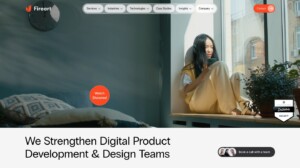
Specializes in: Product UI and interaction motion · SaaS explainers in 2D and 3D · Design plus production code
- Headquarters: Warsaw, Poland, with an office in New York
- Founded: 2013
- Team size: 50+ designers and JavaScript developers
- Clutch rating: 4.9 from 40 verified reviews
Evaluated on the basis of
- Motion range: 2D and 3D animation, explainer and promo videos, logo animation and character work, with sound design and voiceover included. The Boostation explainer turned a phone-cleaning app into a low-poly 3D city, and the team produced the animated teaser for TOHU, the adventure game from sister studio Fireart Games. Live action is not offered.
- Product and UI motion: Motion is designed with the interface rather than added after it. Fireart designers publish Rive interaction work on the studio’s Dribbble team page, including an interactive dashboard and character-driven button animations, and the same team designs the microinteractions in client products. Handoff formats are agreed per project; they are not listed on the service page.
- Brand motion systems: Logo animation and motion that extends a product’s illustration style are part of the service. A stand-alone motion guidelines document is not shown in the public case library.
- Tech and SaaS proof: The motion design page lists SaaS, fintech, e-commerce, gaming and proptech work, and testimonials on it come from Replicant, Revionics, Sprightful and CFI Financial Group. On the product side, the CFI app redesign covered 250+ screens.
- Engagement fit: A typical motion project takes 4-6 weeks, with estimates given up front. Motion can be bought on its own or together with product design and development, and designers can join a client’s own sprints.
Differentiator
Most studios on this list animate a product someone else designed. Fireart designs the interface, builds it in React, Next.js and React Native, and animates it, so the motion in a launch video and the motion inside the app come from the same design system and the same people. That matters when the product changes every sprint: updating an onboarding animation or an explainer becomes part of normal design work rather than a new commission with a new vendor.
Proof of execution
- Boostation: an animated explainer that maps a phone-cleaning app onto a living low-poly 3D city, with features shown as city buildings, such as a game center drawn as a racing stadium. The case page describes the process from agreed sketches to illustration to animation, but publishes no length or results.
- TOHU: Fireart produced the game’s animated teaser end to end, from script and storyboards to character design, style frames and animation, and it was featured in the After Effects gallery in 2023. The game itself was a Webby nominee in Games: Adventure and an honoree in Independent Creator at the 25th Webby Awards in 2021.
- Interaction motion in public: the studio’s Dribbble team page, which carries Dribbble’s Select agency label and has more than 132,000 followers, shows team members’ Rive work such as an interactive dashboard and animated buttons.
Pricing
Clutch lists a $10,000+ minimum project and $50-99 per hour. The motion page promises an estimate up front based on length, complexity and style, includes one revision round, and offers AI-generated or professional voiceover. For ongoing work, design team augmentation places designers inside your team.
Potential limitation
Not the right pick for a broadcast commercial, a live-action shoot or a character-led brand film at Emmy level; BUCK, Giant Ant or ManvsMachine are better placed for that. Only one revision round is included by default, and the public motion case pages publish no lengths or performance figures, so ask for the full reel and any numbers on a call.
My take
The motion that matters most in a SaaS product is usually the least glamorous: the 200 milliseconds that tell a user a click worked, the skeleton screen that makes a slow load feel shorter, the onboarding step that shows rather than tells. Nobody puts those in a showreel, yet users meet them hundreds of times a week. I would put a product studio on that work and a film studio on the hero spot, and I would not ask either to pretend to be the other. Our collection of web motion design examples shows what the first kind looks like when it is done well.
Fireart animates the product from the inside. BUCK works at the other end of the scale, where a brand needs motion that tens of millions of people will see.
2. BUCK
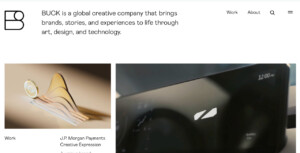
Specializes in: Brand-defining campaigns · Interactive and in-product experiences · 2D, 3D and character animation at scale
- Headquarters: Los Angeles, with studios in New York, Sydney, Amsterdam, London and Vancouver
- Founded: 2004
- Team size: 450+ people across its offices
- Clutch rating: No Clutch profile found
Evaluated on the basis of
- Motion range: The widest on this list: 2D, 3D, character design, stop motion, live action, broadcast titles, WebAR and games, plus handmade miniatures combined with CG for Apple’s “Share Your Gifts”.
- Product and UI motion: Strong. LinkedIn’s first Year in Review, launched at the end of 2025, was built entirely in Rive and supports 207,360 possible user journeys in three languages on devices down to low-end Android phones. In August 2026 BUCK launched an Applied Research Group, and a dedicated lead has run its interactive, real-time and in-product work for technology clients since 2022. Lottie delivery is not publicly claimed.
- Brand motion systems: For GitHub Universe ’24, BUCK created the event identity, animated assets, a stage intro film and an evergreen toolkit for GitHub’s own team. It also designed Eventbrite’s 2025 identity, though another agency, Instrument, led the app redesign.
- Tech and SaaS proof: LinkedIn, GitHub, Eventbrite and Apple, plus product design language that BUCK says it created for Google Gemini and a design playbook for the Kia AI Assistant.
- Engagement fit: Built for large campaign and product engagements. Pricing is not published, and the studio’s scale suits enterprise budgets better than a seed-stage launch.
Differentiator
BUCK is one of very few large motion studios that treats real-time and in-product motion as a discipline of its own. The LinkedIn project shows why that matters: motion that adapts to each user’s data and still runs smoothly on a cheap phone is an engineering problem as much as an animation one. Most studios at BUCK’s level of craft stop at the rendered film.
Proof of execution
- LinkedIn Year in Review (2025): personalized, interactive recaps built in Rive, with 207,360 possible paths in three languages. No performance figures were published.
- GitHub Universe ’24: the “Monuments of Progress” event identity, animated event assets, a stage intro film and a toolkit GitHub’s team can keep using.
- Apple “Share Your Gifts” (2018): a holiday film made with miniature sets and CG that won Film Craft Gold at Cannes Lions 2019. BUCK also holds a 2017 Primetime Emmy for Outstanding Motion Design and a 2022 Children’s & Family Emmy for Netflix’s “We the People”.
Pricing
Not published, and DesignRush lists budget and hourly rate as “Inquire”. A third-party guide by b2w places BUCK in its top budget bracket of $25,000 and above and describes the work as high-budget with long lead times.
Potential limitation
The wrong pick for a $10,000 explainer or a two-week turnaround. The work leans toward brand-defining campaigns, and with no Clutch reviews there is little public evidence of what day-to-day work with the studio is like, so ask for references from clients of your size.
My take
The LinkedIn project is the clearest proof I have seen that the line between motion design and product design is disappearing. If your product has a moment that millions of people will share, such as a year in review, a milestone or a first-run experience, BUCK is one of the few studios that can make it beautiful and make it run. If your problem is a quarterly feature video, you are paying for capacity you will not use.
BUCK makes the moments people share. Thinkmojo makes the videos software buyers watch before they sign up.
3. Thinkmojo
Specializes in: SaaS product launch videos · Product demo libraries · Software interfaces recreated in motion
- Headquarters: San Francisco and Montreal
- Founded: 2012
- Team size: Not published; an unclaimed Clutch profile lists 10-49
- Clutch rating: Profile exists, no reviews yet
Evaluated on the basis of
- Motion range: Product explainers and demos, brand campaigns, event and social content, live action with talent and AI-assisted animation and 3D. The 2025 Rubrik campaign starred the rapper Ludacris.
- Product and UI motion: Animates product interfaces inside marketing videos; for Slack, the team rebuilt the interface in animation software so every screen could move cleanly. In-product motion, Lottie and Rive deliverables are not publicly claimed.
- Brand motion systems: The studio’s work page labels its Asana project a “product motion system”, although the case itself describes a campaign and a demo-video system rather than in-product rules.
- Tech and SaaS proof: Very strong: Slack, Salesforce, Rubrik, Asana, Google Chrome (Japan) and Hello Heart, almost all in software.
- Engagement fit: Works as a long-term video partner for marketing teams. Pricing is not disclosed, and the contact form has no budget field.
Differentiator
Thinkmojo works almost entirely for technology brands, and its core skill is making software understandable in under two minutes. Its long relationship with Slack covered demo series, feature videos and App Store videos, and the studio says Slack grew from a few hundred thousand users to millions during the partnership. That is the kind of continuity a SaaS marketing team needs when features ship every month.
Proof of execution
- Slack: a demo series, feature videos and App Store videos, including a roughly two-minute interface walkthrough that Wistia features as a showcase of product video.
- Salesforce: a three-spot connected-TV campaign for Agentforce that ran on Prime Video, Netflix and YouTube, plus the Einstein Copilot launch and the “Simply Put” series for Salesforce+.
- Rubrik: “Rewind It Back”, a national broadcast campaign for Rubrik’s Agent Rewind, released on 28 November 2025.
Pricing
Custom quote per engagement. No price signals are published on the site or on Clutch.
Potential limitation
Everything Thinkmojo delivers is marketing video; it does not claim in-product motion or developer handoff. There are no third-party reviews (none on Clutch or G2), and most project pages are undated, so ask which work is recent and who on the team made it.
My take
The best SaaS launch videos I have seen do not show the product as it is. They show a simplified version with the clutter removed, so the viewer sees the one idea that matters. Thinkmojo is very good at that editing job. Just plan who will update the video when the interface changes, because a launch video that shows a two-year-old UI quietly tells buyers the product has stopped moving. Our list of video website design examples shows how product videos sit on a landing page.
Thinkmojo makes the launch video. Vucko makes the rules that every later video, keynote screen and interface animation follows.
4. Vucko
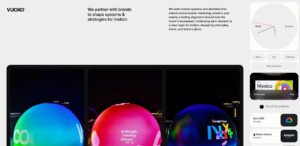
Specializes in: Motion identity systems · Motion guidelines and toolkits · Event and keynote motion for tech brands
- Headquarters: Toronto, Canada
- Founded: 2015
- Team size: Not published; the studio describes a globally connected team
- Clutch rating: No Clutch profile found
Evaluated on the basis of
- Motion range: Motion identities and systems across brand, marketing, product and events, applied to social, out-of-home, digital billboards, keynote stages and the Las Vegas Sphere. Character animation and explainer videos are not part of the public offer.
- Product and UI motion: Partly covered. The Canva system includes UI behaviours and cursor interactions, the Etsy system runs from small in-product interactions to campaigns, and for Spotify Wrapped 2025 Vucko gave motion guidance across product and marketing. The toolkits are built in After Effects; Lottie, Rive and code-ready specs are not publicly claimed.
- Brand motion systems: The strongest on this list. For Canva and Intuit TurboTax, Vucko delivered motion principles, a guidelines portal and After Effects templates with timing values built in.
- Tech and SaaS proof: Google Cloud, Canva, Intuit TurboTax, Spotify and Etsy, with password-protected cases for AWS and Amazon.
- Engagement fit: Suited to enterprise brand teams that will run the system themselves. Pricing is not disclosed, and for commercial film work Vucko has been on Hornet’s director roster since 2021.
Differentiator
Vucko builds the rules rather than a single film. A motion identity sets how a brand moves, from how the logo enters to how fast a card slides in, and then gives in-house teams the templates to apply it for years. For Google Cloud, the studio has built the motion identity of the Next conference five years in a row, which says more about the system than any one video could.
Proof of execution
- Google Cloud Next 2026: the fifth consecutive year of the event’s motion identity, with motion principles, production-ready assets, an After Effects toolkit and guidelines used on the Sphere, the stage, social, out-of-home and the web.
- Canva: a motion identity built on three principles (Personality, Clarity, Story) covering typography, logo, gradients, UI behaviours and cursor interactions, with guidelines published on Canva’s brand portal.
- Intuit TurboTax: a motion signature built on the checkmark, three principles (Progression, Structure, Achievement), a guidelines portal and After Effects toolkits with timing values built in.
Pricing
Custom quote per engagement. No price signals are published.
Potential limitation
The toolkits are made for designers working in After Effects, not for engineers, and no explainer or launch-video work is offered. The client list is almost entirely large enterprise, and with no reviews or prices published, an early-stage company has little to judge fit or cost by.
My take
A motion system is the best value motion you can buy, because every later video, ad and interface animation inherits it instead of starting from zero. The gap is usually between the brand file and the codebase. If I hired Vucko, I would ask for timing and easing values in a form a product team can turn into motion tokens, and have our web design and product designers carry them into the interface.
Vucko builds systems for in-house teams to run. Giant Ant makes the kind of film those teams rarely make themselves: a character-led story with real warmth.
5. Giant Ant
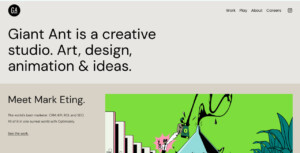
Specializes in: Character-led 2D and 3D storytelling · Product stories for software brands · Title design
- Headquarters: Vancouver, Canada
- Founded: 2007
- Team size: About 22 full-time artists, producers and operations staff
- Clutch rating: No Clutch profile found
Evaluated on the basis of
- Motion range: 2D, 3D, cel, character animation, 2.5D and title design, plus code-driven personalized video and a feature film, “Tangles”, which screened at Cannes in 2026. Live action was spun off into a separate company.
- Product and UI motion: Product interfaces appear inside marketing films, such as the UI flows in Microsoft 365 Copilot work. Lottie, Rive and motion guidelines are not publicly claimed.
- Brand motion systems: Campaign films rather than systems, such as four 2D brand films for Optimizely in 2026 and an OpenTable brand campaign the same year.
- Tech and SaaS proof: Microsoft 365 Copilot, Slack, Strava, Duolingo and Optimizely.
- Engagement fit: A small senior team. In a 2021 interview the founder described pricing as day rates plus a share for creative direction and project management, and said the studio asks for a budget before pitching. Since September 2022 Giant Ant’s business has belonged to Buck Design Canada, and both studios sit in the Residence network.
Differentiator
Giant Ant makes software feel human. Its films use characters, humor and handmade texture to explain products that are otherwise abstract, which is why companies like Slack and Microsoft use it for stories rather than feature lists. The Strava Year in Sport project also shows a technical side: 20 code-driven scenes produced a 75-second film personalized for each athlete, more than two million unique films in total.
Proof of execution
- Microsoft 365 Copilot (2024 onward): a story series, an Ignite 2024 sizzle and versions for Sales, Service and Small Business, heavy on 3D and showing product flows.
- Strava Year in Sport (2018): personalized films generated from each athlete’s data, with more than two million made.
- The 2022 Children’s & Family Emmy for Outstanding Main Titles and Graphics, for “Hilda and the Mountain King”.
Pricing
Not published. A third-party guide places the studio’s budgets at $25,000 and above and describes it as highly selective.
Potential limitation
Founder and executive creative director Jay Grandin moved to BUCK as Chief Brand Officer in August 2026, so ask who will lead your project now. No developer-ready formats are claimed, and a team of about 22 has limited capacity for fast, high-volume work.
My take
Character animation is underrated in B2B. A buyer who laughs at a 60-second film remembers the product name, and a buyer who sits through a feature list usually does not. Giant Ant is the studio I would brief when the product is hard to picture and the audience is tired of dashboards. I would still keep the interface itself with a product team, since a charming film cannot fix a confusing first screen.
Giant Ant tells stories with characters. Oddfellows tells them with design, and its clients are mostly companies that sell to designers.
6. Oddfellows
Specializes in: Brand anthem films · Illustration and icon systems · Interactive brand moments
- Headquarters: Portland, Oregon
- Founded: 2012 in San Francisco
- Team size: 18 people on the team page
- Clutch rating: No Clutch profile found
Evaluated on the basis of
- Motion range: 2D, 3D, cel, live action, stop motion and compositing, including live footage mixed with generative imagery for Replit in 2026.
- Product and UI motion: Product-adjacent rather than in-product motion: a Netflix TV interface icon system of more than 20 illustrations drawn to work at 18 pixels, a Discord Nitro illustration system built in SVG for perk tiles and modals, and an illustration library for Google’s Material You. Lottie and Rive are not publicly claimed.
- Brand motion systems: “Systems” is one of the studio’s listed capabilities, and its Adobe Summit work included guidelines for a visual system.
- Tech and SaaS proof: Figma, Google, Replit, Netflix, Discord, Adobe and Airbnb.org.
- Engagement fit: A small, selective team; pricing is not disclosed and the studio’s hiring is currently closed.
Differentiator
Oddfellows works for companies whose customers are designers, and that audience notices everything. Its “This is Figma” anthem film played before the opening keynote at Figma’s Config 2026, and its interactive Google doodle shows the studio can build things people play with, not only watch.
Proof of execution
- Figma: the “This is Figma” anthem film shown before Dylan Field’s opening keynote at Config 2026.
- Google “Most Searched Playground“: an interactive doodle for Search’s 25th anniversary, launched in December 2023. The studio reports 24.3 million users and more than 85 million trends explored.
- Replit (June 2026): a 60-second brand anthem and a set of extended assets for the company’s refresh.
Pricing
Custom quote per engagement. A third-party guide by b2w says the studio is not the right fit for straightforward B2B explainers or budget-sensitive projects.
Potential limitation
Not built for a plain B2B explainer or a tight budget. The team is small, there are no buyer reviews, and some case studies are password-protected, so you may need a call to see the most relevant work.
My take
Illustration systems are where brand and product meet, and few motion studios take them as seriously as Oddfellows. An icon that has to work at 18 pixels on a TV and at full screen in a launch film is a design system problem. If your brand is mostly illustration, I would ask Oddfellows to build the system and have your product team animate it inside the app. Our guide to how UI illustrations improve UX covers the product side of that handoff.
Oddfellows wins on design taste. ManvsMachine wins on cinematic craft, and its best work makes physical products look extraordinary.
7. ManvsMachine
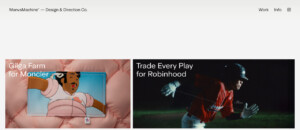
Specializes in: CGI product launch films · Live action with crafted 3D · Kinetic typography and broadcast identity
- Headquarters: London, with a Los Angeles studio opened in 2016
- Founded: 2007
- Team size: Not published
- Clutch rating: No Clutch profile found
Evaluated on the basis of
- Motion range: High-end 3D and CGI, 2D, live action shot on film, practical effects, character work, broadcast idents and kinetic typography.
- Product and UI motion: Product films show software interfaces, as in work for Squarespace and for Canva’s Affinity, but in-product motion, Lottie, Rive and motion guidelines are not publicly claimed.
- Brand motion systems: Broadcast idents and brand identity work. The Nike Air Max ’17 campaign won a Gold Design Lion at Cannes in 2017.
- Tech and SaaS proof: Apple, Squarespace, Samsung, reMarkable and Canva.
- Engagement fit: Works like a commercial production company, with directors’ representation in the UK and US. WPP’s Landor has held a majority stake since 2015.
Differentiator
ManvsMachine is the studio on this list most likely to make your product look physically beautiful. Its reMarkable Paper Pro film (2024) combined live action shot on 16mm and 35mm film with crafted 3D, and its Samsung “Micro Miracles” campaign (2024) filmed nanoscale 3D-printed sculptures under an electron microscope. That level of craft suits a hardware launch or a flagship software moment.
Proof of execution
- Apple iMac Pro “Algorithmic Architecture” (2018): an algorithm-driven CGI film, one of six artist films for the iMac Pro launch.
- Squarespace: “Make the Next” (2022), three spots mixing 2D, 3D and live action that were recognised at the 2023 Motion Awards, and “Human Powered” (2025), the launch spot for Squarespace’s Blueprint AI.
- Samsung “Micro Miracles” (2024, with agency BMB): Best of Show for a campaign at the 2024 Brand Impact Awards. D&AD lists a Black Pencil, two Graphite and four Wood Pencils for the studio overall.
Pricing
Not disclosed. Expect commercial production budgets rather than explainer pricing.
Potential limitation
Built for hero launch films, not for ongoing product motion or files your developers can ship. There are no Clutch reviews and no published prices, so expect a commercial production process with treatments, bids and a producer rather than a quick quote.
My take
A launch film this good raises the bar for everything around it. If ManvsMachine makes your product look extraordinary on launch day, the first time a user opens the app, it has to feel just as considered. I have seen companies spend most of the launch budget on the film and leave the onboarding to whatever the sprint allowed. Budget for both, and brief them together.
ManvsMachine, like most film studios, does not publish prices. The next two studios do, which makes them much easier to plan around.
8. Demo Duck
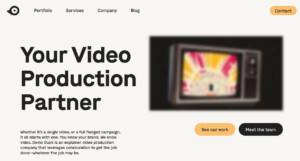
Specializes in: B2B explainer videos · Live action and testimonials for software brands · Video series and campaigns
- Headquarters: Chicago
- Founded: 2011
- Team size: About 16, per Built In Chicago
- Clutch rating: 5.0 from 10 reviews
Evaluated on the basis of
- Motion range: 2D animation, motion graphics, 3D and stop motion, plus scripted live action, testimonials and documentary work. On Clutch, 2D makes up 40% of its animation work.
- Product and UI motion: Uses simplified product interfaces inside videos, as in an animated “Endless Apps” spot for Rippling. Lottie, Rive and in-product motion are not publicly claimed.
- Brand motion systems: Works within clients’ existing brands; motion systems and toolkits are not publicly claimed.
- Tech and SaaS proof: Rippling, Google, Dropbox, Clever, Logitech, Lenovo and ConnectWise.
- Engagement fit: Per-video projects and series with published prices, 50% paid up front and a 6-12 week average timeline.
Differentiator
Demo Duck is one of the few studios that puts its prices in writing, and it can move between animation and live action for the same client. For Rippling it started with a video in 2022 that was scripted, filmed and edited in about three weeks, and by April 2026 it was spending three days on set to produce 12 pieces for Rippling’s enterprise AI campaign.
Proof of execution
- Rippling: a partnership since 2022, including the April 2026 enterprise AI campaign with 12 pieces in different lengths and aspect ratios.
- Google: an animated explainer on Google’s AI ecosystem for a training program, made between May and July 2024 and reviewed on Clutch by a Global Learning Specialist.
- Dropbox for Business: a 1 minute 37 second explainer mixing 2D and 3D.
Pricing
Demo Duck states that a single custom 2D animated video typically costs $20,000-25,000, testimonial videos $15,000-20,000 and scripted live action $40,000-60,000 or more. Clutch lists a $10,000+ minimum and $200-300 per hour.
Potential limitation
Premium per-video pricing on a 6-12 week cycle, from a small team. The output is finished video, not product motion, and only two of its ten Clutch reviews are recent (both from August 2024).
My take
Published prices are a gift to anyone writing a budget, and Demo Duck’s are honest about what a custom explainer really costs. I would pick it when a sales team needs one strong explainer and a few customer stories, especially if live action is part of the plan. For a product that changes every month, I would ask how they handle updates before signing, since a $20,000 video is expensive to redo.
Demo Duck sits at the premium end of published explainer pricing. Yum Yum Videos sits lower, and does nothing but explainers.
9. Yum Yum Videos
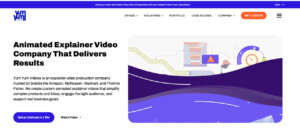
Specializes in: Animated explainer videos · 2D, motion graphics and whiteboard styles · Fixed-scope SaaS explainers
- Headquarters: Miami, with a production office in Buenos Aires
- Founded: 2012
- Team size: 10-49, per Clutch; other directories differ
- Clutch rating: 4.9 from 15 reviews
Evaluated on the basis of
- Motion range: Four explainer styles: 2D, motion graphics, whiteboard and mixed media. 3D appears in only one case study.
- Product and UI motion: Not publicly claimed. The default deliverable is an HD video file, with other formats on request.
- Brand motion systems: Not publicly claimed; explainers follow the client’s brand.
- Tech and SaaS proof: DocuSign, Chargebee, Thicket and Law-Whiz, with IT making up 40% of its work on Clutch.
- Engagement fit: Fixed-scope explainers from $8,000, paid 50% up front and 50% on approval, usually in 7-9 weeks.
Differentiator
Yum Yum Videos does one thing: explainers, which make up all of its Clutch-reviewed work. That focus shows in its process, with two feedback rounds at each stage, and in its willingness to publish detailed price research, including a 2026 guide to what explainers cost across freelancers, small studios and full-service companies.
Proof of execution
- DocuSign: eight industry-specific 2D explainers produced in 2017. In a Clutch review, DocuSign described a 90-second video whose first animation was ready about four weeks after the brief.
- Chargebee: three 2D explainers on subscription billing in 2020-2021.
- Thicket: a 60-second explainer made between January and March 2026; the founder says on Clutch that it increased the conversion rate of paid ads, without giving a figure.
Pricing
Explainer prices start at $8,000, and the studio’s FAQ puts the average animated video at $8,000-30,000. Clutch lists a $10,000+ minimum project.
Potential limitation
Explainer-only, with no product UI motion, Lottie files or live action, and a 7-9 week cycle. Its case studies list clients’ funding rounds and IPOs, which the videos did not cause, so treat them as client lists rather than results.
My take
A focused explainer studio is often the right answer for an early-stage SaaS company with one clear story to tell. The risk is that “explainer” becomes the default for every motion need. Once you have a working explainer, the next gains usually come from motion inside the product and on the landing page, which is a different brief and often a different partner.
Yum Yum and Demo Duck sell videos one at a time. Superside sells capacity by the month.
10. Superside
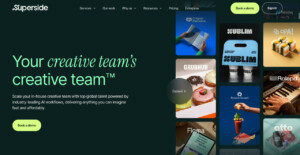
Specializes in: Motion ads and social at volume · Subscription creative team · Lottie web animations and motion toolkits
- Headquarters: Remote-first; founded in Oslo
- Founded: 2015, as Konsus; renamed Superside in 2019
- Team size: 800+ people in 70+ countries, per the company
- Clutch rating: 2.9 from 6 reviews, only one of them about video or motion work
Evaluated on the basis of
- Motion range: Animated videos, motion ads for social and digital, explainers, presentation and event motion, animated logos, and 2D, 3D and mixed media, with live action available through its video production service.
- Product and UI motion: Partly claimed. Superside lists web-ready motion “including Lottie” and micro-interactions; Rive and UI motion specs were not found.
- Brand motion systems: Motion guidelines, toolkits and motion automation are listed services.
- Tech and SaaS proof: Bolt, Salesloft, Thomson Reuters and Reddit.
- Engagement fit: Annual subscriptions only, with a 2-week onboarding before the first 4-week production cycle.
Differentiator
Superside is built for volume. A marketing team that needs dozens of ad variations, event screens and social cut-downs every month gets a large pool of designers and motion artists without hiring, and since 2025 the company has repositioned itself as an AI-first creative partner for enterprises.
Proof of execution
- Bolt: a brand explainer for Bolt’s rebrand, mixing 2D and 3D, delivered in one month by 18 designers and published the day after delivery (Superside’s case study, December 2023).
- Salesloft: four motion ads for San Francisco subway screens during Dreamforce, scaled up to 11-screen displays and delivered in two weeks with no revisions (March 2024).
- Thomson Reuters: four documentary-style videos, including a shoot with a local crew in San Diego (June 2025).
Pricing
The pricing page lists a Flex plan from $15,000 a month on an annual term and a Dedicated plan from $30,000 a month on a 12-month term, plus a $1,000 monthly software fee on every subscription. Project add-ons start at $15,000.
Potential limitation
Not for a one-off explainer: the floor is about $16,000 a month for a year. Its Clutch record is weak, with complaints about late or basic work, and most of its 2025-2026 customer stories are about AI consulting rather than motion.
My take
A subscription is a good deal only if you have the volume and someone in-house who can brief it well every week. I have seen teams sign an annual plan for “creative capacity” and then struggle to fill it, because nobody owned the backlog. If your motion needs come in bursts around launches, project studios will usually cost less.
How this list was assessed
Every agency was checked in October 2026 against the same five criteria, using its own case studies and pricing pages, Clutch, DesignRush and Built In profiles, press releases, award databases and design press such as Stash, It’s Nice That and Creative Review. Each studio had to show dated, public work for technology or software brands, and where sources disagreed on a number or a credit, the card says so or leaves it out.
No numeric scores appear in this guide, and that is deliberate. Six of the ten studios have no Clutch reviews at all, and one has a low average from only six reviews, so a star score would mostly reflect which studios ask clients for reviews.
Where a studio’s public record does not evidence a criterion, the card says “not publicly claimed” instead of guessing. Absence of a claim is not a failure, but it is information you should have before you sign.
What was left out
- Animade, the London studio known for product and character animation. Duolingo acquired it in August 2026 and the team moved in-house, so it no longer takes client work.
- Global advertising networks and full-service digital agencies whose motion work sits inside much broader rosters and is hard to compare with specialist studios.
- Freelancers, marketplaces and AI video generators. They can be the right answer for small tasks, but this guide compares teams that can staff a project.
- Studios whose technology work could not be verified with dated, named case studies.
Why Fireart is first
Fireart sits first because this is our blog and because motion for SaaS and tech products, designed with the interface and handed to the engineers who build it, is exactly what we do. That placement is a statement of fit, not of rank. BUCK, Giant Ant and ManvsMachine will beat us on a hero film, Thinkmojo on a launch video library, Vucko on an enterprise motion identity and Demo Duck on live action.
What does a motion design agency actually do for a software company?
A motion design agency plans, designs and animates the moving parts of a brand and a product: launch films, explainers, ads, logo animation and the motion inside the interface itself. For a software company, the useful split is not 2D versus 3D but where the motion will live and what your team needs to receive at the end.
| Motion type | Where it lives | What you should receive |
|---|---|---|
| Launch or brand film | Website hero, keynotes, paid social | Master file, cut-downs for every aspect ratio, project files |
| Explainer or demo video | Landing pages, sales decks, onboarding emails | Script, storyboard, final video, captions, editable source files |
| Motion ads and social | Paid and organic social, connected TV | Variants by platform and length, templates for later edits |
| Product and UI motion | Inside the app and on the website | Lottie or Rive files, timing and easing specs, reduced-motion versions |
| Brand motion system | Across all of the above | Motion principles, logo animation, transitions, a toolkit others can use |
Start with the interface, not the film
Most companies brief the film first because it is the most visible piece. But a buyer who watches your explainer will open the product within minutes, and the motion they meet there either confirms the promise or quietly breaks it. Mapping the product’s key moments first, such as sign-up, first success, loading and errors, gives the film something true to show.
Take a single moment: a new user connects their first data source. In the explainer it is a five-second shot. In the product it is a progress state, a success animation and perhaps an empty state that turns into a chart. If the film and the product animate that moment differently, users notice the gap, even if they cannot name it. If you are unsure where the line between motion graphics and animation sits, our article on motion graphics vs animation explains the difference.
Two things to prepare before the first call
- A motion inventory: list every place motion appears or should appear, from the homepage hero to the loading spinner, and mark which ones are videos and which ones live in code.
- A format decision: agree with your engineering lead which formats the product can play, such as CSS, Lottie or Rive, before any studio starts animating.
Why do explainers and product animations miss the mark?
They miss when they are made as one-off films for a product that never stops changing, when they run too long, or when they ignore the people who find motion uncomfortable. Each of these is predictable, which means each can be designed against.
Length is the most common problem. In Wyzowl’s 2026 survey, 71% of video marketers said videos of 30 seconds to 2 minutes work best, and 51% picked 30 to 60 seconds. Vidyard’s 2025 benchmark, based on more than 940,000 business videos, found that 65% of viewers watch videos under one minute to the end, against 20% for videos over 20 minutes.
The interface ages faster than the video
An explainer that shows real screens is out of date the first time the design team ships a new navigation. The fix is to show a simplified version of the interface, with only the elements that carry the story, and to keep the source files so screens can be swapped. Ask any studio how they handle a UI change six months after delivery, and what it costs.
Motion nobody can ship
Designers often animate product ideas in After Effects, and engineers then try to rebuild them in code, losing the timing and the feel along the way. Lottie, which Airbnb open-sourced in 2017 and which now has a v1.0 specification under the Linux Foundation, and Rive, which adds interactive state machines, close that gap. A studio that cannot deliver in either is delivering video, not product motion.
Motion that makes people dizzy
Up to 35% of US adults aged 40 and over have experienced some form of vestibular dysfunction, according to the Vestibular Disorders Association, and large parallax effects or zooming transitions can cause dizziness and nausea. WCAG 2.2 asks that motion triggered by interactions can be turned off unless it is essential, and that anything moving automatically for more than five seconds can be paused, stopped or hidden. Every modern browser and operating system supports a “reduce motion” setting through the prefers-reduced-motion media query, so there is no technical excuse.
The video that tries to say everything
A two-and-a-half-minute explainer that lists eleven features usually tests well inside the company and badly with buyers. One idea, one problem, one outcome is enough for the first video. Feature depth belongs in short demos and in the product.
What clients say when they are honest
“Fireart Studio will match the amount of work you put into the relationship.”
Matthew Jewell, VP of Product Design, sports media company, Clutch review
That line applies to every studio on this list. The best motion projects I have seen had a client who joined every review, answered questions within a day and kept the product team in the room.
Two things to settle before you brief anyone
- Decide which single message the first video must land, and write it in one sentence. If you cannot, the studio cannot either.
- Agree on reduced-motion behaviour for every product animation before design starts, so it is part of the spec rather than a fix after launch.
How do you add motion to a product without slowing it down?
Choose the lightest format that can do the job, keep durations short, and give every animation a reduced-motion fallback. Motion inside a product is a performance and accessibility decision as much as a visual one.
| Format | Best for | Watch out for |
|---|---|---|
| CSS and native platform animation | Hover states, transitions, simple feedback | Designers depend on engineers to tune timing |
| Lottie (JSON or dotLottie) | Illustrated loops, empty states, onboarding, animated icons | Complex After Effects scenes produce heavy files |
| Rive | Interactive animation with logic, such as buttons, characters and live dashboards | Needs the Rive runtime and a team that understands state machines |
| Video (MP4 or WebM) | Hero films, background loops, product demos | Heavy files; must be pausable if it plays automatically |
Keep it fast
Nielsen Norman Group recommends that most interface animations last between 100 and 500 milliseconds: about 100 milliseconds for simple feedback such as a toggle, 200 to 300 milliseconds for larger changes such as a modal, and shorter still for animations users see many times a day. Past 500 milliseconds, NN/g notes, animations start to feel like a drag. Material Design adds that duration should grow with the distance an element travels, with entering elements slowing down as they arrive and exiting elements speeding up as they leave.
Use motion to make waiting feel shorter
Motion can change how long a wait feels. Skeleton screens make full-page loads under ten seconds feel shorter, according to Nielsen Norman Group, and a CHI 2010 study found that progress bars with backward-moving ribs made the same wait feel 11% shorter. That is cheaper than a faster server, though it does not replace one.
What a good product motion handoff contains
- Motion tokens: named durations and easing curves that engineers can reuse, so every modal and toast behaves the same way.
- Files per platform: Lottie or Rive files tested on the oldest devices you support, with a file-size budget agreed up front.
- Reduced-motion versions: a fade or an instant change for every animation that moves across the screen.
- A short spec: what triggers each animation, what interrupts it and what happens if the data never arrives.
This is the work our product design team does alongside the interface itself, and our article on microinteractions covers the smallest of these moments in more detail.
How much does motion design cost, and why do quotes vary so much?
A 60-second animated explainer can cost anything from a few hundred dollars to more than $100,000, and the spread is real rather than a sign of overcharging. Wyzowl’s survey of 116 quotes for the same 60-second brief, collected in late 2022, found a median of $5,400 and a range from $600 to $250,000. What moves the price is style, length, the number of versions and who you are buying from.
| Option | Published price | Typical timeline | Source |
|---|---|---|---|
| Small studio explainer | $3,000-8,000 per 60 seconds | Varies | Yum Yum Videos, 2026 research |
| Full-service explainer company | $8,000-25,000 per 60 seconds | 6-8 weeks | Yum Yum Videos, 2026 research |
| Premium custom 2D explainer | $20,000-25,000 per video | 6-12 weeks | Demo Duck |
| 3D, frame-by-frame or VFX-heavy video | $30,000 to $100,000+ | Varies | Yum Yum Videos, 2026 research |
| Subscription creative team | From $15,000 a month plus a $1,000 fee, annual | 2-week onboarding, then 4-5 week cycles | Superside |
| Product studio motion project | From $10,000 (Clutch minimum) | 4-6 weeks | Fireart Studio |
Across all video production, not only explainers, Clutch’s 2026 pricing data puts the average project at about $42,000 and five months, with typical rates of $100-149 per hour. The same data shows rates of $50-99 an hour in Poland and Spain.
What drives the difference
- Style: 3D, frame-by-frame and character animation take far more hours per second than motion graphics.
- Length: every extra 10 seconds adds scripting, design and animation time.
- Versions: each aspect ratio, language and cut-down is extra work, and launch campaigns often need a dozen.
- Live action: crews, locations and talent move a project into a different budget bracket.
- Audio: professional voiceover and licensed music cost more than AI voices and stock tracks.
Two hidden line items
- Revisions beyond the included rounds. Fireart includes one round, and Yum Yum includes two rounds at each stage. Ask what a third round costs before you need it.
- Source files. Some studios deliver only the final video. If you want to update screens or captions later, write ownership of project files into the contract.
How to compare two quotes
- Are both quotes for the same length, style and number of versions?
- How many revision rounds are included, and at which stages?
- Are voiceover, music licensing and captions included?
- Will you receive editable source files and, for product motion, Lottie or Rive files?
Where nearshore savings show up and where they disappear
Clutch’s pricing data puts typical video production rates in Poland at $50-99 an hour, roughly half the $100-149 average across all regions. The savings disappear if feedback takes days to travel between time zones, so ask how many hours of overlap the team will keep with yours and who joins the review calls.
Should you hire a studio, a subscription or an in-house motion designer?
Hire a project studio when the work comes in bursts, a subscription when you have steady volume and someone to brief it, and an in-house motion designer when motion is part of the product every week. Many software companies end up with two of the three.
| Path | Fits when | Real cost you accept |
|---|---|---|
| Brand or film studio | One launch film, rebrand or campaign | Premium budgets and long lead times; updates are new projects |
| Explainer studio | One or two clear explainers at a fixed price | Video only; product motion needs another partner |
| Product design studio with motion | Motion in the product and in marketing from one team | The studio needs access to your roadmap and design system |
| Subscription service | Steady volume of ads, social and event assets | Annual commitment and someone in-house to manage the backlog |
| In-house motion designer | Weekly motion needs and deep product knowledge | One person’s range, tooling costs and management time |
Where AI fits
AI tools are now part of most video workflows. In Wyzowl’s 2026 survey, 63% of video marketers said they had used AI to create or edit videos, up from 51% a year earlier, and HubSpot’s 2026 State of Marketing found that 86% of marketing teams use AI in at least some areas. In practice, AI makes versions, captions, translations and early concepts cheaper. It does not yet replace the person who decides what the product should feel like when a user taps a button.
Embedding designers instead of hiring
A middle path is to embed designers from a studio inside your own team. With design team augmentation, a product or motion designer works in your sprints and tools, which suits companies that need motion every week but not a full-time hire yet.
What should you ask a motion design agency before signing?
Bring these questions to the first call. They separate studios that can make a beautiful film from studios that can make motion your company will keep using.
Scope and format
- Which formats will we receive for each piece, and will we own the editable source files?
- How do you handle a change to our product interface after delivery, and what does it cost?
Product and engineering
- Can you deliver product animations as Lottie or Rive files, and will you test them on the devices we support?
- Who on your team talks to our engineers, and at which stage?
Accessibility
- How do you handle reduced-motion settings and autoplaying video in your work?
Commercial terms
- How many revision rounds are included, and at which stages?
- Who will lead our project day to day, and what else will they be working on?
- What is included in the price: voiceover, music, captions, versions and translations?
A studio that struggles with any of these questions in the first call is showing you something important.
Frequently asked questions
What is the difference between motion design and animation?
Animation is the broader craft of making things move, including character animation for film and games. Motion design, or motion graphics, usually means animating design elements such as type, shapes, icons and interfaces to communicate information or a brand. Most studios on this list do both.
How long should a SaaS explainer video be?
Between 30 seconds and two minutes, and closer to one minute for a first video. Most marketers in Wyzowl’s 2026 survey said this range works best, and Vidyard found that viewers finish videos under one minute far more often than longer ones.
How long does a motion design project take?
A typical explainer takes six to twelve weeks at the studios that publish timelines, and Fireart quotes four to six weeks for a typical motion project. Large campaigns and anything with live action take longer.
Lottie or Rive: which should we use in our product?
Use Lottie for illustrated animations that play from start to finish, such as empty states, icons and onboarding loops. Use Rive when the animation needs to react to the user or to data, such as interactive buttons, characters or live dashboards.
Do we need a motion design agency or a video production company?
A video production company is built around cameras, crews and editing. A motion design agency is built around design and animation. If your story is mostly about software, start with motion design and add live action only where real people or physical products are essential.
Choosing your motion design partner
Start with the job, not the name. If you need a hero film, look at BUCK, Giant Ant, Oddfellows or ManvsMachine. If you need a launch video library, look at Thinkmojo, and if you need a motion identity your in-house team can run for years, look at Vucko. If you need a fixed-price explainer, Demo Duck and Yum Yum publish their prices, and if you need volume, Superside sells it by the month.
If you need motion that lives inside your product and matches your marketing, designed by the team that builds the interface, that is what we do at Fireart. Our motion design services cover explainers, 2D and 3D animation and product motion, and the first call is the right place to find out whether we are the right fit or whether one of the studios above would serve you better.






 Kotlin
 C++
 C#
 Ruby on Rails
 Java
 Firebase
 Python
 Vue.js
 HTML5
 CSS3
 Azure